
Last updated February 2026
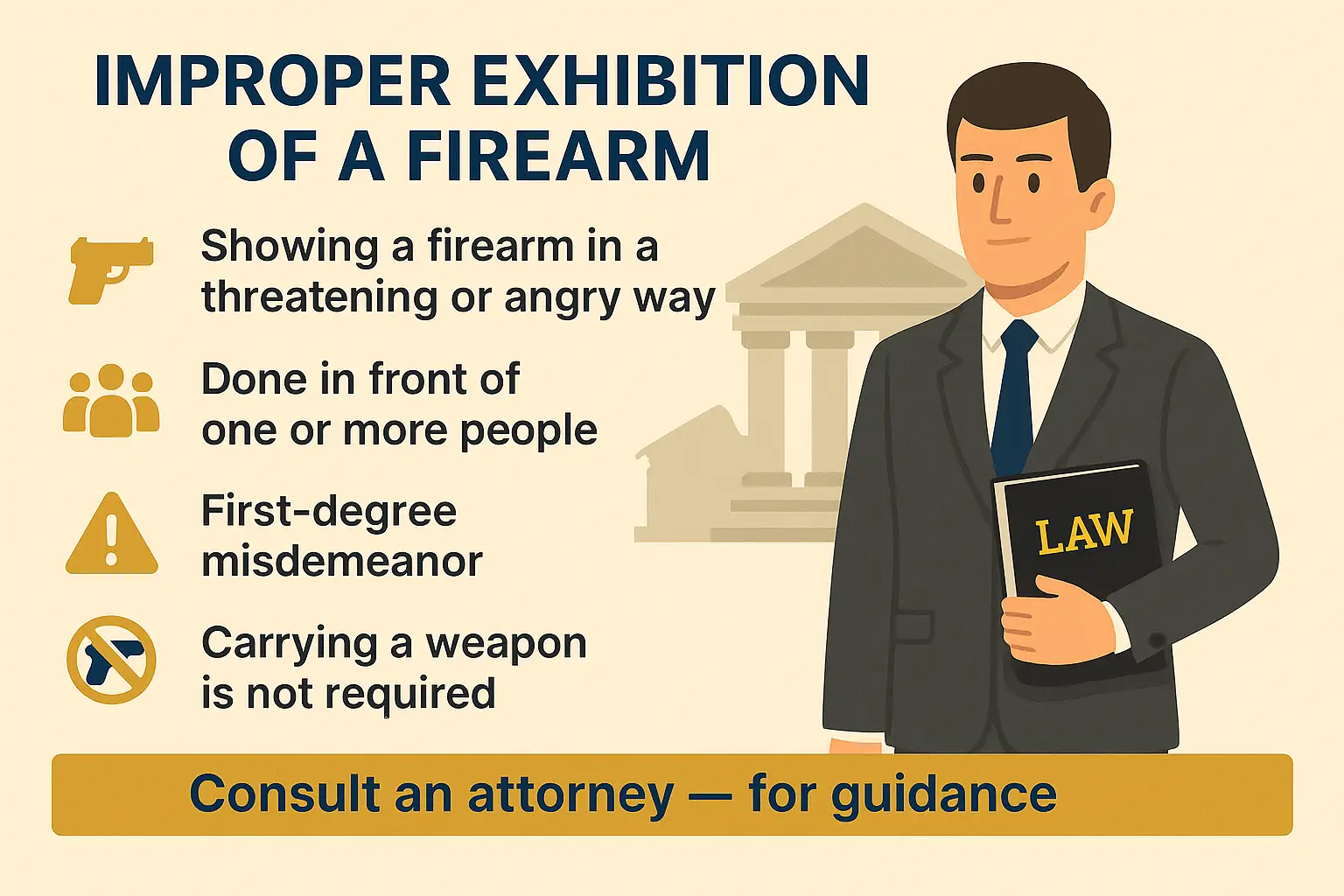
Florida law punishes not just the firing of a weapon — but the improper or threatening display of one. Under Fla. Stat. § 790.10, “improper exhibition” occurs when a person shows, displays, or brandishes a firearm or weapon in a rude, careless, angry, or threatening manner in the presence of another person.
This is a first-degree misdemeanor, but prosecutors in Broward and Miami-Dade take these cases seriously because they often arise during traffic incidents, neighbor disputes, domestic arguments, or bar confrontations.
For a broader overview of how Florida law treats firearm possession, display, and other weapons offenses, see our Gun Crime Charges in Florida guide.
Here’s what you need to know if you’re facing this charge.
🧠 Is “Brandishing” a Crime in Florida?
Florida law does not use the word “brandishing.” Instead, conduct commonly described as brandishing is usually charged as improper exhibition under Fla. Stat. § 790.10.
In practice, prosecutors use this statute when they believe a firearm or weapon was displayed in a rude, careless, angry, or threatening manner — even if the gun was never pointed, fired, or removed from a holster.
If the State claims the display was an intentional threat of violence, prosecutors may attempt to file or upgrade the case to aggravated assault with a deadly weapon, which is a felony. That distinction is frequently contested and often turns on video evidence, witness credibility, and context.
🧾 What the State Must Prove
To convict someone of improper exhibition of a firearm or weapon, the State generally must prove:
• You had a firearm or dangerous weapon in your possession
• You exhibited or displayed it
• The display was rude, careless, angry, or threatening
• One or more other persons were present
• The display was not reasonably necessary for self-defense
If prosecutors claim you intended to threaten violence, they may seek felony charges instead — a move that is frequently challenged in court.
🚨 Common Situations Leading to Improper Exhibition Charges
Improper exhibition charges often occur when:
Two drivers argue in traffic
Someone displays a gun during a heated dispute
A firearm is flashed during a road-rage encounter
A weapon is handled while intoxicated (common in DUI-related investigations)
A family argument escalates and someone calls police
A gun is displayed during a trespass or parking-lot confrontation
Body-worn camera footage and witness inconsistencies often play key roles in defending these cases.
🧾 Penalties for Improper Exhibition of a Firearm
Improper exhibition is a first-degree misdemeanor punishable by:
Up to 1 year in jail
Up to 1 year probation
Up to $1,000 in fines
Possible loss of concealed-carry rights
No-contact orders
Firearm seizure in some cases
A conviction can also affect employment, background checks, and future firearm licensing — similar to the collateral consequences seen in domestic violence, DUI, and reckless driving cases.
⚠️ When Improper Exhibition Can Become a Felony
Improper exhibition is usually charged as a first-degree misdemeanor. However, prosecutors may pursue felony charges if they allege the firearm was displayed as an intentional threat.
Most commonly, this involves allegations of aggravated assault with a deadly weapon.
That line is often disputed. Many cases involve:
• Subjective or exaggerated witness claims
• Ambiguous gestures later framed as threats
• Limited visibility or obstructed views
• Video evidence that contradicts police reports
Whether a case remains a misdemeanor or escalates to a felony frequently determines whether prison exposure is on the table.
🛡️ Defenses That Work in Improper Exhibition Cases
Improper exhibition charges are frequently overcharged and highly defensible. Common defenses include:
Self-defense or defense of others
Florida law allows the display of a firearm when it is reasonably necessary to prevent harm or stop a forcible felony. If the display was defensive and proportional, the charge may fail.
No threatening or careless conduct
Visibility alone is not a crime. The State must prove the firearm was displayed in a rude, angry, careless, or threatening manner — not merely seen.
Accidental or incidental exposure
Brief printing, clothing movement, or unintentional exposure does not meet the legal standard for improper exhibition.
Missing statutory elements
If no other person was present, or prosecutors cannot prove the required intent or manner of display, the charge cannot stand.
Video or body-worn camera contradictions
Footage frequently undermines witness exaggeration or officer characterizations of “threatening” behavior.
Witness credibility issues
Many cases rely on emotional, biased, or inconsistent accusations arising from disputes or misunderstandings.
Illegal stop, detention, or firearm seizure
If law enforcement lacked lawful grounds to stop, detain, or search you, the evidence may be suppressed — often resulting in dismissal.
🚨 Speak With a Fort Lauderdale Criminal Defense Lawyer Today
Improper exhibition charges can carry serious consequences — especially when paired with allegations of threats, DUI, or resisting.
Contact Michael White, P.A. to protect your rights, review the evidence, and build a strong defense.
❓ FAQs — Improper Exhibition of a Firearm in Florida
1. Is improper exhibition a felony in Florida?
No. It is usually a first-degree misdemeanor unless paired with a more serious charge.
2. Can I claim self-defense?
Yes. Florida law permits the display of a weapon in lawful self-defense.
3. Does the gun need to be loaded?
No. Even an unloaded firearm can support this charge.
4. What if I accidentally displayed the firearm?
Accidental exposure generally does not meet the “rude, angry, or threatening” requirement.
5. Can this charge be reduced or dismissed?
Often yes — especially when video contradicts witness claims or when self-defense applies.