
Last updated April 2026
If you’ve been charged with a non-violent offense in Florida, you may be eligible for Pretrial Intervention (PTI) — a structured diversion program that allows certain defendants to avoid prosecution and conviction.
PTI is one of the most common diversion options available in Florida criminal cases.
For a broader overview of diversion programs statewide, see how Florida diversion programs work and who qualifies.
⚖️ What Is Pretrial Intervention?
Pretrial Intervention is a diversion agreement offered by the State Attorney’s Office. Instead of proceeding to trial, eligible defendants complete specified conditions in exchange for dismissal of charges.
PTI is not automatic.
It is discretionary and must be approved by the prosecutor.
Unlike sentencing alternatives, PTI occurs before conviction, meaning successful completion results in the case being dismissed.
🧭 Who Controls PTI Decisions?
Only the State Attorney’s Office can approve PTI.
Judges do not place defendants into PTI programs on their own initiative.
In Broward County, PTI decisions are often influenced by how the case is expected to perform at trial. Cases with evidentiary weaknesses or strong mitigation are more likely to be approved—especially when those issues are presented early in the process.
Admission typically depends on:
• Nature of the charge
• Prior criminal history
• Victim input (if applicable)
• Strength of the evidence
• Mitigation presented by defense counsel
To assess whether you may qualify, see whether you qualify for diversion programs in Florida.
📝 What Happens If You’re Accepted?
If approved, you will enter into a written agreement requiring you to complete specific conditions.
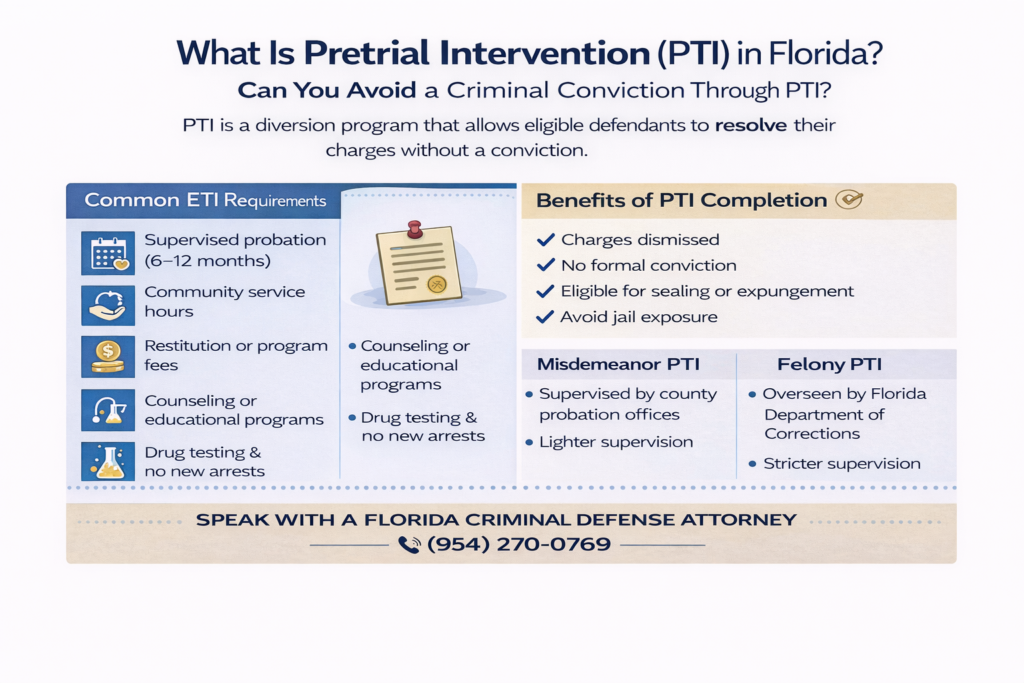
Typical PTI conditions may include:
• Supervised probation (often 6–12 months)
• Community service hours
• Payment of restitution or program fees
• Educational or counseling programs
• Drug testing (when applicable)
• No new arrests
If you successfully complete the program, the State dismisses the charges.
Failure to comply usually returns the case to active prosecution.
This outcome—dismissal after completion—is one of the ways criminal charges can be dropped before trial in Florida.
🔎 Misdemeanor vs. Felony PTI
PTI programs differ depending on charge level.
✔ Misdemeanor PTI
Typically supervised by county probation offices.
Often shorter and less intensive.
✔ Felony PTI
Overseen by the Florida Department of Corrections under Fla. Stat. § 948.08.
May involve stricter reporting requirements and longer supervision.
Felony PTI is more structured and may include additional compliance obligations.
🎯 Benefits of Completing PTI
Successful PTI completion can result in:
• Dismissal of charges
• No formal conviction
• Potential eligibility for sealing or expungement
• Avoidance of jail exposure
• Reduced collateral consequences
Because PTI avoids adjudication, it can significantly protect employment, licensing, and immigration interests.
In cases where PTI is unavailable, attorneys may pursue alternative outcomes such as how adjudication withheld works in Florida and when it’s available.
🚫 When PTI May Not Be Available
PTI is often limited for:
• Violent offenses
• Repeat offenders
• Certain firearm offenses
• Some domestic violence cases
• Drug trafficking charges
Eligibility varies by county and prosecutor.
🛡 Strategic Considerations
PTI is strongest when pursued early. In many cases, the decision to offer PTI is shaped before formal plea negotiations begin, making early advocacy critical.
Effective advocacy may involve:
• Presenting mitigation materials
• Highlighting community ties
• Demonstrating rehabilitation
• Addressing restitution proactively
Because admission is discretionary, preparation matters.
📞 Speak With a Florida Criminal Defense Attorney
If you are facing charges and believe you may qualify for PTI, early legal strategy can significantly affect your options.
Call (954) 270-0769 for a confidential consultation.
❓ Frequently Asked Questions
1. What is Pretrial Intervention (PTI) in Florida?
PTI is a diversion program offered by the State Attorney’s Office that allows eligible defendants to avoid prosecution by completing court-approved conditions like community service, classes, and probation. If completed successfully, the charges are dismissed.
2. Who qualifies for PTI in Florida?
PTI is typically offered to first-time offenders facing non-violent misdemeanor or felony charges. Eligibility is determined by the prosecutor, not the judge, and depends on your criminal history and the nature of the offense.
3. What’s the difference between felony and misdemeanor PTI in Florida?
Felony PTI is supervised by the Florida Department of Corrections and may involve stricter conditions. Misdemeanor PTI is managed locally by the county probation office and is generally less intensive.
4. How long does PTI last in Florida?
Most PTI programs last between six and twelve months, depending on the charge, the jurisdiction, and the conditions imposed by the State Attorney’s Office.
5. What happens after I complete PTI in Florida?
If you complete all the conditions successfully, the State dismisses the charges. You may also be eligible to have your record sealed or expunged, depending on the case.