
Last updated November 2025
Updated for 2025 — How Release Works After an Arrest
If you’ve heard the terms bail and bond used in a Florida criminal case, you’re not alone. Many people use them interchangeably — but they’re not the same thing.
In this guide, a Florida criminal defense lawyer explains how bail and bond actually work, what judges consider when setting bail, and what options you have for release after an arrest.
⚖️ What Is Bail?
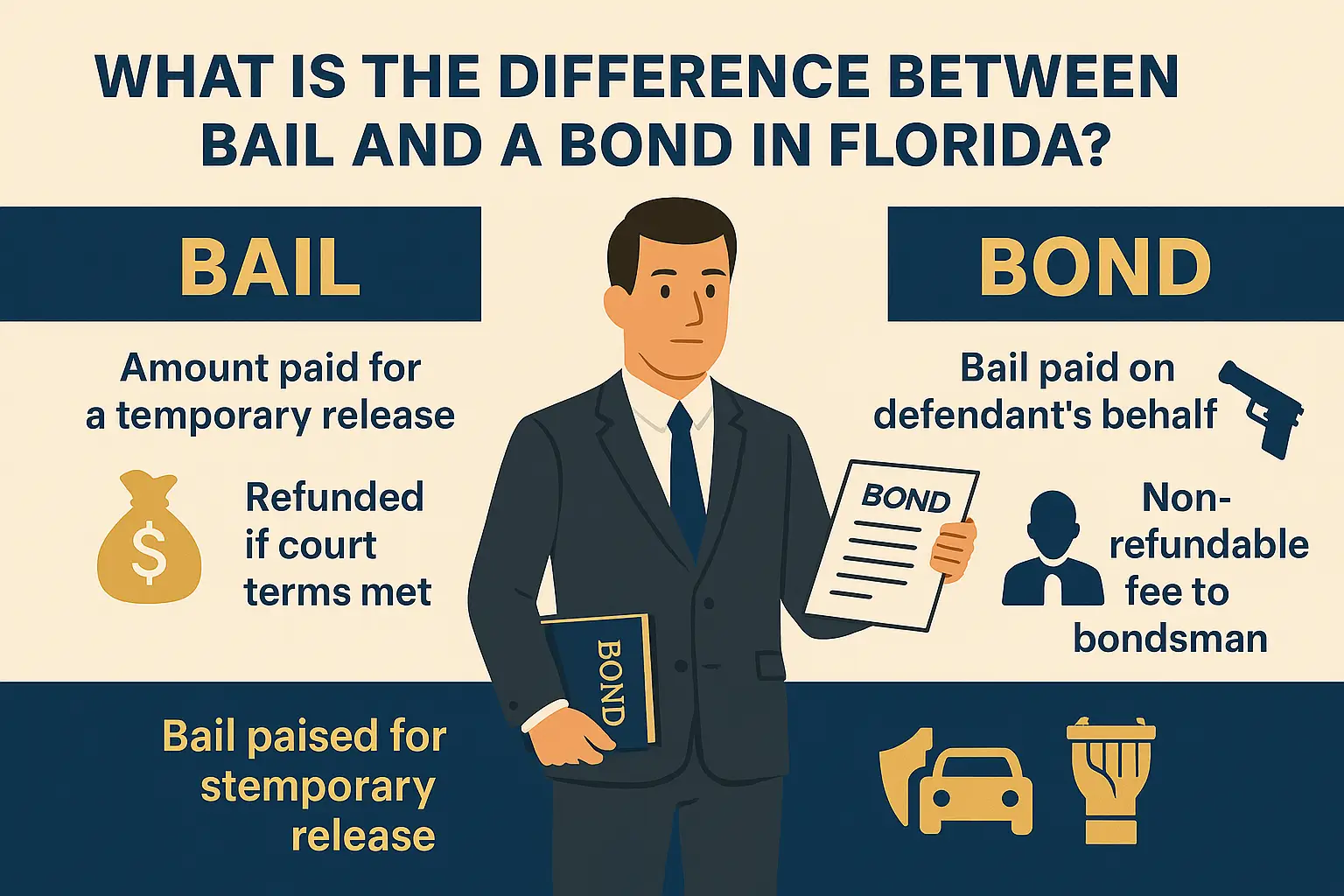
Bail is the dollar amount a judge sets to let you out of jail while your case is pending. It’s a financial promise that you’ll come back to court as required.
If you appear at all court dates, your bail may later be refunded (minus any court costs or restitution). If you fail to appear, you forfeit the entire amount and a warrant is issued for your arrest.
In many cases, an experienced Fort Lauderdale criminal defense attorney can file a motion to reduce your bail or request release on recognizance (ROR) when you present minimal risk to the community.
🧮 How Judges Set Bail in Florida
Florida judges have discretion when determining bail and must consider factors like:
The seriousness of the charge
Prior criminal record and court attendance history
Financial circumstances
Family and employment ties
Whether the defendant poses a flight risk or danger
Having skilled legal representation early can significantly impact these factors and improve your chance of release.
💳 What Is a Bond?
If you can’t pay the full bail, a bond is a third-party guarantee (usually through a bondsman) that posts your bail with the court.
You pay a non-refundable fee (commonly ~10% of the bail).
If you miss court, the bondsman must cover the full amount—and can pursue you or your co-signers.
📂 Common Bond Types in Florida
Cash Bond: You (or a family member) pay the full amount to the clerk.
Surety Bond: A bondsman posts the bail for a fee (often ~10%).
Property Bond: Real estate or other assets pledged as collateral.
Federal Bond: Used in federal cases (separate rules, higher scrutiny).
Immigration Bond: For non-citizens held on immigration matters.
🧷 Bail vs. Bond — Quick Facts
✅ Bail = the amount the court sets
✅ Bond = a method to post that amount (often via bondsman)
✅ Bail can be refunded; bond fees are not
🚫 Missing court = forfeiture + warrant
🔒 Serious/violent charges often mean higher bail and stricter conditions
👮 Practical Tips Right After Arrest
After booking, you’ll appear before a judge for a first appearance or bond hearing.
Your lawyer can argue for a lower bail or request non-monetary release under Florida’s pretrial statutes.
For clients facing DUI or other common offenses, see our Fort Lauderdale DUI lawyer page for specific bail considerations in those cases.
🛡️ How We Help
Our firm represents clients across Broward and South Florida in:
Bail and bond hearings
Motions to reduce bail
Pretrial release negotiations
Warrants and surrender arrangements
We also advise on record-sealing and expungement options after your case concludes — learn more in our Sealing and Expungement in Florida guide.
📞 Call (954) 270-0769 or request a free consultation today.
❓ FAQs: Bail vs. Bond in Florida
Q1. What’s the main difference?
Bail is the amount set by the court. A bond is how you post it (often via a bondsman for a fee).
Q2. Do you get bail money back?
Yes—if you appear for all court dates. The court may apply funds to costs/fines/restitution before refunding any remainder.
Q3. How much does a bond cost?
Bondsmen typically charge about 10% of the total bail as a non-refundable premium; collateral may be required.
Q4. What happens if I miss court?
The judge may revoke release, forfeit the bail/bond, and issue a warrant. A bondsman can also pursue you for the full amount.
Q5: Can a defense lawyer help lower my bail amount?
Often, yes. Your attorney can seek a bond reduction hearing and present community ties, employment, and other factors to reduce the amount or modify conditions.