
Last updated October 2025
If you or someone you know has just been arrested in Broward County, the first 48 hours are critical.
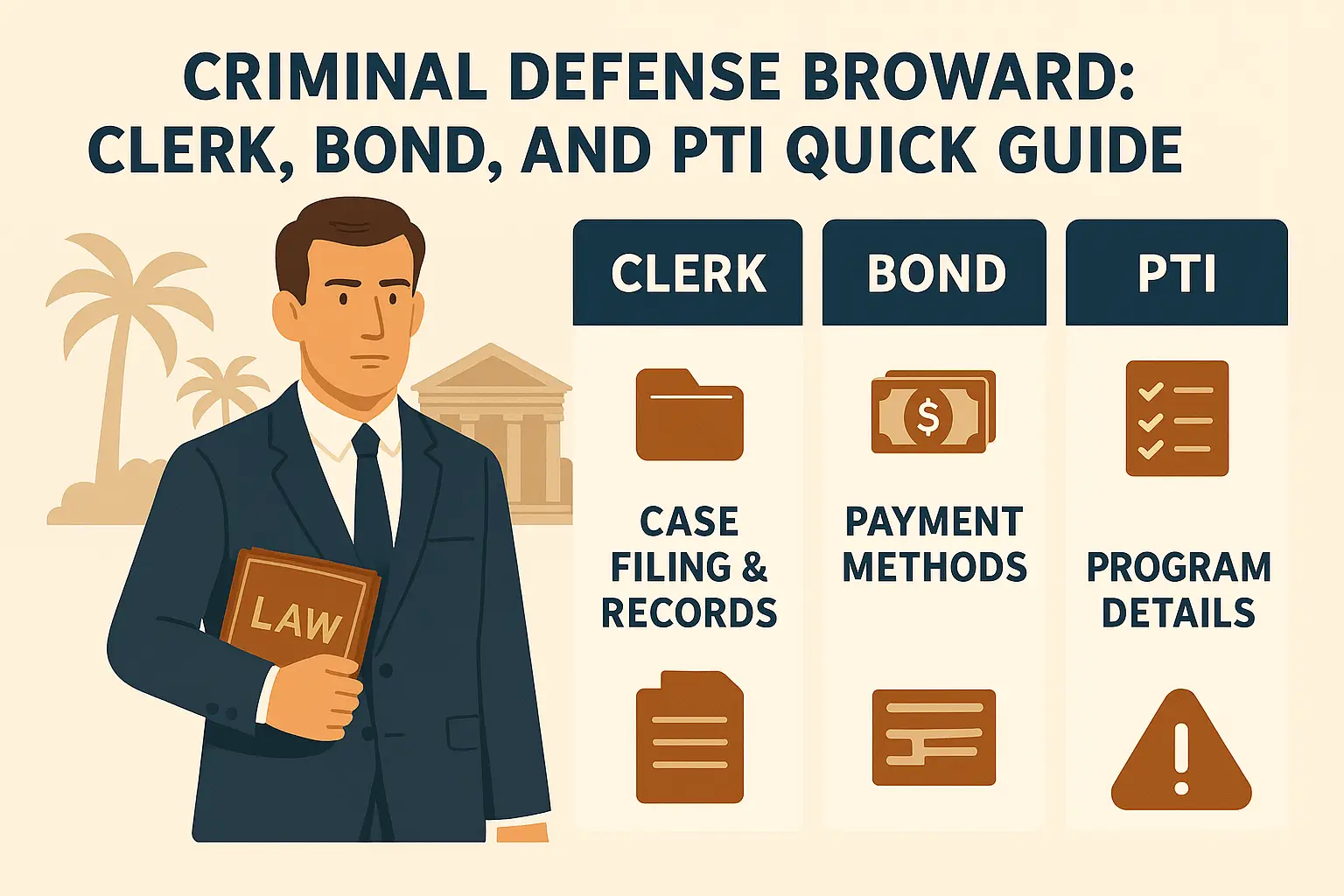
This quick guide from a Broward criminal defense attorney explains exactly what happens next — from setting bond to contacting the Clerk of Courts, and how pretrial programs can save your record.
🏛️ Step 1: Clerk of Courts and Case Filing
After arrest, your case is assigned a number through the Broward County Clerk of Courts.
The Clerk manages court dates, filings, and public records — but they don’t decide guilt or innocence.
Your Fort Lauderdale criminal defense lawyer monitors filings daily to ensure the State Attorney’s Office formally charges (or “files”) the case correctly.
In some instances, the State declines to file (“No-Info”), ending the case before arraignment.
💰 Step 2: Bond and Release Options
Most people arrested in Broward are taken to the Main Jail in downtown Fort Lauderdale.
At first appearance (usually within 24 hours), the judge sets bond based on:
Charge severity and prior record;
Risk of flight;
Public safety considerations.
An experienced Broward criminal defense attorney can argue for a ROR (Release on Recognizance) or reduced bond.
If bond is denied, your lawyer can file a motion for bond review later in the week.
For domestic-related arrests, judges often impose no-contact orders, which your domestic violence attorney in Fort Lauderdale can later move to modify.
🧭 Step 3: PTI – Pretrial Intervention Programs
Broward County offers Pretrial Intervention (PTI) programs for first-time offenders and low-level felonies.
These programs allow you to complete counseling, treatment, or community service in exchange for dismissal of charges.
A drug lawyer in Fort Lauderdale can often secure PTI entry in possession or paraphernalia cases, while theft and fraud charges may qualify for restitution-based diversion.
Participation is voluntary but must be approved by the State Attorney and your attorney.
Successful completion results in no conviction and eligibility to seal or expunge your record.
🧠 Step 4: Stay Proactive — Not Reactive
The biggest mistake after a Broward arrest is waiting for court notices.
Your attorney should:
Verify Clerk filings daily;
File an appearance of counsel immediately;
Demand discovery from the State;
Identify suppression or dismissal opportunities early.
Firms listed among Broward’s best criminal defense attorneys succeed because they act fast — often before the State formally files.
❓ Broward County Criminal Defense FAQs
1) Where do Broward criminal cases get filed?
All cases go through the Broward County Clerk of Courts in Fort Lauderdale, which assigns judges and hearing dates.
2) How soon after arrest will I see a judge?
Usually within 24 hours during first appearance court, where bond and release are addressed.
3) What is Pretrial Intervention (PTI)?
PTI is a diversion program allowing eligible defendants to complete conditions for dismissal instead of conviction.
4) Can I modify a no-contact order?
Yes. Your attorney can file a motion once the alleged victim consents and the judge approves modification.
5) What happens if charges are dismissed?
You can petition to seal or expunge the arrest record to remove it from public databases.
📣 Arrested in Broward County? Here’s What to Do Next.
Time is everything. Early action can mean the difference between dismissal and prosecution.
📞 Call Michael White, P.A. at (954) 270-0769 or request a free consultation today.