
Last updated November 2025
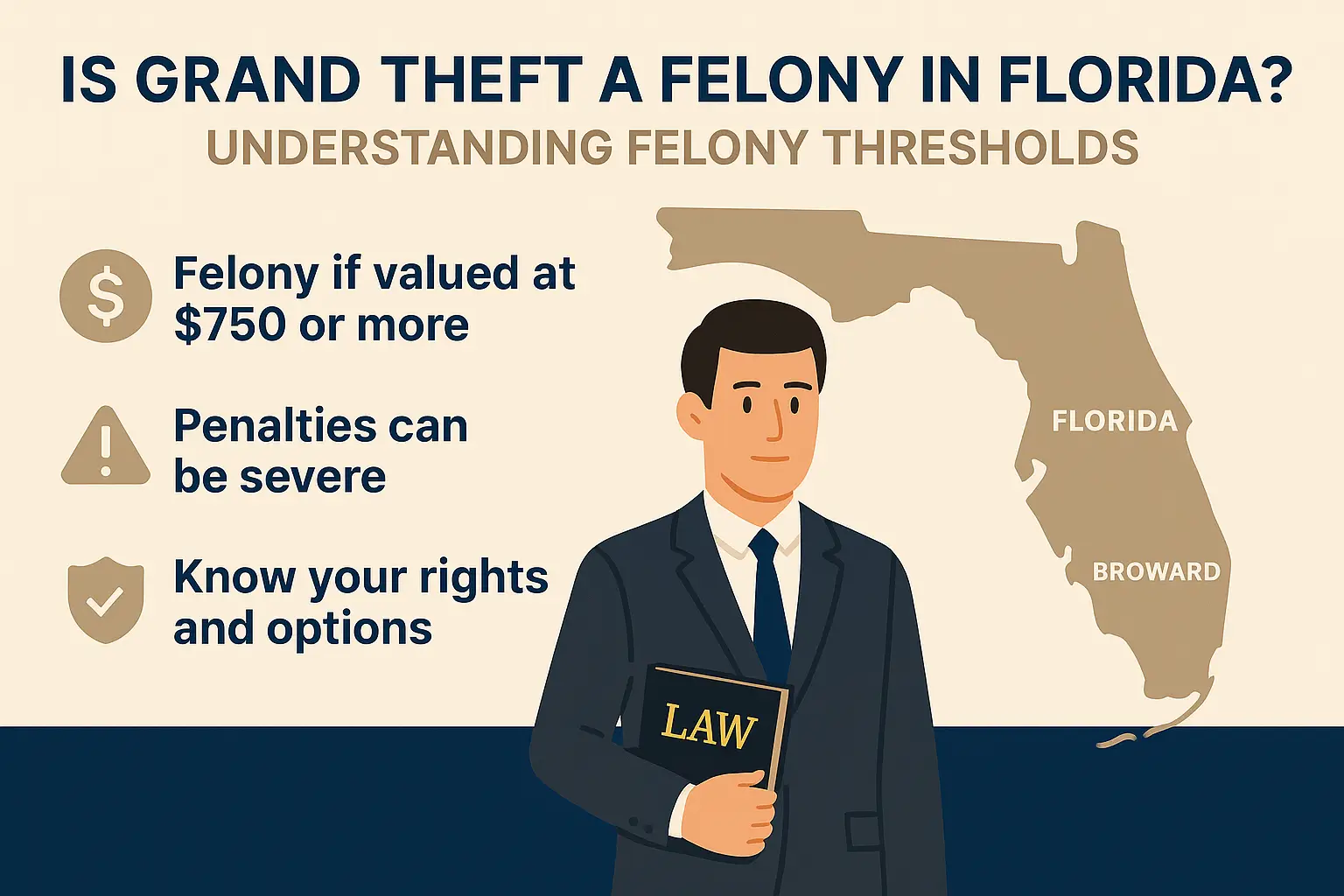
Florida’s theft laws changed in 2019, raising the felony threshold from $300 to $750 — but prosecutors still overcharge many cases. Under Florida Statute §812.014, “grand theft” occurs when someone unlawfully takes property valued above that amount.
The result? What was once a misdemeanor can now be a third-degree felony, punishable by years in prison and permanent record damage. Understanding how prosecutors calculate “value” is the key to defending your case.
⚖️ Florida’s Felony Theft Tiers
The law classifies grand theft by property value:
$750–$20,000: Third-degree felony — up to 5 years in prison and $5,000 fine.
$20,000–$100,000: Second-degree felony — up to 15 years in prison.
Over $100,000: First-degree felony — up to 30 years and $10,000 fine.
Items like firearms, motor vehicles, and law enforcement equipment can trigger automatic felony charges regardless of value. Learn how those enhancements apply in Florida Burglary Law: What Counts as Burglary and What Doesn’t.
💼 How Prosecutors Prove Value
Value is the most contested element of any grand theft case. The State often relies on retail estimates or replacement cost instead of fair market value. A skilled Fort Lauderdale criminal defense lawyer can challenge inflated valuations and seek reduction to petit theft or dismissal.
Similar valuation issues are discussed in Grand Theft Florida $750+: What Counts and What Doesn’t.
🧠 Defenses That Work
Defenses depend on whether the State can prove both intent and ownership:
Lack of intent: You believed the property was yours or borrowed with permission.
Value dispute: The property was worth less than $750.
Mistaken identity: Poor surveillance or unreliable witnesses.
Restitution agreements: Paying back the alleged loss can lead to case dismissal.
Learn how these tactics work in other theft cases through Theft Charges in Florida: How to Protect Your Record.
🔗 Collateral Consequences
A felony theft conviction can affect voting rights, employment, and professional licenses. If your case ends in dismissal, review Fort Lauderdale Record Sealing & Expungement to keep your record clean.
For official statute language and updates, see the Florida Senate Theft Statute page.
Florida Grand Theft FAQs: Thresholds, Penalties & Defenses
1. Is all theft over $750 a felony in Florida?
Yes, but only if prosecutors can prove actual value above that amount.
2. Can a felony theft be reduced to a misdemeanor?
Yes. Challenging the property’s value or intent often results in charge reduction.
3. Will I go to jail for grand theft?
Not necessarily. Diversion, restitution, and plea negotiation can prevent incarceration.
4. How long does a theft case take in Broward County?
Most theft cases resolve within 3–6 months through pre-trial motions and discovery.
5. Can I expunge a grand theft charge?
Yes — if the case is dismissed, dropped, or resolved without a conviction.
💬 Contact a Florida Grand Theft Defense Attorney Today
Accused of grand theft in Florida? Don’t face it alone.
Contact Michael White, P.A. today for a free consultation with a former prosecutor who challenges inflated valuations and protects your future.