
Last updated November 2025
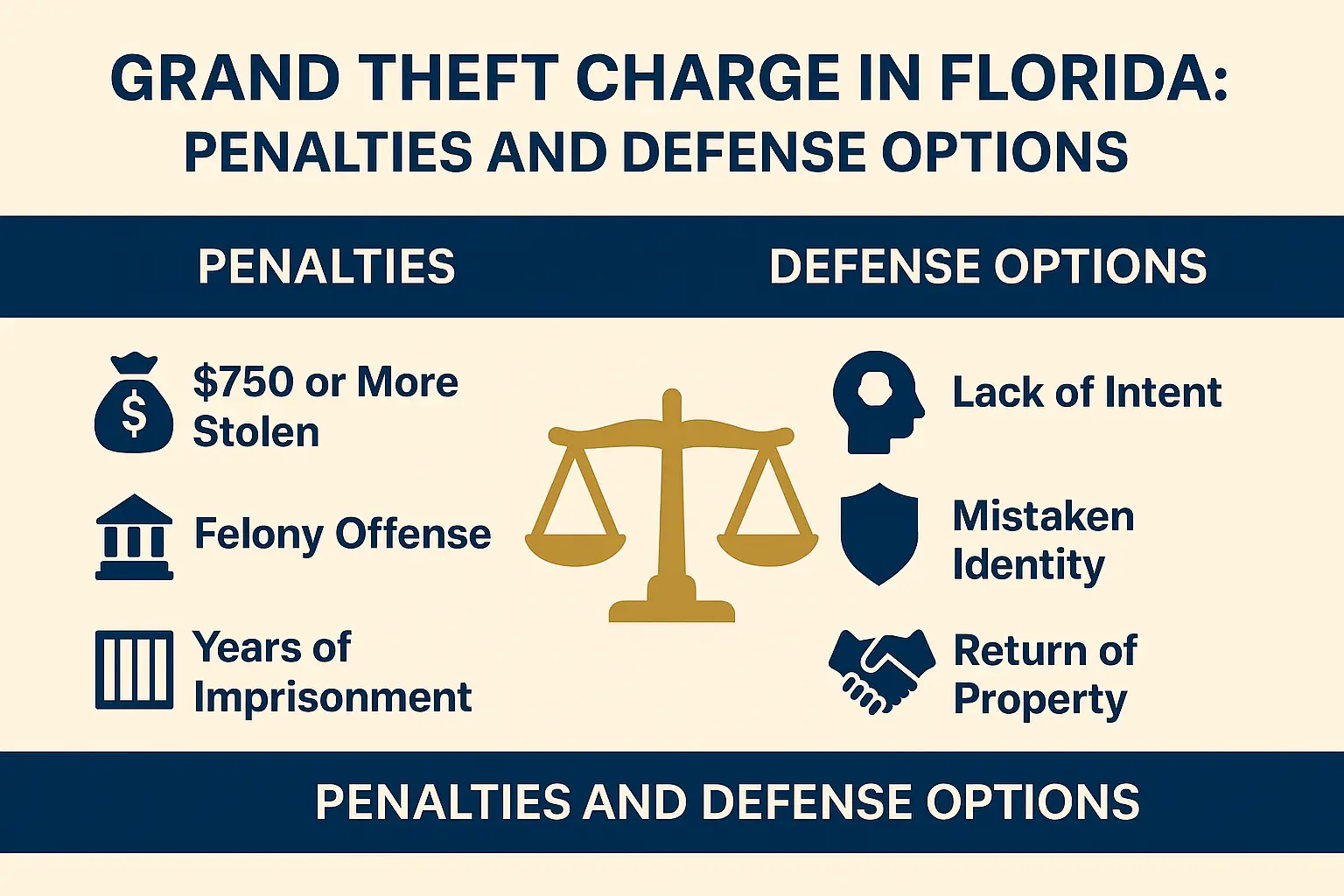
A grand theft charge in Florida is more than a property crime — it’s a felony that can follow you for life. Under Florida Statute §812.014, theft becomes grand theft when the value of property exceeds $750 or falls into special protected categories, such as firearms or motor vehicles.
Because Florida prosecutors often overcharge theft cases, the best defense starts by questioning value, intent, and ownership.
⚖️ Understanding Grand Theft Penalties
Florida divides grand theft into degrees based on property value:
Third-degree felony: $750–$20,000 — up to 5 years in prison and $5,000 fine.
Second-degree felony: $20,000–$100,000 — up to 15 years.
First-degree felony: Over $100,000 or certain protected property — up to 30 years.
These charges can also lead to restitution orders and permanent record damage. Learn how the threshold changed in Is Grand Theft a Felony in Florida? Understanding Felony Thresholds.
💼 How Prosecutors Prove Theft
To secure a conviction, the State must prove:
1️⃣ You knowingly took or used another’s property.
2️⃣ You intended to deprive the owner of it temporarily or permanently.
3️⃣ The property’s value met the felony threshold.
However, proving value is rarely straightforward. Retail price, replacement cost, and market value often differ — a fact many juries misunderstand. That’s where your lawyer can make the difference.
See how valuation disputes shape outcomes in Grand Theft Florida $750+: What Counts and What Doesn’t.
🧠 Effective Defense Strategies
Michael White, P.A. uses years of prosecutorial experience to expose weak evidence in grand theft cases. Common defenses include:
Lack of intent: You believed the item was yours or had permission to take it.
Insufficient value proof: The property’s market value falls below $750.
Mistaken identity: Surveillance or witness error.
Restitution and negotiation: Paying restitution can lead to reduced or dismissed charges.
When intent is unclear, prosecutors may agree to reduce a felony to petit theft or trespass.
🔗 Related Property Crime Issues
Grand theft charges often overlap with burglary or fraud counts. Learn about combined cases in Florida Burglary Law: What Counts as Burglary and What Doesn’t and about record protection in Fort Lauderdale Record Sealing & Expungement.
Florida Grand Theft FAQs: Penalties, Reductions & Expungement
1. What is the penalty for grand theft in Florida?
Anywhere from 5 to 30 years in prison, depending on the degree and circumstances.
2. Can grand theft charges be reduced?
Yes. Value disputes, lack of intent, or restitution can result in charge reductions.
3. Can I go to jail for a first-time grand theft?
Not always. First offenders often qualify for diversion or probation instead of prison.
4. Does paying back the victim help?
Yes. Restitution often helps secure reduced penalties or dismissal.
5. Can I expunge a grand theft charge?
Yes — if your case is dropped, dismissed, or resolved without a conviction.
💬 Contact a Florida Grand Theft Defense Attorney Today
If you’re charged with grand theft in Florida, every detail counts — from valuation to witness testimony.
Contact Michael White, P.A. today for a free consultation with a former prosecutor who defends property crime cases across Broward and South Florida.