
Last updated November 2025
A “simple assault” charge in Florida might sound minor — but it carries serious consequences, especially if misunderstood. Under Florida Statute §784.011, assault means an intentional, unlawful threat by word or act to do violence to another person, with an apparent ability to carry it out, and doing some act which creates a well-founded fear.
⚖️ How Florida Defines Simple Assault
In plain language, assault doesn’t require physical contact — only the threat of violence.
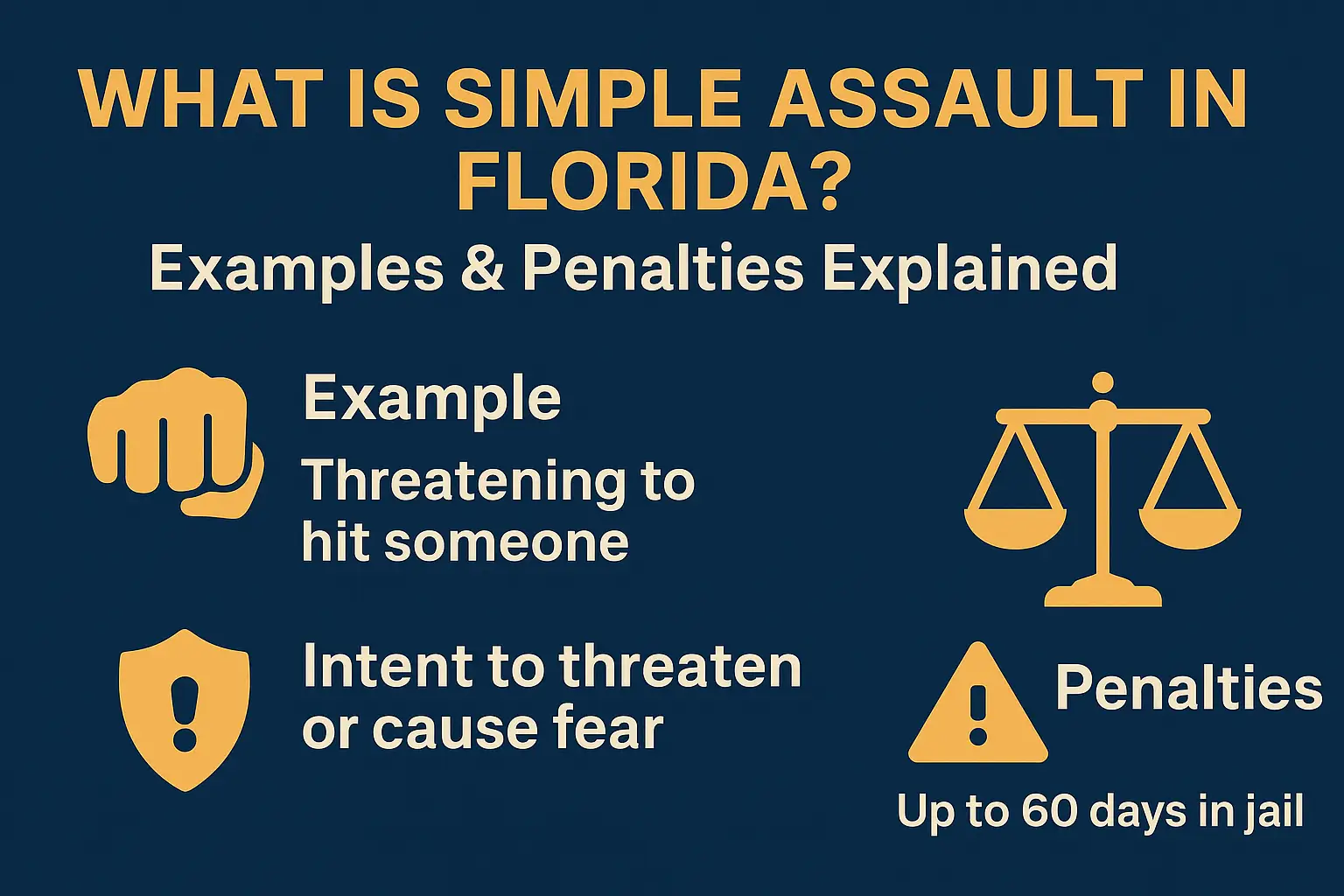
Example: Raising a fist and saying, “I’ll hit you,” can be charged as assault if the other person reasonably fears harm.
No contact required: That’s the key distinction between assault and battery, defined in §784.03, which involves actual touching or striking.
For a deeper dive into both charges, see Florida Assault Definition: Legal Meaning & Common Defenses and Assault in Florida: How the Law Defines and Punishes It.
🚨 Penalties for Simple Assault
Simple assault is classified as a second-degree misdemeanor, punishable by:
Up to 60 days in jail,
6 months’ probation, and
Up to $500 in fines.
However, if a weapon is displayed or the victim falls into a protected category (law enforcement, teacher, public employee), charges escalate to aggravated assault — a felony. For context, see What Is Aggravated Assault in Florida? Laws & Defenses.
🧠 Common Defenses to Assault Charges
A skilled Fort Lauderdale criminal defense attorney will evaluate evidence, witness credibility, and intent. Common defenses include:
Lack of intent (e.g., words spoken in anger, not as a threat)
Conditional threat (“If you come closer, I’ll hit you” isn’t always assault)
Self-defense under Florida’s Stand Your Ground law
Mistaken identity or unreliable eyewitness accounts
Many cases resolve through pre-trial diversion or dismissal when evidence shows no actual intent or ability to carry out harm.
🔗 Related Charges & Record Protection
Assault charges often appear alongside domestic violence, resisting arrest, or disorderly conduct. For example, read how overlapping offenses are handled in Domestic Violence Attorney Fort Lauderdale: Protecting Your Rights & Future and Resisting Arrest Defense Attorney Fort Lauderdale.
After resolution, eligible clients may be able to seal or expunge the record — see Fort Lauderdale Record Sealing & Expungement: Start Fresh After a Charge for details.
❓ FAQs
1. Is simple assault a felony in Florida?
No, it’s a misdemeanor unless it involves a weapon or protected victim, which makes it aggravated assault.
2. Do I need a lawyer for a misdemeanor assault?
Yes. Even minor convictions affect background checks and future cases.
3. What if no one was injured?
Physical injury isn’t required — only a credible threat that caused fear.
4. Can a simple assault charge be dropped?
Yes. Prosecutors may drop cases if there’s no credible witness or evidence of fear.
5. Will an assault stay on my record?
Yes, unless sealed or expunged after dismissal or completion of diversion.
💬 Contact a Fort Lauderdale Assault Attorney Today
If you’ve been charged with simple assault in Broward County, don’t face it alone.
Contact Michael White, P.A. for a free consultation with a former prosecutor who knows Florida’s assault laws inside and out.