
Last updated January 2026
Driving without a valid driver’s license in Florida is not just a traffic ticket — it is a criminal offense that can result in fines, probation, and a permanent criminal record.
If you’ve been charged with No Valid Driver’s License (NVDL) under Florida Statute § 322.03 or § 322.54, acting quickly can make a real difference. In many cases, an experienced traffic defense attorney can help reduce the charge, avoid a conviction, or even get the case dismissed.
⚖️ What Does “No Valid Driver’s License” Mean in Florida?
You may be charged with No Valid Driver’s License if you operate a motor vehicle on a public roadway and:
You have never been issued a driver’s license by any U.S. state, or
You do not possess a driver’s license recognized by the State of Florida
This offense is based on the absence of a valid license, not the status of a suspended or revoked license.
Important distinction:
This charge does not apply if your license was suspended, revoked, or expired. Those situations are charged separately as Driving With a Suspended License (DWLS) under Florida law.
👉 See: Driving With a Suspended License in Florida
🛑 Penalties for Driving Without a Valid License in Florida
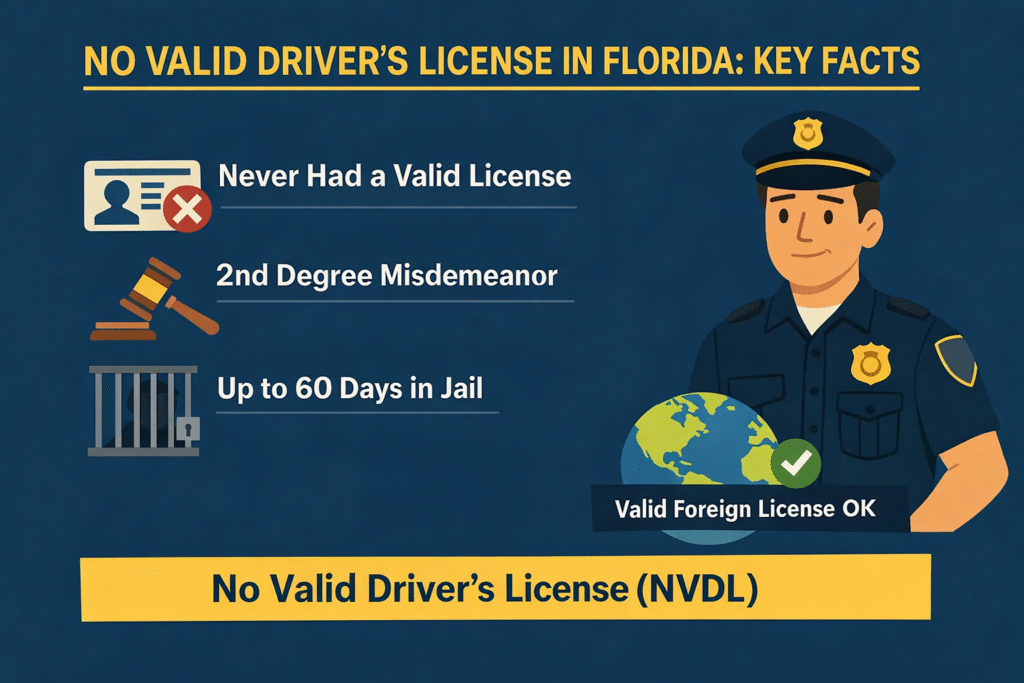
No Valid Driver’s License is a second-degree misdemeanor, punishable by:
Up to 60 days in jail
Up to 6 months of probation
A $500 fine
A permanent criminal record, even if no jail time is imposed
While many first-time offenders avoid incarceration, a conviction can still carry serious long-term consequences — especially for employment, professional licensing, immigration, and background checks.
🌍 Can Foreign Nationals Drive in Florida?
Yes — Florida law recognizes valid foreign driver’s licenses for non-resident visitors.
If you are a tourist or foreign national:
You may legally drive in Florida with a valid license from your home country
You should present that license during the traffic stop
Politely ask the officer to note the license presentation on the citation
In many cases, proof of a valid foreign license can be a strong defense to an NVDL charge.
🛡️ Legal Defenses to No Valid Driver’s License Charges
Every case is different, but common defense strategies include:
Challenging whether the traffic stop was lawful
Showing the driver possessed a valid foreign license
Demonstrating the defendant was not operating the vehicle
Negotiating for a dismissal or withhold of adjudication
Correcting charging errors where the offense was misclassified
Because NVDL cases are often overcharged or misapplied, early legal review is critical.
🚦 No Valid License as a Criminal Traffic Offense
Driving without a valid license is one of several criminal traffic offenses prosecuted in Florida courts. While it may sound minor, a conviction can follow you long after the case is over.
👨⚖️ Speak With a Fort Lauderdale Traffic Defense Lawyer
If you’ve been charged with No Valid Driver’s License in Fort Lauderdale or anywhere in South Florida, do not assume it’s “just a ticket.”
Attorney Michael White is a former prosecutor who defends clients facing traffic crimes across Broward County and South Florida — including tourists, immigrants, and first-time offenders.
📞 Call (954) 270-0769 or schedule your free consultation today.
❓ No Valid Driver’s License – Frequently Asked Questions
1. Is driving without a valid license a crime in Florida?
Yes. It is a second-degree misdemeanor punishable by jail, probation, and fines.
2. What’s the difference between No Valid License and DWLS?
If you never had a valid license, you may be charged with No Valid Driver’s License. If you had a license that was suspended or revoked, you are charged separately with DWLS.
3. Can I drive in Florida with a foreign driver’s license?
Yes. Non-residents may legally drive with a valid license from their home country.
4. Will an NVDL conviction stay on my record?
Yes. A conviction creates a permanent criminal record, though dismissal or a withhold of adjudication may be possible.
5. Can a lawyer help get this charge dismissed?
Often, yes. A lawyer can challenge the stop, verify license validity, and negotiate for dismissal or reduced consequences.