
Last updated January 2026
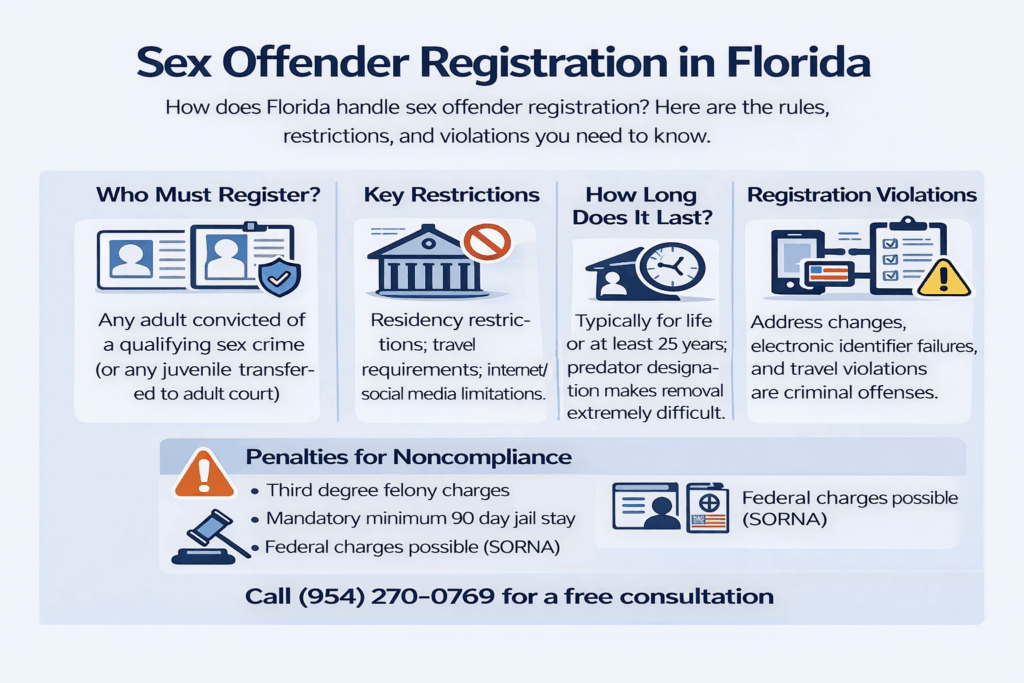
Sex offender registration in Florida carries some of the most severe and lasting consequences in the criminal justice system. For many people, the registration requirement is more damaging than jail or probation itself — affecting where you can live, work, travel, and even how you use the internet.
Registration is mandatory for certain sex-crime convictions, and violations are aggressively prosecuted — even when the alleged noncompliance is technical or unintentional.
If you are facing registration requirements, accused of a registration violation, or under investigation for a qualifying offense, it is critical to understand how Florida’s registration laws work — and how these cases are defended.
🔍 Who Is Required to Register as a Sex Offender in Florida?
Florida law requires registration for individuals convicted of certain qualifying sex offenses under § 943.0435, as well as some federal and out-of-state convictions.
Registration may be required after convictions involving:
Sexual battery
Lewd or lascivious offenses
Internet sex crimes
Sexting-related offenses involving minors
Certain federal sex offenses
👉 For an overview of qualifying offenses, see our guide to sex crimes in Florida.
⚖️ Sex Offender vs. Sexual Predator: What’s the Difference?
Florida law distinguishes between sex offenders and sexual predators.
🔸 Sex Offender
A person convicted of a qualifying offense who must comply with Florida’s registration and reporting requirements.
🔸 Sexual Predator
A designation imposed by the court for the most serious offenses or repeat conduct.
This classification carries additional restrictions, enhanced monitoring, and increased public notification.
The classification significantly affects:
Length of registration
Residency restrictions
Supervision conditions
Community notification requirements
🗺️ Registration Obligations & Reporting Requirements
Once registration is required, compliance is strict.
Common obligations include:
Initial registration within required timeframes
Reporting address changes, even temporary ones
Reporting employment and school information
Registering vehicles and identifiers
Reporting travel plans
Registering internet identifiers and online accounts
Even minor deviations can lead to new felony charges.
🏠 Residency, Employment & Internet Restrictions
Registered individuals may face:
Prohibitions on living near schools, parks, or daycare facilities
Employment restrictions in certain industries
Internet and social-media limitations
Enhanced monitoring during probation or supervision
Violations can occur even when the underlying conduct is otherwise lawful.
⛓️ Penalties for Failure to Register or Registration Violations
Failure to comply with registration requirements is itself a separate felony offense.
Potential penalties include:
New felony charges
Prison or jail exposure
Extended probation
Additional registration consequences
Federal involvement under SORNA in some cases
👉 Many violations arise from misunderstandings or technical errors — not intent to evade registration.
🛡️ Defending Sex Offender Registration Violations
Effective defenses depend on the facts, but often include:
🔹 No Intentional Violation
The State must prove knowing and willful noncompliance — not mistake, confusion, or miscommunication.
🔹 Improper Classification or Notice
Errors in classification or failure to provide clear notice of obligations can invalidate charges.
🔹 Technical or Administrative Errors
Cases often involve:
Incorrect databases
Outdated information
Agency reporting failures
🔹 Constitutional Challenges
Overbroad restrictions or unlawful enforcement may violate constitutional protections.
⚠️ What to Do If You’re Facing Registration Issues
If you are:
Required to register
Accused of a registration violation
Under investigation for a qualifying sex offense
You should:
Avoid speaking with law enforcement without counsel
Document compliance efforts
Preserve records and communications
Consult a sex-crimes defense attorney immediately
Early intervention can prevent escalation and additional charges.
📞 Sex Offender Registration Defense in Fort Lauderdale
At Michael White, P.A., we defend individuals facing registration requirements and alleged violations throughout Fort Lauderdale and South Florida.
We understand:
How registration laws are enforced
Where mistakes are made
How to challenge improper charges
📞 Call (954) 270-0769 or request a confidential consultation today.