
Last updated November 2025
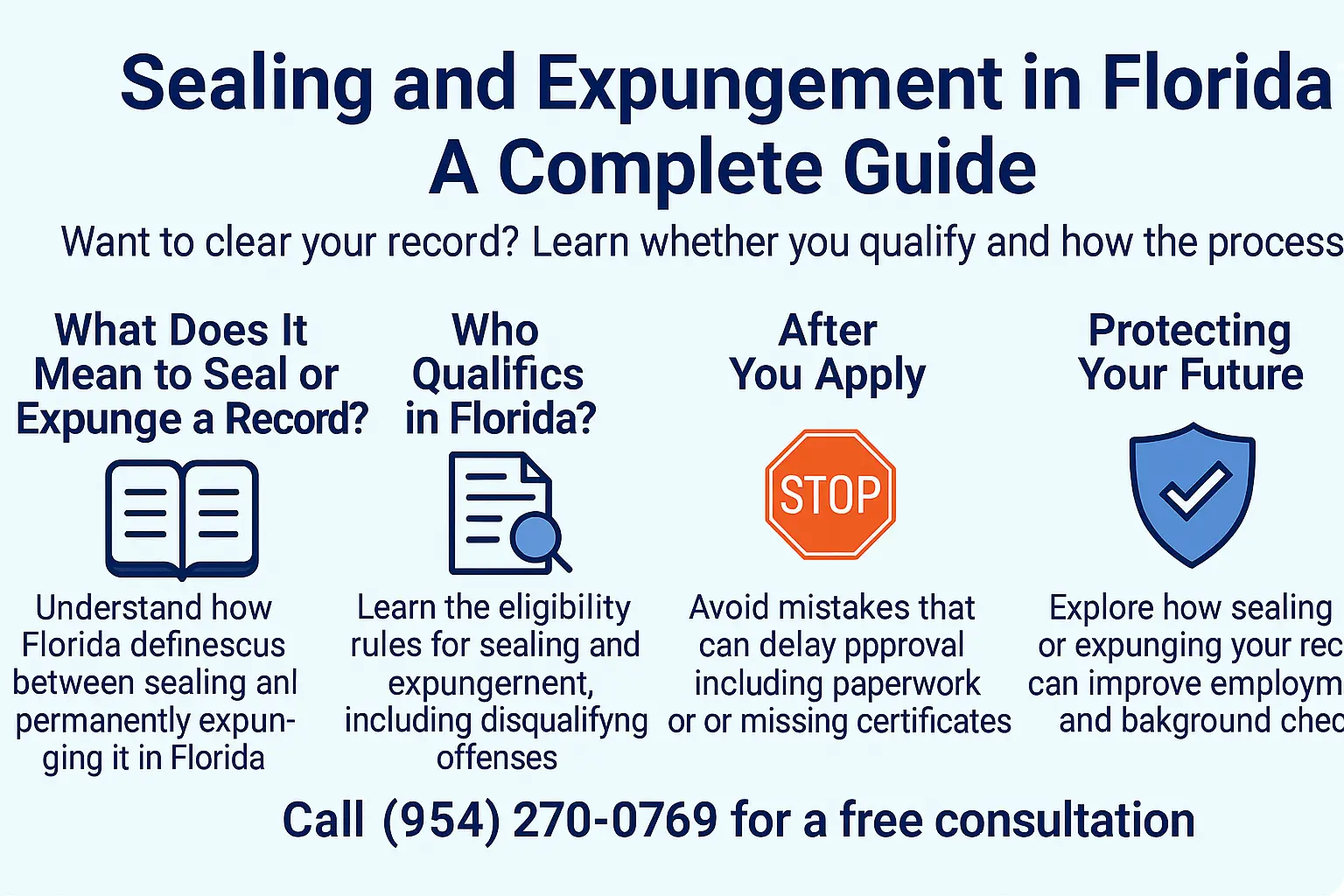
If you’re looking to clear your criminal record in Fort Lauderdale or anywhere in South Florida, sealing or expungement may be an option. These legal tools can help protect your privacy, open doors to employment and housing, and give you a fresh start.
This guide explains:
- The difference between sealing and expungement
- Who qualifies for each
- What the process looks like
- How these options can change your life
🔒 What’s the Difference Between Sealing and Expungement?
Many people use the terms interchangeably, but under Florida Statute § 943.045, sealing and expungement are distinct legal processes.
| Feature | Sealing | Expungement |
|---|---|---|
| Record Status | Made confidential | Destroyed (except by FDLE) |
| Who Can See It | Limited agencies (e.g., DCF, law enforcement) | No one (unless court-ordered) |
| Can You Deny It? | Yes, with some exceptions | Yes, with similar exceptions |
| Eligibility | Withhold of adjudication | Charges dropped, dismissed, or acquitted |
| Future Expungement | Eligible after 10 years | Already the final step |
✅ Who Qualifies for Sealing or Expungement?
You may be eligible if:
- Your case resulted in a withhold of adjudication (sealing)
- Your charges were dropped, dismissed, nolle prossed, or you were found not guilty (expungement)
- You have no prior criminal convictions
- You have no other record expungements or sealings in Florida
- You have no pending charges
Some charges are never eligible (e.g., domestic violence, certain sex offenses). Your attorney can quickly determine your eligibility.
👉 Related: Sealing & Expungement: Can domestic violence charges be expunged?
👉 Related: Fort Lauderdale Criminal Defense Attorney
📁 How the Sealing or Expungement Process Works
The process typically takes 5–7 months and includes:
1. Obtain Certificate of Eligibility from FDLE
This must be submitted with fingerprints and required documentation.
2. File Petition to Seal/Expunge in Court
Your attorney files a petition including the FDLE certificate and a sworn affidavit.
3. State Attorney Response
Prosecutors may contest or approve the petition.
4. Court Hearing (If Required)
Some judges grant petitions without hearings; others require short hearings.
5. Court Issues the Order
Once granted, the Clerk seals or expunges the record.
🌟 Benefits of Sealing or Expunging Your Record
Even a single arrest can impact your future. Clearing your record can:
🏢 Improve Employment Opportunities
Most employers run background checks. Sealed or expunged records won’t appear.
🏠 Expand Housing Access
Landlords routinely deny applicants with criminal histories.
💬 Restore Your Reputation
No more worrying about mugshots or outdated arrest records online.
✨ Legally Deny the Incident
You may lawfully deny the arrest or charge in most situations.
🧘 Gain Peace of Mind
Clearing your record provides closure and a clean slate.
⚠️ Who Can Still See a Sealed or Expunged Record?
While sealing and expungement provide major privacy protections, some entities still have limited access:
Law enforcement
Florida Department of Children and Families (DCF)
Department of Juvenile Justice
Licensing boards (certain professions)
Applications for Florida Bar admission
When charged with a new crime
Your attorney will explain exactly when disclosure is required.
💬 Frequently Asked Questions
Q: Who is eligible to expunge a criminal record in Florida?
You may qualify if your charges were dropped, dismissed, or you were found not guilty, and you have no prior convictions, sealings, or expungements. An attorney can review your case for eligibility under Fla. Stat. § 943.045.
Q: Can I seal a record if I received a withhold of adjudication?
Yes. Sealing is typically available if you received a withhold of adjudication and meet other requirements, such as no prior convictions or pending charges.
Q: Does a sealed or expunged record appear on a background check?
In most cases, no. Sealed records are hidden from public view and expunged records are destroyed, though limited agencies like law enforcement or licensing boards may still access them.
Q: Can I legally deny the charge after sealing or expungement?
Yes, in most scenarios you may lawfully deny the incident. Exceptions apply when seeking law-enforcement employment, certain professional licenses, or admission to the Florida Bar.
Q: Do I need a lawyer to seal or expunge my record in Florida?
While self-filing is possible, most people use an attorney to avoid delays or mistakes. An experienced Fort Lauderdale expungement lawyer can help streamline the process and improve your chances of success.
📞 Ready to Clear Your Record?
If you’re ready to move forward with sealing or expunging your record, we’re here to help. At Michael White, P.A., we’ve handled hundreds of record-clearing cases across Fort Lauderdale and South Florida.
📲 Call (954) 270-0769 or schedule your free consultation online today.