
Last updated November 2025
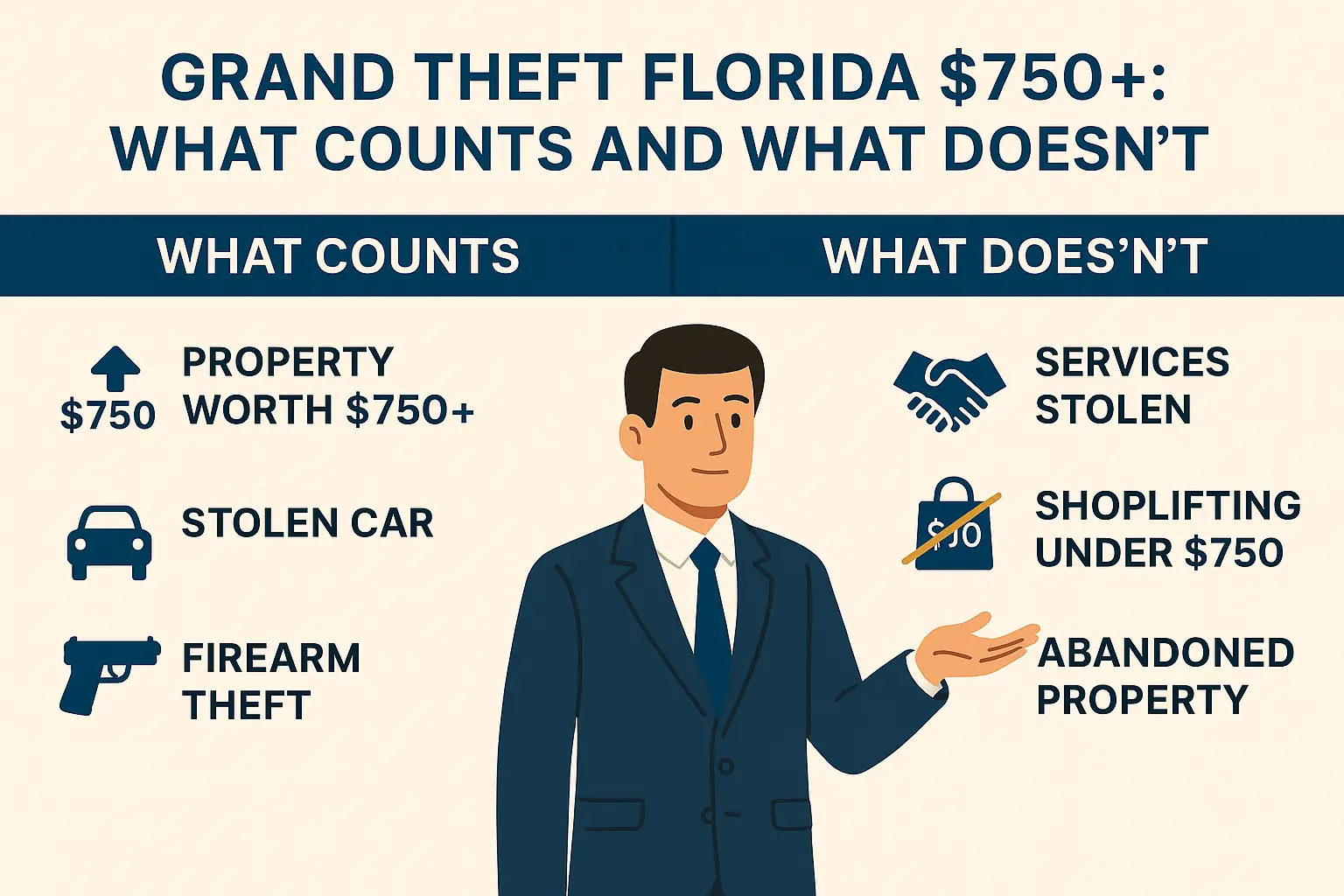
In Florida, the line between misdemeanor and felony theft can come down to a few dollars. Grand theft begins at $750 — meaning even a minor property dispute can carry felony-level consequences. Understanding how the statute defines value and intent is key to avoiding lifelong damage to your record.
⚖️ Florida’s Grand Theft Law
Under Florida Statute §812.014, theft becomes “grand” when the property is valued at $750 or more. The law divides grand theft into three degrees based on value:
Third-degree felony: $750–$20,000 (up to 5 years in prison)
Second-degree felony: $20,000–$100,000 (up to 15 years)
First-degree felony: Over $100,000 (up to 30 years)
Even a third-degree felony conviction can block employment and licensing opportunities.
🧾 How Value Is Calculated
Prosecutors often overstate item values to bump charges into felony territory. Market price, not replacement or sentimental value, controls. An experienced Broward theft attorney can challenge the State’s valuation method, request expert appraisals, and move to reduce charges.
Learn how value and ownership affect similar cases in Grand Theft Charge in Florida: Penalties and Defense Options.
🧠 Defenses That Work
The State must prove:
1️⃣ The property belonged to someone else,
2️⃣ You knowingly took or used it, and
3️⃣ You intended to deprive the owner of it.
Effective defenses include:
Mistaken ownership or borrowing (no intent to steal);
Disputed valuation (worth under $750 → misdemeanor petit theft);
Lack of evidence (no witness or clear video);
Restitution and diversion, especially for first-time offenders.
For broader theft defenses, see GrandTheft Charges in Florida: How Serious is It?
🔗 When Theft Overlaps with Other Crimes
Grand theft can accompany fraud, burglary, or dealing in stolen property. See how intent and location matter in Burglary with Assault or Battery in Florida: What It Means & How to Defend It.
If your case is dismissed or reduced, explore Fort Lauderdale Record Sealing & Expungement to restore your reputation.
Florida Grand Theft FAQs: Charges, Value & Defenses
1. What’s considered grand theft in Florida?
Any property valued at $750 or more, taken with intent to deprive the owner.
2. Can a grand theft charge be reduced?
Yes. If value is unproven or intent unclear, it can drop to petit theft or be dismissed.
3. Does repaying the victim help my case?
It can. Restitution and cooperation often lead to diversion or dismissal.
4. What if I didn’t know the property was stolen?
Lack of knowledge can defeat intent, a core element of theft.
5. Can grand theft be expunged?
Only if the case is dismissed, dropped, or resolved without conviction.
💬 Contact a Florida Grand Theft Defense Attorney Today
Facing a grand theft charge in Florida doesn’t mean your life is over.
Contact Michael White, P.A. for a free consultation with a former prosecutor who knows how to challenge valuation, intent, and evidence in Broward County courts.