
Last updated November 2025
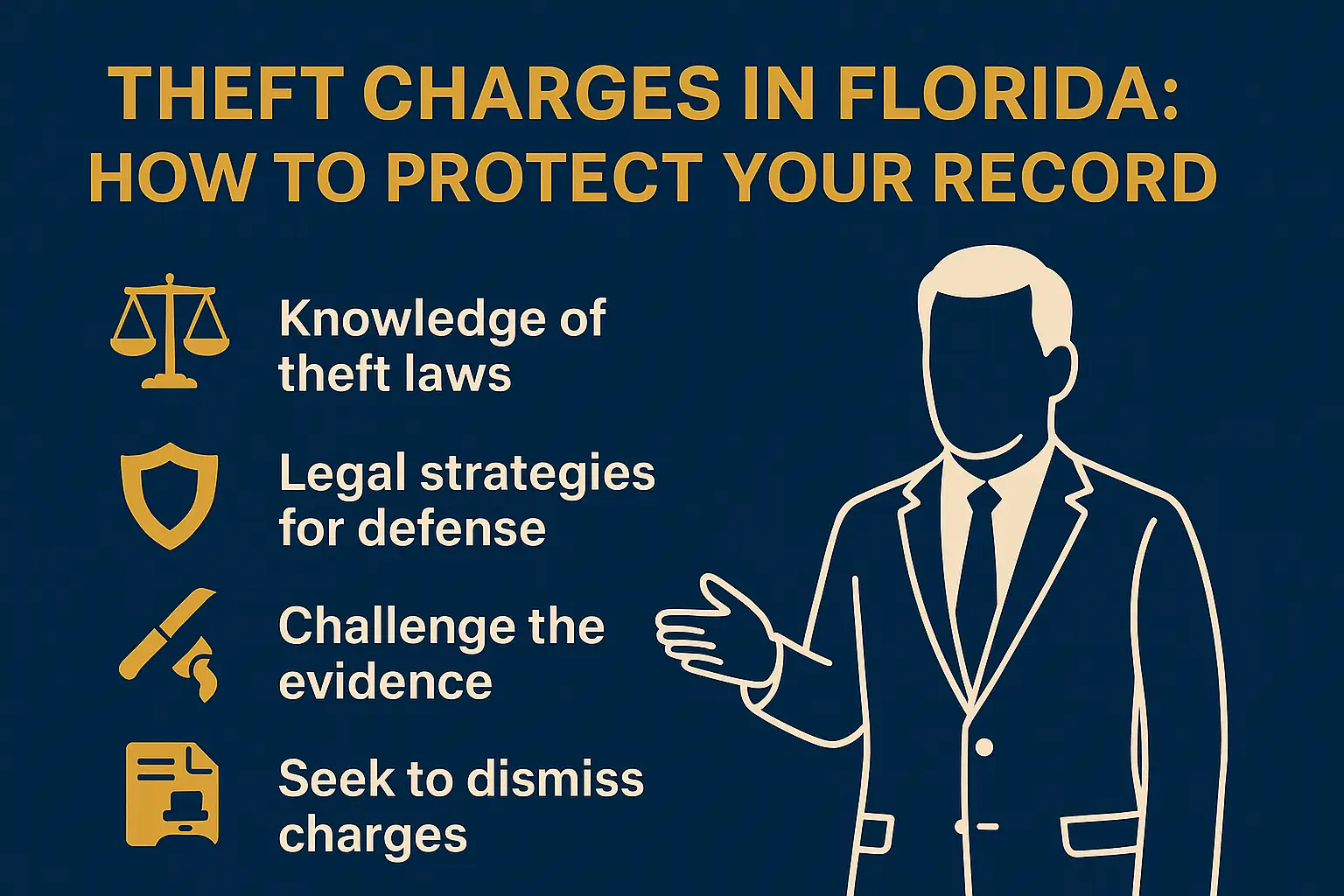
A theft accusation in Florida can have long-lasting effects — even a misdemeanor conviction can damage employment, housing, and licensing prospects. Whether you’re accused of shoplifting or grand theft, it’s critical to understand the law and act fast with the help of a qualified Broward theft defense attorney.
⚖️ How Florida Defines Theft
Under Florida Statute §812.014, theft occurs when a person knowingly obtains or uses another’s property with the intent to deprive the owner of it permanently or temporarily.
The law distinguishes between petit theft and grand theft based on property value:
Petit theft (under $750) is a misdemeanor;
Grand theft (over \$750) is a felony, with escalating penalties as value increases.
Learn how Florida courts classify theft in Grand Theft in Florida: What Counts as a Felony.
💼 Common Theft Scenarios
Theft charges cover a wide range of conduct, including:
Retail theft or shoplifting;
Misuse of company property;
Taking lost or misdelivered items;
Credit card or identity-related theft.
Even small-value thefts can trigger major penalties if you have prior convictions. Review how these cases escalate in Grand Theft Charge in Florida: Penalties and Defense Options.
🧠 Defenses That Work
Strong defenses depend on the facts. Common strategies include:
Lack of intent: Mistaken possession or misunderstanding ownership.
Consent: You believed you had permission to use or borrow property.
Value disputes: Misclassification can mean the difference between felony and misdemeanor.
Insufficient evidence: No video, receipts, or credible witnesses.
A Fort Lauderdale criminal defense lawyer can often negotiate pre-trial diversion or restitution in lieu of prosecution, preventing a conviction altogether.
🔗 Protecting Your Record After a Theft Charge
Even dismissed cases can leave digital footprints. Learn how to clear your record in Fort Lauderdale Record Sealing & Expungement.
If your case involves a juvenile or first-time offense, diversion programs may lead to dismissal and record clearance. You can also read about related offenses in Burglary with Assault or Battery in Florida for perspective on how property crimes can escalate.
Florida Theft FAQs: Petit vs. Grand Theft & Penalties
1. What’s the difference between petit theft and grand theft?
Property value — under \$750 is petit theft (misdemeanor), above that is grand theft (felony).
2. Will a theft conviction stay on my record forever?
Yes. Theft crimes are considered “crimes of dishonesty” and cannot be sealed after conviction.
3. Can I be charged if I intended to return the property?
Intent matters. If you didn’t intend to permanently deprive the owner, your lawyer can challenge the charge.
4. What if the store didn’t press charges?
The State Attorney can still prosecute based on police reports and evidence.
5. How can a lawyer help with my theft case?
An attorney can negotiate diversion, contest evidence, and protect your record from lasting harm.
💬 Contact a Florida Theft Defense Attorney Today
Charged with theft in Florida? Take action before your record is permanently affected.
Contact Michael White, P.A. for a free consultation with a former prosecutor who knows how to win theft and fraud cases in Broward County.