
Last updated April 2026
In Florida, the line between misdemeanor and felony theft can come down to a few dollars. Grand theft begins at $750 — meaning even a minor property dispute can carry felony-level consequences. Understanding how the statute defines value and intent is key to avoiding lifelong damage to your record.
Theft charges in Florida are classified primarily by value.
For a broader breakdown of how theft offenses are classified under Florida law, see theft charges in Florida.
⚖️ Florida’s Grand Theft Law
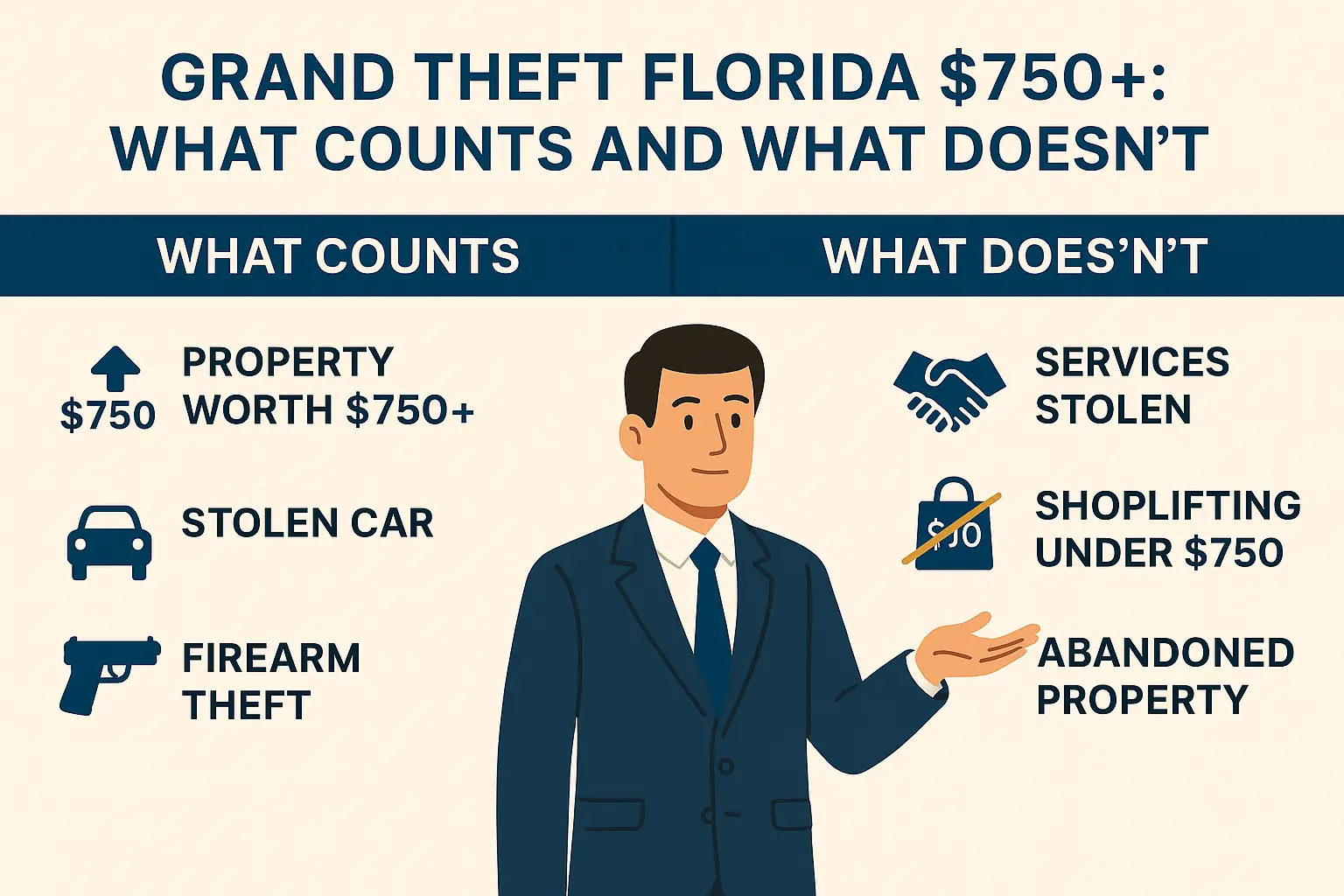
Under Florida Statute §812.014, theft becomes “grand” when the property is valued at $750 or more. The law divides grand theft into three degrees based on value:
-
Third-degree felony: $750–$20,000 (up to 5 years in prison)
-
Second-degree felony: $20,000–$100,000 (up to 15 years)
-
First-degree felony: Over $100,000 (up to 30 years)
Even a third-degree felony conviction can block employment and licensing opportunities.
Theft of $750 or more is charged as a felony under Florida law. For a breakdown of felony degrees and sentencing exposure, see a full breakdown of grand theft felony penalties in Florida.
🧾 How Value Is Calculated
Prosecutors often overstate item values to bump charges into felony territory. Market price, not replacement or sentimental value, controls. In many cases, these valuations come from store employees, alleged victims, or reports that are never independently verified.
An experienced Broward theft attorney can challenge the State’s valuation method, request expert appraisals, and move to reduce charges. In Broward County, valuation disputes are one of the most common ways felony theft charges are reduced.
In many prosecutions, disputes over value lead to reductions or dismissal—learn when theft charges can be dropped in Florida.
🚫 What Does Not Count Toward the $750 Threshold
In many Florida theft cases, prosecutors attempt to inflate value using methods that do not hold up in court. Common examples include:
• Replacement cost instead of fair market value
• Original purchase price instead of current condition
• Sentimental or personal value
• Retail price when the item was used or damaged
• Aggregating unrelated items to cross the felony threshold
We frequently see prosecutors rely on these inflated methods when trying to push cases over the felony threshold.
Florida courts focus on fair market value at the time of the alleged theft — not what the item once cost or what it would cost new.
🧠 Defenses That Work
In grand theft cases near the $750 threshold, defenses often focus on value, intent, and ownership, rather than outright denial. These cases are often won by focusing on valuation early—before the State can lock in a felony theory.
The State must prove:
1️⃣ The property belonged to someone else,
2️⃣ You knowingly took or used it, and
3️⃣ You intended to deprive the owner of it.
Effective defenses include:
-
Disputed valuation (worth under $750 → misdemeanor petit theft)
-
Mistaken ownership or borrowing
-
Lack of intent to permanently deprive (This element is frequently contested—see how lack of intent defense in Florida theft cases applies.)
-
Lack of evidence
-
Restitution and diversion
As a former prosecutor, Michael White routinely challenges inflated valuations that are used to justify felony charges — and many cases resolve once value is properly scrutinized.
🔗 When Theft Overlaps with Other Crimes
Grand theft can accompany fraud, burglary, or dealing in stolen property.
If your case is dismissed or reduced, explore Fort Lauderdale Record Sealing & Expungement to restore your reputation.
❓ FAQs
1. What’s considered grand theft in Florida?
Any property valued at $750 or more, taken with intent to deprive the owner.
2. Can a grand theft charge be reduced?
Yes. If value is unproven or intent unclear, it can drop to petit theft or be dismissed.
3. Does repaying the victim help my case?
It can. Restitution and cooperation often lead to diversion or dismissal.
4. What if I didn’t know the property was stolen?
Lack of knowledge can defeat intent, a core element of theft.
5. Can grand theft be expunged?
Only if the case is dismissed, dropped, or resolved without conviction.
💬 Charged With Grand Theft Near the $750 Threshold?
When value is disputed, early legal intervention often determines whether a case remains a felony or is reduced to a misdemeanor. What happens early in the case often determines whether the charge remains a felony or is reduced to a misdemeanor.
Contact Michael White, P.A. to discuss how valuation, intent, and evidence apply to your case.