
Last updated November 2025
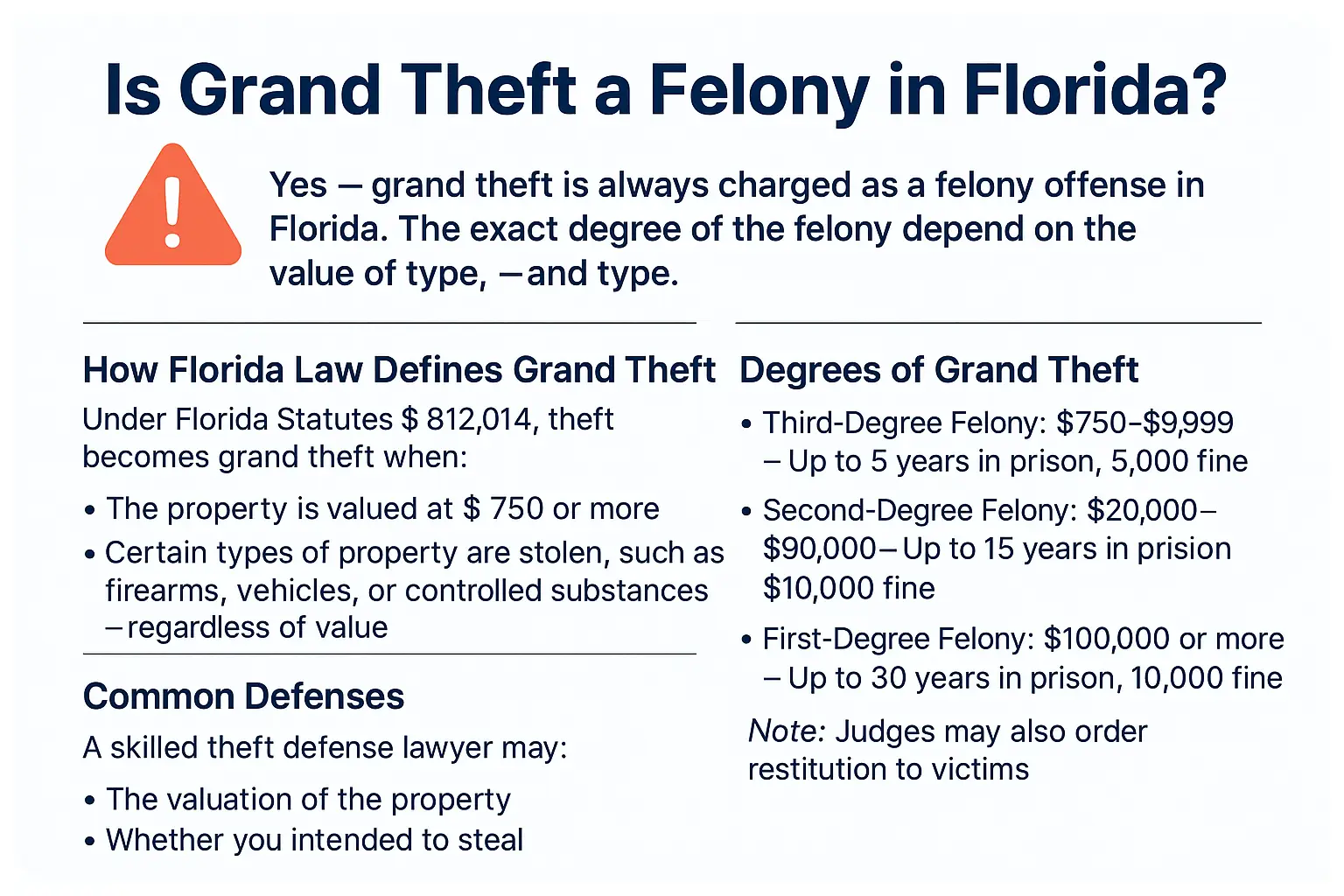
Yes — in Florida, grand theft is always charged as a felony offense. The exact degree of the felony depends on the value of the property taken and, in some cases, the type of property involved. Felony convictions can mean prison time, steep fines, and a permanent criminal record.
📜 How Florida Law Defines Grand Theft
Under Florida Statutes § 812.014, theft becomes grand theft when:
The property is valued at $750 or more
Certain types of property are stolen, such as firearms, vehicles, or controlled substances — regardless of value
⚖️ Degrees of Grand Theft
Third-Degree Felony: $750–$19,999 — Up to 5 years in prison, $5,000 fine
Second-Degree Felony: $20,000–$99,999 — Up to 15 years in prison, $10,000 fine
First-Degree Felony: $100,000 or more — Up to 30 years in prison, $10,000 fine
💡 Note: Judges may also order restitution to victims.
🛡️ Common Defenses Against Florida Grand Theft Charges
A skilled theft defense lawyer may challenge:
The valuation of the property
Whether you intended to steal
Ownership disputes or permission issues
Evidence obtained through unlawful search or seizure
❓Frequently Asked Questions
Can grand theft charges be reduced to a misdemeanor?
Yes — sometimes charges can be reduced to petit theft through negotiations.
Does returning the property help?
It may help during negotiations but doesn’t erase the charge.
Is intent required for a felony theft conviction?
Yes. Prosecutors must prove you intended to deprive the owner of their property.
Can first-time offenders avoid jail?
Possibly — through plea deals, diversion programs, or alternative sentencing.
❓Frequently Asked Questions
If you’ve been charged with grand theft, contact an experienced Florida theft defense attorney who knows how to protect your rights and challenge the state’s case.