
Last updated November 2025
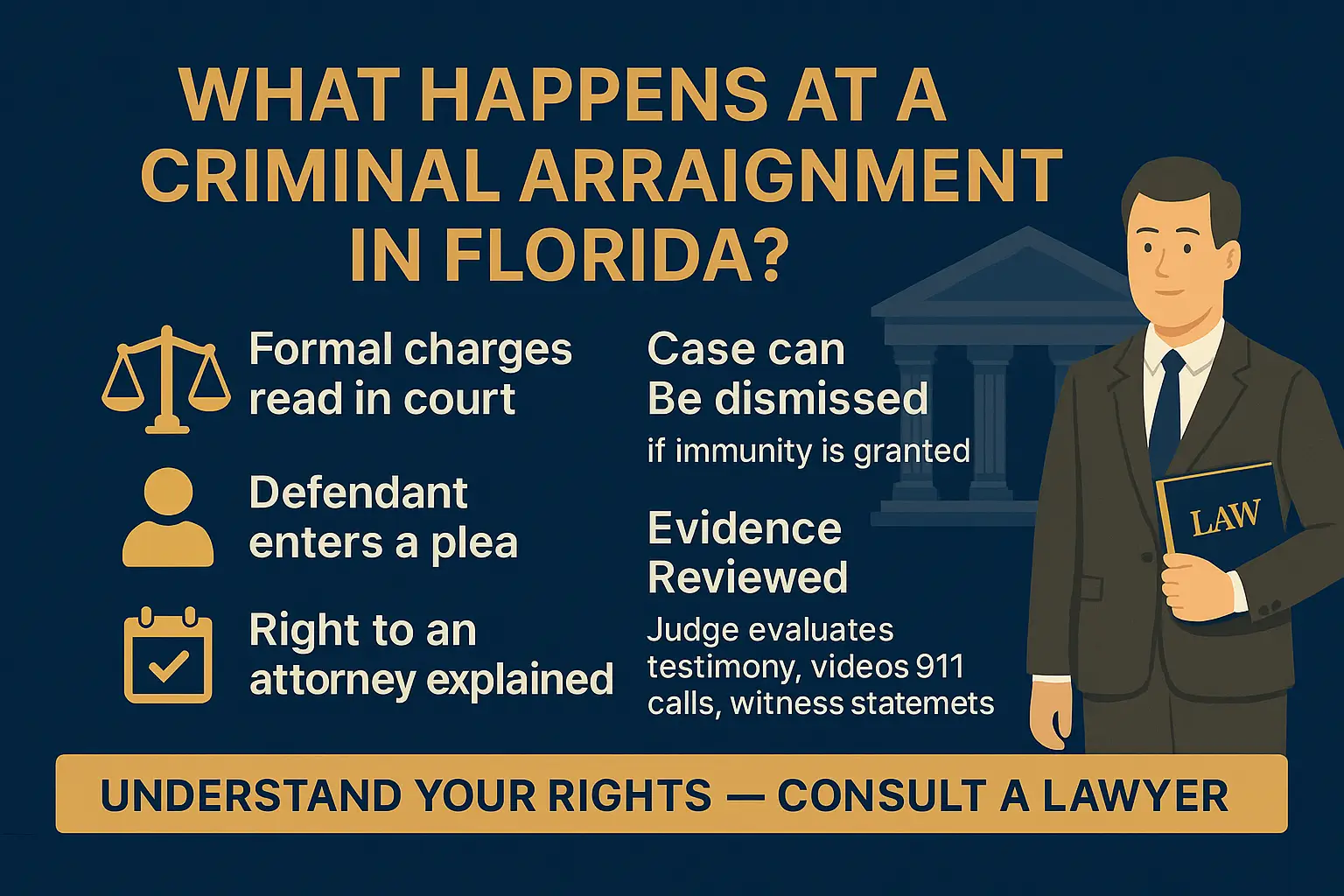
Your arraignment is the first formal court hearing after charges are filed in a Florida criminal case. Unlike first appearance — which happens within 24 hours of arrest — the arraignment is where the court:
Reads the official charges against you
Advises you of your rights
Takes your initial plea
Sets future court dates
Arraignments in Broward County move quickly. Most last under 2 minutes, and the judge typically handles dozens of cases in one session. But what happens at this hearing can affect the rest of your case — especially if you appear without counsel or enter a plea without understanding the consequences.
Here’s what you need to know before you walk in.
⚖️ What Is an Arraignment?
An arraignment is the point in the case where the State formally files charges and the judge ensures:
You understand the charges
You understand the possible penalties
You understand your right to counsel
You enter a plea (not guilty, guilty, or no contest)
Most defense attorneys file a written plea of not guilty and a waiver of arraignment ahead of time so you don’t have to appear. But if this hasn’t been done, you must attend.
This stage ties directly into the early case strategy used in DUI, domestic violence, and BAT LEO matters, where early control of the narrative is crucial.
📝 What Happens During the Hearing?
Here’s the typical flow of a Florida criminal arraignment:
1. Judge Calls Your Case
You’ll approach the podium or appear via Zoom, depending on the division.
2. Judge Advises You of the Charges
The court reads the information or citation filed by the State Attorney.
3. Judge Advises You of Your Rights
Including:
Right to counsel
Right to remain silent
Right to a trial
4. Entry of Plea
Most people enter:
Not guilty
Demand for discovery
Election of trial by jury
5. Setting of Future Dates
The judge sets:
Case management
Status conferences
Pretrial hearings
Motion dates (such as a motion to suppress)
Trial periods
6. Ensuring Representation
If you don’t have a lawyer, the court will ask about your plans to hire counsel or appoint the public defender.
🕒 Do You Have to Go to Arraignment?
Not always.
If your attorney files a:
Written plea of not guilty, and
Waiver of arraignment
…you typically do not need to appear.
However, personal appearance is required when:
A charge is mandatory appearance (e.g., DV, DUI, certain felonies)
The judge specifically orders it
There are bond-related concerns
You missed a prior court date
Failure to appear can result in a bench warrant, or capias — a common issue in DWLS and criminal speeding cases where clients believe the citation is “just a ticket.”
📋 What NOT to Do at Arraignment
Do not:
Discuss the facts of your case
Try to “explain” what happened
Argue with the prosecutor
Talk about evidence
Mention prior criminal history
Make statements that can be used against you
The arraignment is a procedural hearing — not the time to make your case.
This is especially important in cases involving domestic violence, drug possession, or any offense where statements can later be used to impeach you.
🧩 What Happens After Arraignment?
After arraignment, your case formally enters the pretrial phase, where your attorney begins:
Reviewing discovery
Analyzing body-worn camera footage
Evaluating stop legality for a motion to suppress
Negotiating with prosecutors
Filing motions
Preparing for trial
This phase is where your case is truly won or lost — very similar to strategies used in DUI and Stand Your Ground cases.
🚨 Speak With a Fort Lauderdale Criminal Defense Lawyer Today
If you have an arraignment coming up — or you missed one — contact Michael White, P.A. immediately.
We can file the proper paperwork, protect your rights, and prevent avoidable warrants and penalties.
❓ FAQs — Criminal Arraignment in Florida
1. What is the purpose of an arraignment?
To formally advise you of the charges and take your initial plea.
2. Do I need a lawyer for arraignment?
Yes. A lawyer protects your rights and may waive your arraignment entirely.
3. What if I already entered a plea at first appearance?
The arraignment still occurs unless formally waived by your attorney.
4. What happens if I miss my arraignment?
A judge can issue a bench warrant, leading to arrest and additional charges.
5. Does the State present evidence at arraignment?
No. Arraignment is procedural — evidence and arguments come later.