
Last updated February 2026
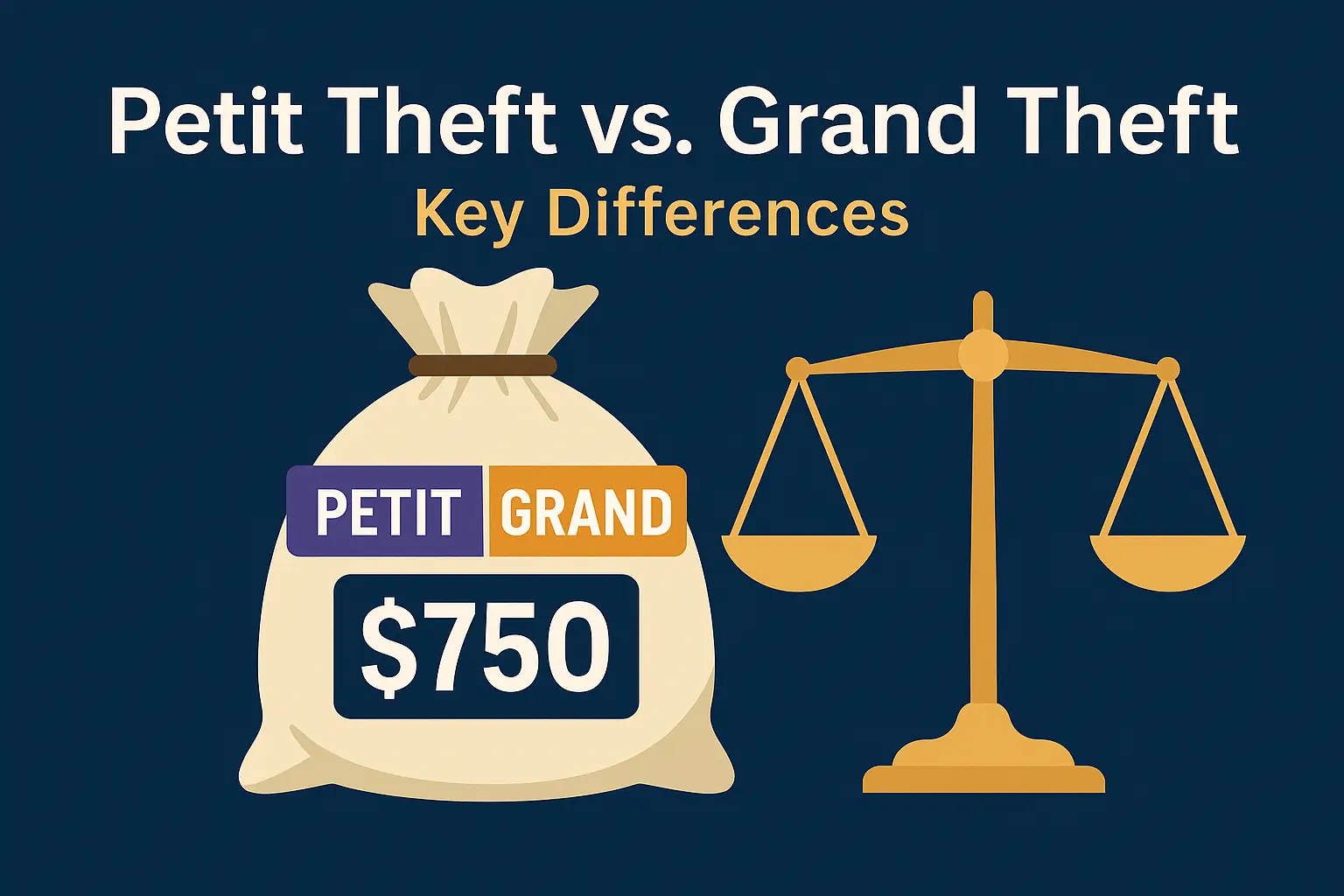
If you’re accused of theft in Florida, the charge you face depends on the value of the property. Theft under a certain amount is treated as petit theft (a misdemeanor), while higher-value theft is considered grand theft (a felony). The difference between the two can mean the difference between a short jail sentence and decades in prison.
Understanding where a case falls on this spectrum is often the first step in determining exposure, defenses, and possible outcomes.
⚖️ Florida Theft Law
Under Florida Statute §812.014, theft is defined as knowingly obtaining or using someone else’s property with intent to deprive them of it. The law sets value thresholds that determine whether the crime is charged as petit theft or grand theft.
Theft charges in Florida are classified based primarily on value. For a full overview of how theft offenses are charged, see theft charges in Florida.
💵 Petit Theft in Florida
Second-Degree Misdemeanor: Property valued under $100. Punishable by up to 60 days in jail and a $500 fine.
First-Degree Misdemeanor: Property valued between \$100 and \$749. Punishable by up to 1 year in jail and a $1,000 fine.
⚠️ Even a petit theft conviction can leave you with a permanent criminal record that may not be eligible for sealing or expungement.
If your case involves property under the felony threshold, learn more about petit theft misdemeanor charges in Florida, including penalties and defense options.
💰 Grand Theft in Florida
Grand theft is a felony charge, broken into degrees:
Third-Degree Felony: $750–$20,000 (up to 5 years in prison and $5,000 fine).
Second-Degree Felony: $20,000–$100,000 (up to 15 years in prison and $10,000 fine).
First-Degree Felony: $100,000+ (up to 30 years in prison and $10,000 fine).
Theft of $750 or more is charged as a felony. For a breakdown of felony degrees and sentencing exposure, see grand theft felony penalties in Florida.
🔍 Key Differences Between Petit Theft and Grand Theft
| Factor | Petit Theft | Grand Theft |
|---|---|---|
| Value | Under $750 | $750+ |
| Charge | Misdemeanor | Felony |
| Penalties | Up to 1 year jail | 5–30 years prison |
| Impact | Less severe but still permanent record | Severe penalties and felony record |
🛑 Other Factors That Can Elevate a Theft Charge
Other factors can elevate a theft charge, even when value is disputed.
Prior theft convictions, the type of victim (such as elderly or disabled persons), theft during a state of emergency, or theft of law-enforcement or emergency equipment can all increase exposure.
📱 How Value Is Treated in Non-Retail Theft Cases
Even when value is disputed, other statutory factors can increase exposure.
For example, when someone is accused of stealing a used item like a cellphone, laptop, or other personal property, prosecutors must prove the item’s fair market value at the time of the alleged theft, not what it originally cost when new.
In practice, many Florida prosecutors are reluctant to expend resources on expert testimony to establish depreciation for used property. As a result, cases involving personal items like used smartphones often resolve as second-degree petit theft, even when the item was originally expensive.
This distinction is critical. Challenging how value is calculated — or whether the State can realistically prove felony-level value — is often one of the most effective ways to reduce or dismiss theft charges in non-retail cases.
🧠 Why Value and Intent Disputes Matter
In both petit theft and grand theft cases, outcomes often turn on disputes over value, intent, ownership, and the legality of police conduct. When value is inflated, aggregated, or based on unreliable pricing, felony charges may be subject to reduction. Similarly, lack of intent, consent issues, or unlawful searches can significantly weaken the State’s case.
Prosecutors sometimes attempt to aggregate multiple items to inflate value above the felony threshold — a tactic that can often be challenged.
Similarly, retail pricing, sale tags, and inventory estimates are frequently inflated or inaccurate, making value disputes a key defense in theft cases.
📍 Broward County Theft Defense
In Broward County, prosecutors aggressively pursue theft cases, whether misdemeanor or felony. The sooner you have a lawyer, the stronger your chances of reducing or dismissing charges.
❓ Frequently Asked Questions: Petit Theft vs. Grand Theft in Florida
Q1: What is the threshold between petit theft and grand theft in Florida?
A: $750. Theft involving property valued under $750 is generally charged as petit theft (a misdemeanor). Theft of $750 or more is charged as grand theft (a felony).
Q2: Can petit theft charges be upgraded to grand theft?
A: Yes. If prosecutors can prove that the value of the property was $750 or more, a petit theft charge may be upgraded to grand theft.
Q3: Can grand theft be reduced to petit theft?
A: Yes. Grand theft charges are often reduced when the State cannot prove felony-level value or when there are disputes over ownership, intent, or valuation.
Q4: Can shoplifting be charged as grand theft in Florida?
A: Yes. Shoplifting can be charged as grand theft if the value of the merchandise is $750 or higher, regardless of whether the theft occurred in a retail setting.
Q5: Can theft charges be sealed or expunged in Florida?
A: Not if there is a conviction. However, dismissals, acquittals, or certain diversion outcomes may still qualify for record sealing or expungement under Florida law.