
You are here:
Home > DUI Defense > ⚖️ DUI Sentencing in Florida: What Factors Influence the Outcome?
⚖️ DUI Sentencing in Florida: What Factors Influence the Outcome?
Last updated February 2026
If you’ve been arrested for DUI in Florida, one of the first questions you’re likely asking is:
“What sentence am I actually facing?”
The answer depends on far more than the charge itself. While Florida law sets maximum penalties for DUI, actual sentencing outcomes vary widely based on the facts of the case, your history, and how the case is resolved in court.
This page explains how DUI sentencing works in practice, what judges consider at sentencing, and when DUI charges can be reduced before sentencing ever occurs.
⚖️ DUI Sentencing vs. DUI Penalties: What’s the Difference?
Florida DUI law establishes statutory penalties — including jail exposure, fines, probation, and license consequences. But sentencing is the process by which a judge determines what actually happens in a specific case.
In other words:
Penalties = what the law allows
Sentencing = what the court imposes
For a full breakdown of statutory DUI penalties, see our guide to Florida DUI penalties. This page focuses on how judges sentence DUI cases, not maximum punishment charts.
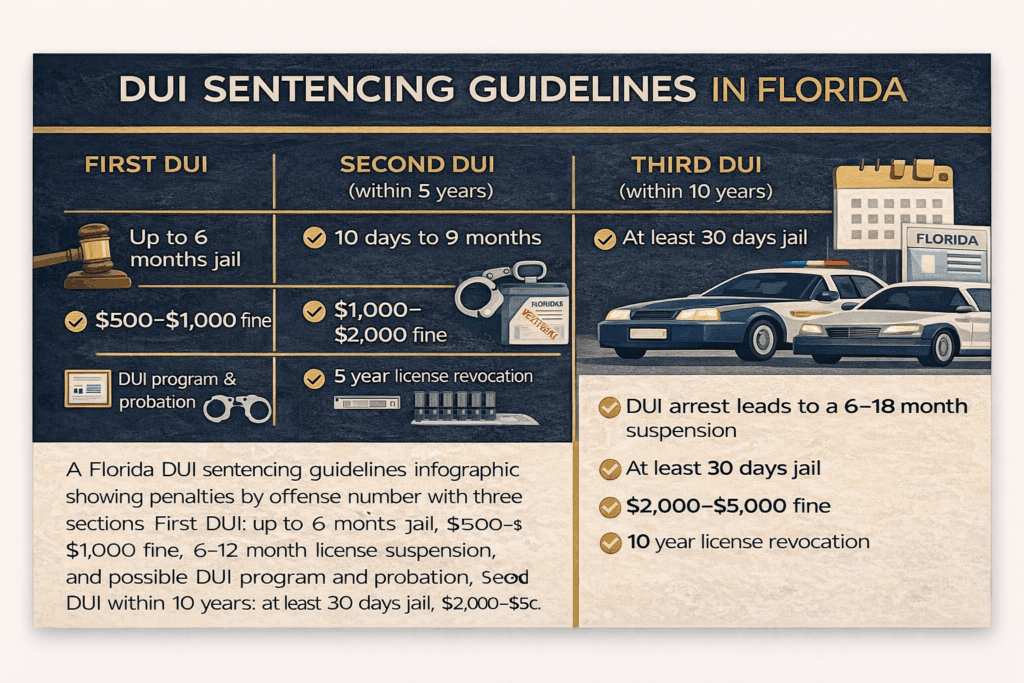
📋 Minimum Sentencing Exposure for Florida DUI Charges
Florida DUI offenses may be charged as misdemeanors or felonies depending on prior history and aggravating factors.
🟢 First-Time DUI (Misdemeanor)
Typical sentencing exposure may include:
$500 fine (or $1,000 if BAC ≥ 0.15 or a minor was present)
Six months of probation
License suspension
DUI school and substance abuse evaluation
Possible community service or ignition interlock device
Jail is legally permitted but not automatic, and many first-time cases resolve without incarceration.
🟡 Second DUI Within 5 Years
A second DUI within five years carries mandatory minimum consequences, including:
$1,000–$2,000 fine
Five-year license suspension
Mandatory 10 days in jail
One year of probation
Ignition interlock requirements
The timing between offenses is a major sentencing factor.
🟠 Third or Subsequent DUI
A third DUI within 10 years is charged as a felony, exposing the defendant to:
State prison time
Long-term or permanent license revocation
Extended probation and supervision
Even DUIs outside statutory lookback periods can still result in enhanced sentencing exposure.
🚨 DUI Cases Involving Injury or Death
Sentencing exposure increases dramatically when a DUI involves an accident:
Property damage or minor injury → misdemeanor DUI
Serious bodily injury → third-degree felony
DUI manslaughter → second-degree felony (or higher if failure to render aid is alleged)
These cases are aggressively prosecuted and often involve:
Mandatory prison exposure
Permanent license revocation
Civil lawsuits alongside criminal sentencing
🧾 What Factors Do Judges Consider at DUI Sentencing?
Judges in Fort Lauderdale and across South Florida typically consider:
Prior DUI or criminal history
Alleged BAC level
Whether an accident, injury, or aggravating factor is present
Compliance with court conditions before sentencing
The procedural posture of the case (trial vs plea)
Sentencing outcomes are rarely mechanical — judicial discretion matters.
🔁 Can a DUI Sentence Be Reduced in Florida?
Yes — but only before sentencing occurs.
Many DUI cases never reach sentencing for DUI because they resolve as:
Reckless driving (“wet reckless”)
Reduced or amended charges
Dismissals based on evidentiary or constitutional issues
Common factors supporting reduction include:
Borderline BAC results
Flawed field sobriety testing
Suppression issues with breath or blood evidence
Weak proof of actual physical control
Once a DUI conviction is entered, sentencing discretion becomes limited — which is why early defense strategy is critical.
🚘 Probation, Jail, and Alternative Sentencing
In appropriate cases, Florida courts may impose:
Probation instead of jail
Community-based penalties
Treatment-based conditions
Ignition interlock in lieu of incarceration
Alternative sentencing is case-specific and depends heavily on how the case is positioned before sentencing.
📍 Facing DUI Sentencing in Fort Lauderdale or South Florida?
A DUI arrest does not automatically determine how a case ends. Sentencing outcomes depend on:
The strength of the State’s evidence
The legal issues raised before trial
How the case is resolved procedurally
Understanding sentencing exposure early allows defendants to make informed decisions before consequences become permanent.
❓ Frequently Asked Questions: DUI Sentencing in Florida
What is the minimum sentence for a first DUI in Florida? A fine, probation, license suspension, and DUI school. Jail is permitted but often avoidable in first-time cases.
Is jail mandatory for a DUI conviction? Only in certain repeat-offender scenarios. Most first-time DUIs do not result in jail when properly handled.
Can a DUI be reduced to reckless driving? Yes. Many DUI cases resolve as reckless driving depending on the evidence and circumstances.
How long does a DUI stay on your record in Florida? A DUI conviction remains permanently and cannot be sealed or expunged.
What factors influence DUI sentencing the most? Prior history, alleged BAC, aggravating factors, and how the case resolves before sentencing.
What are the consequences of a felony DUI conviction in Florida?
The consequences of a felony DUI conviction in Florida include severe penalties such as imprisonment for up to five years, substantial fines, and a mandatory driver's license suspension for a minimum of five years, along with a lasting criminal record.
What are the penalties for a first-time felony DUI in Florida?
The penalties for a first-time felony DUI in Florida can include up to five years in prison, a fine of $1,000 to $5,000, and mandatory probation, along with the possibility of losing your driver's license for up to five years.
What is the difference between a misdemeanor and felony DUI in Florida?
The difference between a misdemeanor and felony DUI in Florida lies in the severity of the offense; a misdemeanor generally applies to first-time offenses with less severe penalties, while a felony DUI typically involves repeat offenses or circumstances that result in serious harm or death.
What are the fines for a felony DUI conviction in Florida?
The fines for a felony DUI conviction in Florida can range from $1,000 to $5,000, depending on the specifics of the case and prior offenses. Additional court costs and fees may also apply.
What is the minimum sentence for a felony DUI in Florida?
The minimum sentence for a felony DUI in Florida is a mandatory minimum of 5 years in prison for a third offense or if the DUI caused serious bodily injury or death.
Can a felony DUI conviction be expunged in Florida?
A felony DUI conviction cannot be expunged in Florida. However, individuals may seek to have their record sealed under certain conditions if they meet specific eligibility requirements.
Do I need a lawyer for a felony DUI charge in Florida?
The necessity of hiring a lawyer for a felony DUI charge in Florida is crucial. An experienced attorney can navigate complex legal processes, provide defense strategies, and greatly increase the chances of a favorable outcome.
Can a DUI conviction be a felony in Florida?
A DUI conviction can indeed be classified as a felony in Florida. This typically occurs if it is a third offense within a 10-year period or if it involves serious injury or death to another person.
What is the impact of a felony DUI?
The impact of a felony DUI includes severe legal penalties such as increased fines, lengthy prison sentences, and a permanent criminal record, which can affect employment opportunities, driving privileges, and insurance rates.
How can a felony DUI affect employment?
A felony DUI can significantly impact employment opportunities, as many employers conduct background checks and may view such a conviction as a red flag, potentially leading to disqualification from jobs, especially in sensitive fields like transportation or law enforcement.
What defenses are available for felony DUI?
The defenses available for felony DUI include challenging the legality of the traffic stop, questioning the accuracy of breathalyzer or blood tests, and arguing that the individual was not impaired or that there were extenuating circumstances.
How does the court determine DUI severity?
The court determines DUI severity based on several factors, including the defendant’s blood alcohol concentration (BAC), prior DUI offenses, injury or damage caused, and whether minors were present in the vehicle at the time of the offense.
What should I expect during a felony DUI trial?
During a felony DUI trial, you can expect a detailed examination of evidence, witness testimonies, and arguments from both the prosecution and defense. The trial's outcome will largely depend on the strength of the presented case and legal strategies employed.
Are plea bargains common for felony DUIs?
Plea bargains are indeed common for felony DUIs. Many defendants seek these agreements to potentially reduce penalties or charges, allowing for more favorable outcomes than going to trial.
What documentation is needed for a felony DUI case?
The documentation needed for a felony DUI case includes your arrest record, police reports, chemical test results, prior conviction records, and any relevant evidence that can support your defense.
How does prior history affect felony DUI sentencing?
Prior history significantly impacts felony DUI sentencing. Repeat offenders may face harsher penalties, including longer prison sentences and increased fines, as judges often consider previous convictions to determine the severity of the sentence.
What rehabilitation programs are available for DUI offenders?
Rehabilitation programs available for DUI offenders include substance abuse treatment, counseling services, and alcohol education courses designed to address underlying issues and promote responsible behaviors. These programs can vary in length and format, often aiming to reduce recidivism.
Can felony DUIs affect professional licenses in Florida?
Felony DUIs can significantly affect professional licenses in Florida. Many licensing boards may consider a felony conviction as grounds for denial or suspension, impacting your ability to maintain or obtain employment in regulated professions.
What role does blood alcohol content play in sentencing?
Blood alcohol content (BAC) significantly influences sentencing in DUI cases. Higher BAC levels can lead to more severe penalties, including longer license suspensions and increased fines, as outlined by Florida's DUI laws.
What are common misconceptions about felony DUI laws?
Common misconceptions about felony DUI laws include the belief that all DUI offenses result in felony charges and that penalties are the same across states. In reality, felony DUI typically applies after multiple offenses or aggravating factors, and laws can vary significantly by state.
dui florida felony, is a dui a felony in florida, tier dui florida, dui jail time florida, sentencing for dui, felony dui florida, dwi plea bargain wake county, dwi sentence reduction wake county, state of florida dui penalties
Frequently Asked Questions
What are the consequences of a felony DUI conviction in Florida?
The consequences of a felony DUI conviction in Florida include severe penalties such as imprisonment for up to five years, substantial fines, and a mandatory driver's license suspension for a minimum of five years, along with a lasting criminal record.
What are the penalties for a first-time felony DUI in Florida?
The penalties for a first-time felony DUI in Florida can include up to five years in prison, a fine of
,000 to ,000, and mandatory probation, along with the possibility of losing your driver's license for up to five years.
What is the difference between a misdemeanor and felony DUI in Florida?
The difference between a misdemeanor and felony DUI in Florida lies in the severity of the offense; a misdemeanor generally applies to first-time offenses with less severe penalties, while a felony DUI typically involves repeat offenses or circumstances that result in serious harm or death.
What are the fines for a felony DUI conviction in Florida?
The fines for a felony DUI conviction in Florida can range from ,000 to ,000, depending on the specifics of the case and prior offenses. Additional court costs and fees may also apply.
What is the minimum sentence for a felony DUI in Florida?
The minimum sentence for a felony DUI in Florida is a mandatory minimum of 5 years in prison for a third offense or if the DUI caused serious bodily injury or death.
Can a felony DUI conviction be expunged in Florida?
A felony DUI conviction cannot be expunged in Florida. However, individuals may seek to have their record sealed under certain conditions if they meet specific eligibility requirements.
Do I need a lawyer for a felony DUI charge in Florida?
The necessity of hiring a lawyer for a felony DUI charge in Florida is crucial. An experienced attorney can navigate complex legal processes, provide defense strategies, and greatly increase the chances of a favorable outcome.
Can a DUI conviction be a felony in Florida?
A DUI conviction can indeed be classified as a felony in Florida. This typically occurs if it is a third offense within a 10-year period or if it involves serious injury or death to another person.
What is the impact of a felony DUI?
The impact of a felony DUI includes severe legal penalties such as increased fines, lengthy prison sentences, and a permanent criminal record, which can affect employment opportunities, driving privileges, and insurance rates.
How can a felony DUI affect employment?
A felony DUI can significantly impact employment opportunities, as many employers conduct background checks and may view such a conviction as a red flag, potentially leading to disqualification from jobs, especially in sensitive fields like transportation or law enforcement.
What defenses are available for felony DUI?
The defenses available for felony DUI include challenging the legality of the traffic stop, questioning the accuracy of breathalyzer or blood tests, and arguing that the individual was not impaired or that there were extenuating circumstances.
How does the court determine DUI severity?
The court determines DUI severity based on several factors, including the defendant’s blood alcohol concentration (BAC), prior DUI offenses, injury or damage caused, and whether minors were present in the vehicle at the time of the offense.
What should I expect during a felony DUI trial?
During a felony DUI trial, you can expect a detailed examination of evidence, witness testimonies, and arguments from both the prosecution and defense. The trial's outcome will largely depend on the strength of the presented case and legal strategies employed.
Are plea bargains common for felony DUIs?
Plea bargains are indeed common for felony DUIs. Many defendants seek these agreements to potentially reduce penalties or charges, allowing for more favorable outcomes than going to trial.
What documentation is needed for a felony DUI case?
The documentation needed for a felony DUI case includes your arrest record, police reports, chemical test results, prior conviction records, and any relevant evidence that can support your defense.
How does prior history affect felony DUI sentencing?
Prior history significantly impacts felony DUI sentencing. Repeat offenders may face harsher penalties, including longer prison sentences and increased fines, as judges often consider previous convictions to determine the severity of the sentence.
What rehabilitation programs are available for DUI offenders?
Rehabilitation programs available for DUI offenders include substance abuse treatment, counseling services, and alcohol education courses designed to address underlying issues and promote responsible behaviors. These programs can vary in length and format, often aiming to reduce recidivism.
Can felony DUIs affect professional licenses in Florida?
Felony DUIs can significantly affect professional licenses in Florida. Many licensing boards may consider a felony conviction as grounds for denial or suspension, impacting your ability to maintain or obtain employment in regulated professions.
What role does blood alcohol content play in sentencing?
Blood alcohol content (BAC) significantly influences sentencing in DUI cases. Higher BAC levels can lead to more severe penalties, including longer license suspensions and increased fines, as outlined by Florida's DUI laws.
What are common misconceptions about felony DUI laws?
Common misconceptions about felony DUI laws include the belief that all DUI offenses result in felony charges and that penalties are the same across states. In reality, felony DUI typically applies after multiple offenses or aggravating factors, and laws can vary significantly by state.
dui florida felony, is a dui a felony in florida, tier dui florida, dui jail time florida, sentencing for dui, felony dui florida, dwi plea bargain wake county, dwi sentence reduction wake county, state of florida dui penalties