
Last updated April 2026
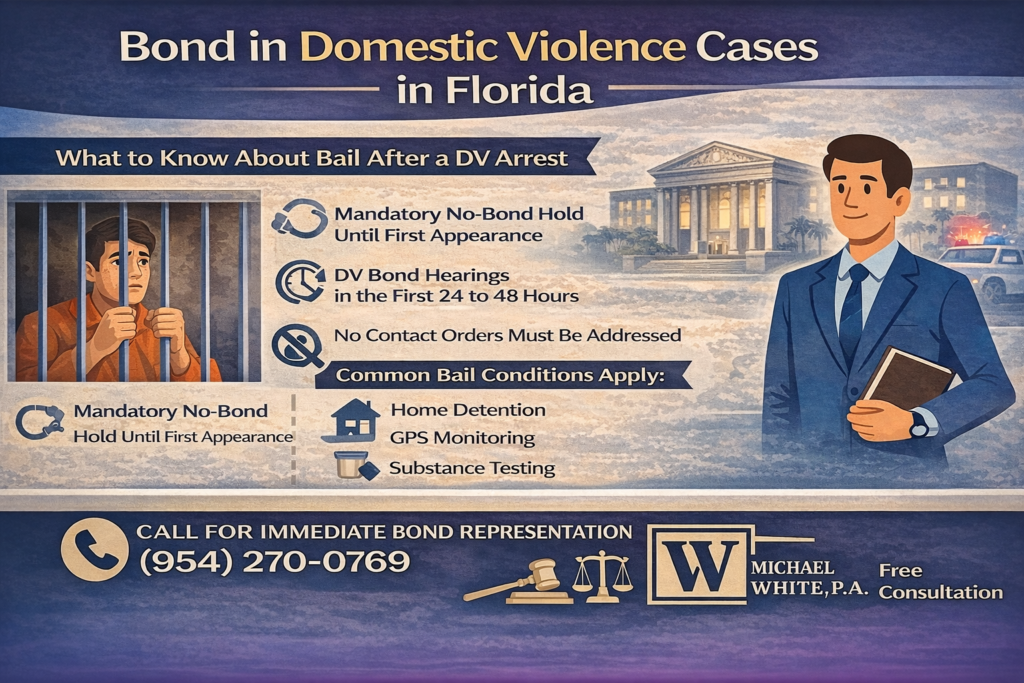
Many people arrested for domestic violence in Florida are surprised to learn that bond is not immediately available.
Unlike most misdemeanor offenses, domestic violence arrests typically involve a mandatory hold until the defendant appears before a judge. That means even first-time offenders with no prior criminal record are often held in jail overnight.
If you have been arrested for domestic violence in Fort Lauderdale or Broward County, understanding how the bond process works can help you prepare for what happens next.
If you are facing domestic violence charges, start by reviewing our guide to working with a Fort Lauderdale Domestic Violence Defense Lawyer to understand the legal process and the immediate steps that may affect your release.
Why Domestic Violence Arrests Often Result in a No-Bond Hold
Florida law requires that individuals arrested for domestic violence appear before a judge before bond can be set.
This first appearance hearing typically occurs within 24 hours of arrest.
During that hearing, the judge evaluates several factors, including:
The seriousness of the allegations
The defendant’s criminal history
Risk of further violence
The safety of the alleged victim
Whether the defendant poses a flight risk
Until that hearing occurs, defendants are commonly held in custody.
What Happens at a First Appearance Hearing?
A first appearance hearing is the court’s initial review of the arrest.
During this hearing, the judge determines:
Whether probable cause exists for the arrest
Whether bond should be granted
What release conditions should apply
Judges may set a monetary bond or release a defendant on non-monetary conditions such as supervised release.
Because these hearings occur quickly after arrest, defendants often have little time to gather information or evidence before appearing before the judge.
Common Bond Conditions in Domestic Violence Cases
When a judge grants bond in a domestic violence case, release conditions are often stricter than in other misdemeanor cases.
Common conditions include:
No Contact Orders
The defendant is prohibited from contacting the alleged victim directly or indirectly.
No Return to the Residence
Judges frequently order defendants to stay away from the home shared with the alleged victim.
GPS Monitoring
In more serious cases, courts may require GPS monitoring or electronic supervision.
Firearm Restrictions
Defendants may be required to surrender firearms while the case is pending.
These conditions remain in place until modified by the court.
Bond Decisions in Felony Domestic Violence Cases
Bond decisions can become more complicated when the alleged offense is a felony domestic violence charge.
Examples include aggravated battery or domestic violence by strangulation.
Felony charges often result in:
Higher bond amounts
Stricter release conditions
Greater scrutiny by judges and prosecutors
You can learn more about one of the most serious felony domestic violence charges in our guide to Domestic Violence Strangulation in Florida.
Can Bond Be Modified Later?
Yes. Bond conditions can sometimes be modified after the initial hearing.
Common requests include:
Changing a no-contact order to no violent contact
Allowing limited contact regarding children
Modifying GPS monitoring conditions
Adjusting travel restrictions
Courts evaluate these requests based on safety concerns and the facts of the case.
What Happens If Bond Is Denied?
In rare cases involving serious allegations or extensive criminal history, a judge may deny bond.
If that occurs, the defendant may remain in custody until:
A later bond hearing
A bond review motion
Trial or case resolution
However, most domestic violence defendants are eventually released with conditions.
How Bond Issues Affect the Direction of a Case
The first appearance hearing often sets the tone for the entire case.
Bond conditions can affect:
Housing access
Communication with family members
Employment
Preparation for court
Early legal intervention can help address these issues quickly and prevent violations that could lead to additional charges
Speak With a Fort Lauderdale Domestic Violence Defense Lawyer
Domestic violence arrests move quickly through the court system, and the first 24 to 48 hours often determine the direction of the case.
Understanding bond conditions, release restrictions, and your legal options can make a significant difference.
If you were arrested for domestic violence in Fort Lauderdale, Hollywood, or anywhere in Broward County, speak with an experienced defense attorney as soon as possible.
Michael White, P.A. is a former Broward prosecutor who understands how domestic violence cases are prosecuted — and how they can be challenged.
Call (954) 270-0769 for a confidential consultation.