
Last updated March 2026
Being arrested for a drug offense in Florida can be overwhelming. Many people facing drug charges are unsure what happens next, how quickly the case will move, and what decisions must be made early in the process.
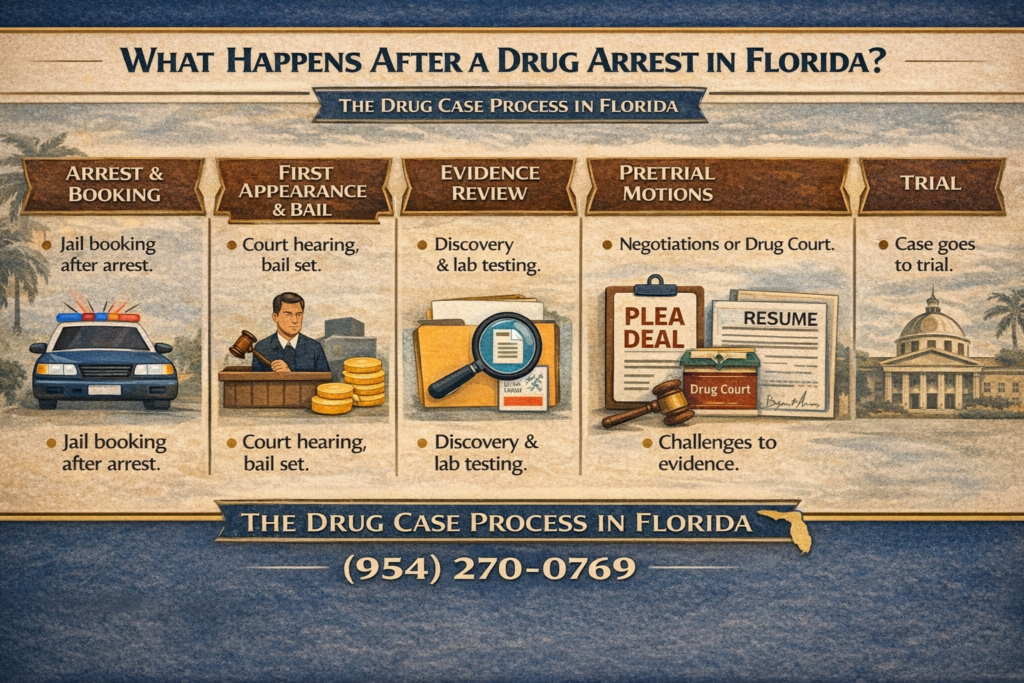
Florida drug cases typically move through several stages, beginning with arrest and first appearance, followed by evidence review, pretrial motions, negotiations, and sometimes trial.
Understanding how the process works can help defendants make informed decisions and avoid costly mistakes early in the case.
For a broader overview of Florida drug charges and defenses, see our guide to Drug Crimes Defense.
🚔 Arrest and Booking
Drug cases often begin with:
• traffic stops
• street encounters
• search warrants
• undercover investigations
• task force operations
After an arrest, the defendant is taken to jail for booking, where fingerprints and photographs are taken and the charges are formally recorded.
In many cases, law enforcement will also seize phones, vehicles, or other evidence during the arrest.
⚖️ First Appearance and Bail
Under Florida law, a person arrested must typically appear before a judge within 24 hours.
At this hearing the judge will determine:
• whether probable cause exists for the arrest
• whether the defendant will be released
• the amount of bail, if applicable
👉 Learn more about Bail in Florida Drug Cases
Bail decisions may depend on:
• the seriousness of the charge
• criminal history
• community ties
• whether trafficking or distribution is alleged
🔍 Evidence Review and Discovery
After charges are filed, prosecutors must disclose the evidence they intend to use in the case. This process is known as criminal discovery.
Discovery may include:
• police reports
• body camera footage
• witness statements
• laboratory testing results
• photographs and physical evidence
👉 What the State Must Disclose in a Florida Drug Case
Reviewing this evidence carefully is one of the most important steps in preparing a defense.
Laboratory testing can play a critical role in Florida drug prosecutions. In some cases, the alleged substance must be analyzed by a forensic laboratory before prosecutors can rely on scientific confirmation of the drug involved. Delays in testing sometimes occur when forensic laboratories experience heavy case volume. Learn more about What Happens if The Crime Lab is Backlogged in a Drug Case.
Although laboratory testing is important evidence, arrests and initial charges sometimes occur before forensic confirmation is completed. Law enforcement may rely on probable cause, officer observations, or preliminary field tests when making an arrest. Learn more about Whether Drug Charges Can be Filed Without a Lab Result in Florida.
⚖️ Pretrial Motions and Legal Challenges
Many drug cases involve legal challenges to the evidence.
Common pretrial issues include:
• illegal searches or traffic stops
• unreliable laboratory testing
• chain of custody problems
• insufficient evidence
Defense attorneys may file motions asking the court to suppress or exclude certain evidence.
If critical evidence is suppressed, the prosecution’s case may weaken significantly.
🤝 Plea Negotiations and Diversion Options
Not every drug case proceeds to trial. In many cases, prosecutors and defense attorneys negotiate potential resolutions.
Possible outcomes may include:
• reduced charges
• probation
• diversion programs
• dismissal after successful program completion
👉 What to Consider Before Accepting a Plea Deal in a Florida Drug Case
Some defendants may qualify for diversion programs such as Drug Court or Pretrial Intervention (PTI).
👉 Drug Court in Broward County: Eligibility and Process
These programs sometimes allow defendants to avoid a permanent criminal conviction.
First-time offenders sometimes qualify for reduced penalties, diversion programs, or probation rather than incarceration depending on the circumstances of the case.
⚖️ Trial
If a case cannot be resolved through dismissal or negotiation, it may proceed to trial.
At trial, prosecutors must prove the charges beyond a reasonable doubt.
Drug trials often focus on issues such as:
• whether the defendant possessed the drugs
• whether the evidence was lawfully obtained
• whether the substance was properly tested and identified
Many cases are resolved before reaching this stage, but trial remains an important option when the evidence is weak or disputed.
📍 Drug Cases in Broward County
Drug prosecutions in Broward County often involve specialized narcotics units and coordinated law enforcement investigations.
Local court procedures and prosecutorial practices can influence:
• bond decisions
• diversion eligibility
• plea negotiations
• trial strategy
Understanding how drug cases move through the Broward court system can be an important part of developing a defense strategy.
📞 Speak With a Florida Drug Defense Lawyer
The decisions made early in a drug case can significantly affect the outcome.
An experienced criminal defense lawyer can review the evidence, explain the possible outcomes, and help determine the best course of action.
📲 Call Michael White, P.A. at (954) 270-0769
💬 Or request a confidential consultation online.
FAQs
What happens immediately after a drug arrest in Florida?
After arrest, the defendant is booked into jail and must appear before a judge within 24 hours for a first appearance hearing.
How is bail determined in drug cases?
Bail depends on the severity of the charge, criminal history, and other factors such as community ties and risk of flight.
What is discovery in a drug case?
Discovery is the process in which prosecutors must disclose evidence they plan to use, including police reports, lab results, and witness statements.
Do all drug cases go to trial?
No. Many cases are resolved through negotiations or diversion programs before trial.
What is Drug Court in Florida?
Drug Court is a diversion program that allows some defendants to complete treatment and supervision in exchange for reduced charges or dismissal.