
Last updated April 2026
Are THC gummies legal in Florida?
Not always — and in some cases, they can lead to felony charges.
Many people assume edibles are legal because of medical marijuana laws, but Florida treats these products very differently than most expect.
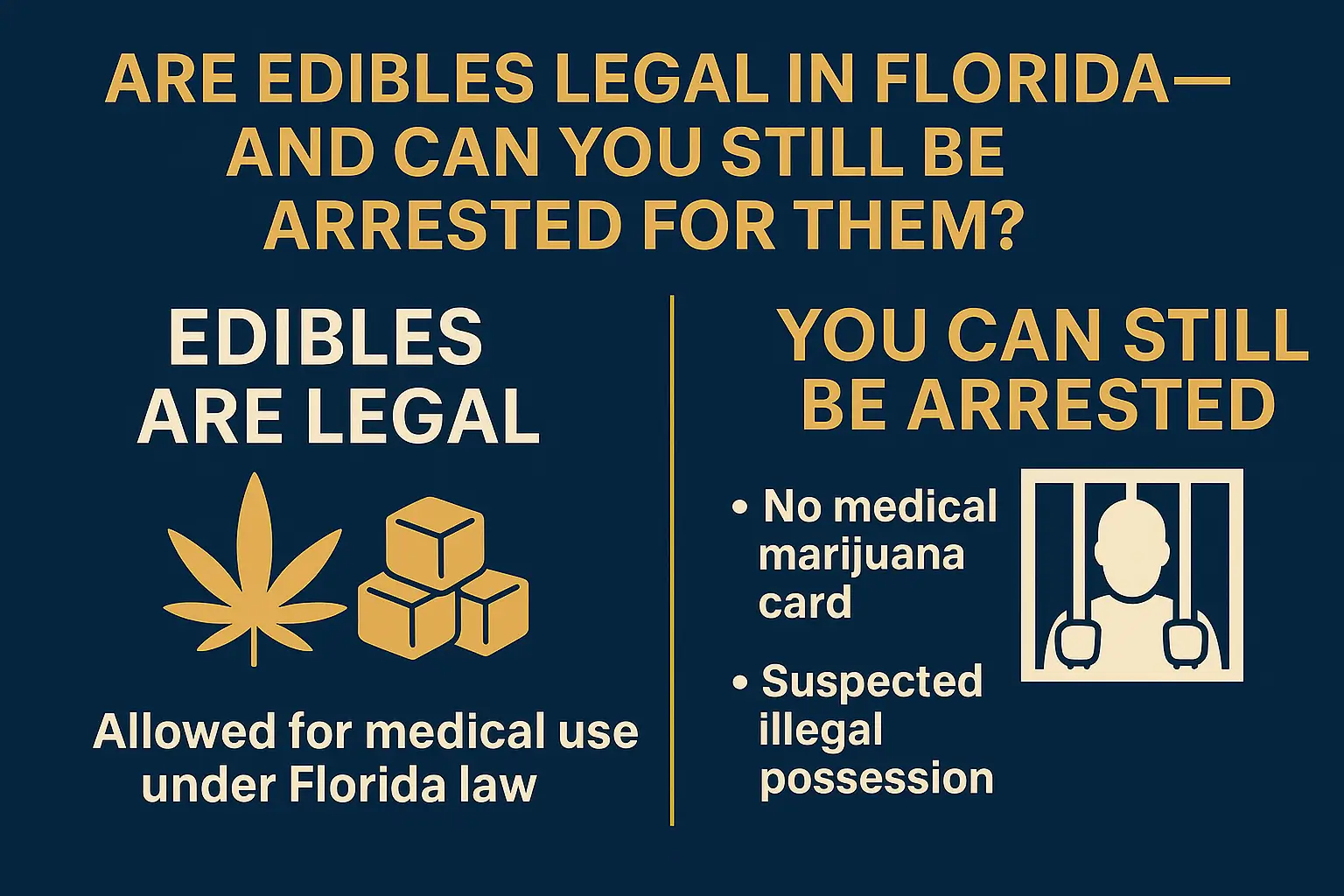
But the truth is, you can still be arrested for possessing edibles in Florida, depending on the situation.
As a Fort Lauderdale criminal defense lawyer and former prosecutor, I’ve handled dozens of edible-related cases. The law isn’t always clear—and people are frequently charged even when they believed they were following the rules.
Edibles are only one part of Florida’s broader cannabis laws. Issues involving marijuana possession, THC products, medical marijuana cards, and other cannabis-related charges can arise in a variety of ways.
For a broader overview of how Florida law treats marijuana and THC products, see our guide to Florida Marijuana & THC Laws.
Here’s what you need to know before you risk getting charged.
🚨 Quick Answer: Are Edibles Legal in Florida?
Only in limited situations. THC edibles are legal in Florida if you are a registered medical marijuana patient and follow strict rules. Otherwise, possession can lead to criminal charges — and in some cases, felony or trafficking charges based on weight.
Even small amounts can lead to arrest because Florida law treats edibles as a controlled substance—and in many cases, the entire weight of the edible (not just the THC) is used to determine charges.
This means a single package of gummies can potentially result in felony charges depending on weight and circumstances.
⚖️ Florida’s Law on THC Edibles
Under Florida law, only patients registered in the Medical Marijuana Use Registry (MMUR) and approved by a qualified physician may legally possess THC edibles.
If you don’t have a valid Florida medical marijuana card, edibles are treated as a Schedule I controlled substance.
Therefore, you can be arrested for possessing edibles in Florida if:
-
You don’t have a valid medical marijuana card
-
The edibles weren’t purchased from a licensed dispensary
-
You possess more than your daily limit
-
The product contains Delta-9 THC from marijuana, not hemp
-
You’re on federal property, near a school, or crossing state lines
If you have a medical marijuana card but were still charged, your case may involve compliance or documentation issues. See how a medical marijuana card defense works in Florida.
⚖️ Is Possessing Edibles Always a Crime in Florida?
Not always—but it often is.
Florida law distinguishes between lawful medical use and unlawful possession, and many arrests happen in situations where people believed they were compliant.
You may still be arrested even if:
- You purchased the product legally in another state
- The product was labeled as hemp or Delta-8
- You believed the THC level was within legal limits
Law enforcement focuses on appearance, packaging, and suspected THC content—not just what the label says.
As a result, many edibles cases begin with an arrest first, and legal analysis later.
🚫 Why People Get Arrested for Edibles in Florida
Most edibles arrests happen because people believe the products are legal when they are not — or assume small amounts won’t matter.
In reality, Florida law focuses on how the product is classified and how it is measured, not just what you thought you were buying.
🌿 CBD, Delta-8, and Hemp-Derived Edibles
Hemp-based products exist in a legal gray area:
✅ CBD edibles with less than 0.3% Delta-9 THC are legal under both federal and Florida law.
⚠️ Delta-8 THC remains unregulated—not explicitly banned, but law enforcement may still arrest you if the product appears intoxicating, mislabeled, or non-compliant with packaging standards.
Don’t assume something bought online or at a gas station is legal. Many “hemp” edibles are misbranded and fail Florida’s labeling or potency rules.
For a deeper look at how law enforcement treats these products, see our guide on Delta-8 THC arrests in Florida.
⚠️ Why Edibles Can Turn Into Felony or Trafficking Charges
Many people assume edibles are treated like small amounts of marijuana. That’s not how Florida law works.
In most DUI and drug cases, prosecutors focus on the <strong>total weight of the substance</strong> — not just the THC content. With edibles, that means the entire product is counted, including sugar, gelatin, chocolate, or baked goods.
For example, a package of gummies that weighs several ounces may be treated as a felony-level amount — even if the actual THC content is relatively low.
This is why edibles cases can escalate quickly from a simple possession charge to a felony or even trafficking allegation, depending on the weight and circumstances.
In many cases, the key defense issue is not whether THC was present — but whether the State can properly prove weight, composition, and legality under Florida law.
For a deeper breakdown of how weight thresholds affect felony and trafficking charges, see how Florida drug trafficking laws are applied based on weight.
🧪 What Happens After an Edibles Arrest
If you’re arrested, police usually send the product to a state lab to confirm THC concentration. That result determines:
-
Whether charges are filed
-
Whether it’s a misdemeanor or felony
-
Whether you qualify for diversion or dismissal
Under § 893.13:
-
Possession of cannabis under 20 grams = misdemeanor, but with edibles, courts often use the total weight of the product—not just THC content—which can quickly elevate charges to a felony
-
Over 20 grams THC = felony
-
High-weight edibles = possible trafficking (weight of the entire edible counts)
This same issue often arises in cases involving cannabis concentrates, where high-potency products can lead to more serious charges. Learn more about marijuana concentrates possession in Florida.
Convictions can also trigger a 6–12 month driver’s-license suspension, even if you weren’t driving.
In edibles cases, Florida law often treats the entire product’s weight — not just the THC content — as the relevant measure, which is why gummies and baked goods can quickly trigger felony or trafficking charges.
✅ Quick Legal Summary
| Legal | Illegal / Risky |
|---|---|
| Medical edibles for MMUR patients | Possession without a card |
| Purchased from a licensed dispensary | Crossing state lines / federal property |
| CBD < 0.3% Δ9 THC products | Mislabelled Delta-8 / gas-station edibles |
⚖️ How We Defend Edibles Cases
At Michael White, P.A., we’ve helped clients avoid convictions by challenging:
-
Illegal searches and traffic stops
-
Faulty lab procedures or chain of custody
-
Unverified THC weight or potency
-
Lack of probable cause or inconsistent statements
An experienced drug crimes defense attorney can often suppress key evidence, negotiate reduced charges, or secure diversion to protect your record.
As a former prosecutor, Attorney Michael White evaluates how these cases are charged, how evidence is tested, and where the State’s case is most vulnerable.
❓ FAQs: Edibles and Florida Law
Are THC edibles legal in Florida?
Only for patients with a valid Florida medical marijuana card. Recreational edibles remain illegal and can lead to criminal charges.
Can I take edibles across state lines or onto federal property?
No. Federal law still prohibits marijuana, even for medical use. Carrying edibles across borders or onto federal land is illegal.
Can I claim I didn’t know the edibles were illegal?
Lack of knowledge can be raised as a defense, but edibles cases more often turn on lab testing, weight calculations, and whether the product was legally sourced.
Are CBD or Delta-8 edibles legal?
CBD edibles with less than 0.3% Delta-9 THC are generally legal. Delta-8 exists in a gray area, and arrests can still occur if products exceed limits or appear intoxicating.
What are the penalties for possessing edibles?
Under § 893.13, less than 20 grams THC = misdemeanor; more than 20 grams = felony. Large-weight products can trigger trafficking charges.
Can lab testing help get my charges dropped?
Yes. If the lab finds the THC content was under the legal threshold, your attorney can move to dismiss.
Will my license be suspended?
Yes. Any drug possession conviction in Florida carries a 6–12 month suspension, even if you weren’t driving.