
Last updated February 2026
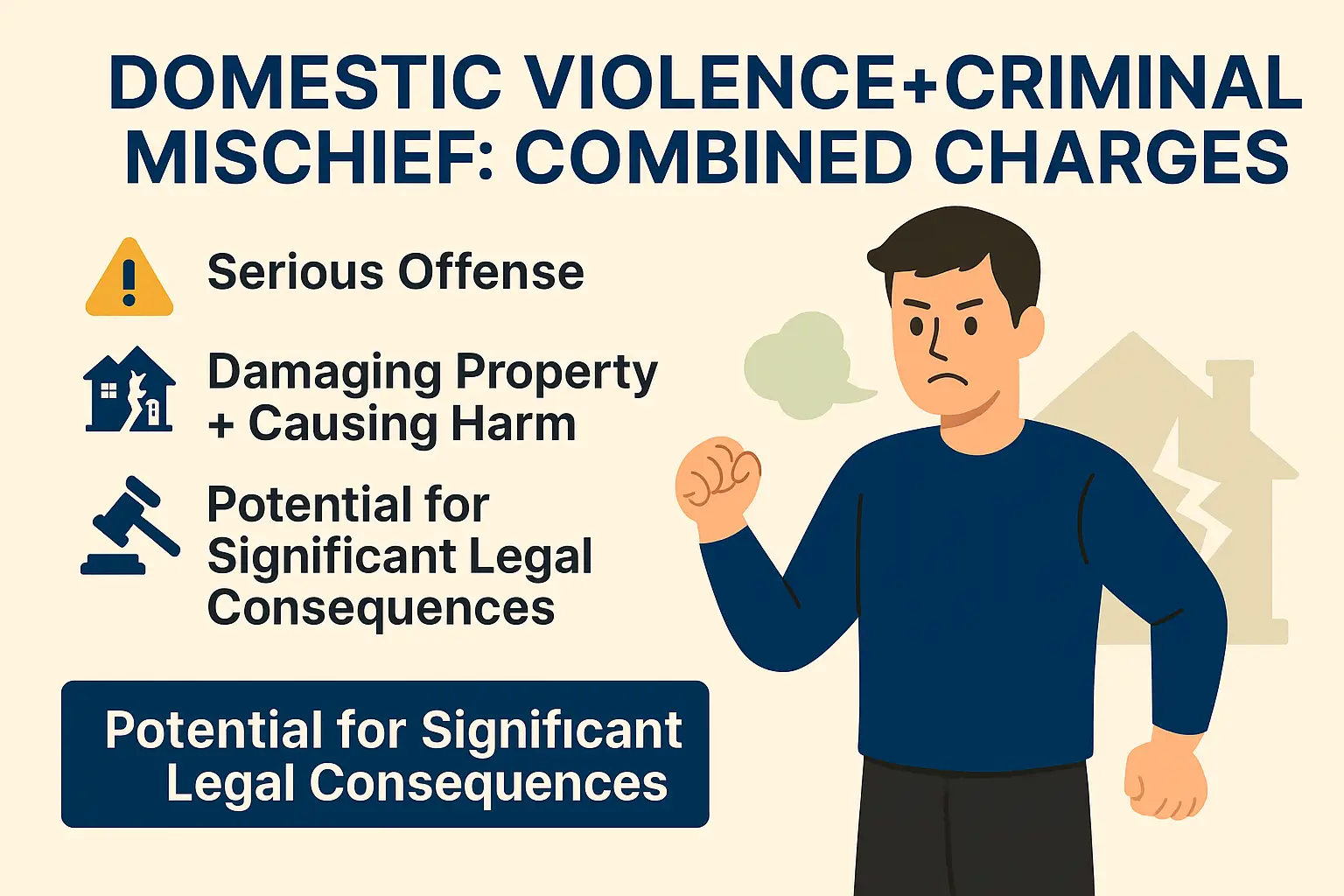
In Florida, domestic violence (DV) cases are frequently paired with criminal mischief when an argument escalates and property is damaged. This combined-charge scenario appears constantly in Broward and Miami-Dade — often based on assumptions rather than evidence.
But despite how police treat these cases, both charges are highly defendable, especially when the damage was accidental, minimal, mutual, or unsupported by body-worn camera footage.
This page focuses on domestic violence cases involving property damage. For a broader overview of domestic violence charges and defense strategy in Florida, see our Domestic Violence Defense guide.
Here’s what the State must prove and how these cases are fought.
⚖️ What Counts as Criminal Mischief in a DV Case?
Under Florida Law, criminal mischief is the willful and malicious destruction of another person’s property.
In domestic cases, this often includes:
Broken phones
Cracked doors or doorframes
Holes in drywall
Broken plates, TVs, lamps
Damaged vehicles
Destroyed clothing or bags
Police frequently assume intent — even when property damage resulted from:
A mutual struggle
Self-defense
Accidental contact
Both parties pulling or pushing items
🚨 Why DV + Criminal Mischief Are Filed Together
Police almost always file both charges when:
A phone was destroyed during an argument
Property breaks in the middle of physical contact
Someone throws an object
Damage occurs while defending yourself
A neighbor or family member reports “noise + breaking”
The alleged victim points to damage caused earlier
🔗 When the State “Stacks” Charges
Combined DV + mischief cases usually involve two separate counts:
1️⃣ Domestic Violence Battery (1st-Degree Misdemeanor)
Intentional touching/striking OR causing bodily harm.
2️⃣ Criminal Mischief (Misdemeanor or Felony)
Depends on:
Prior convictions
Amount of damage
Whether the property belongs to the alleged victim
Damage thresholds:
Under $200 → 2nd-degree misdemeanor
$200–$999 → 1st-degree misdemeanor
$1,000+ → 3rd-degree felony
Felony mischief cases almost always involve overcharging or inflated repair estimates — issues your motion to suppress or motion to dismiss strategies can exploit.
🧭 How Prosecutors Try to Prove These Cases
They rely heavily on:
Body-worn camera footage
911 recordings
Photographs of damage
Statements made during the heat of the moment
Claims of “fear” or “threatening behavior”
Prior DV calls
Neighbors reporting “glass breaking”
If the victim later recants — common in DV cases — the State may still proceed using hearsay exceptions, just like in victim-won’t-show-up situations.
🛡️ Defenses to DV + Criminal Mischief in Florida
At Michael White, P.A., we use targeted defenses including:
✔ Accidental Damage / No Intent
Criminal mischief requires intent — not accidents.
✔ Self-Defense
Damage caused while defending yourself is not malicious.
✔ Joint Ownership Issues
You cannot “damage another’s property” if you co-own it.
✔ Mutual Combat
Damage caused during mutual pulling or shoving does not equal “malicious destruction.”
✔ Victim Credibility Problems
Inconsistencies in statements are common and easily exposed.
✔ Police Jumped to Conclusions
Bodycam often contradicts officer assumptions.
✔ Illegal Entry or Detention
If police entered unlawfully, everything afterward is attackable through a motion to suppress.
🚨 Speak With a Fort Lauderdale Criminal Defense Lawyer Today
Combined DV + criminal mischief cases can be serious — but they’re also highly defendable.
Contact Michael White, P.A. today so we can challenge the State’s narrative, expose inconsistencies, and fight to protect your future.
❓ FAQs — DV + Criminal Mischief in Florida
1. Why am I charged with both DV and criminal mischief?
Because police often assume property damage during an argument was intentional.
2. Can criminal mischief be a felony?
Yes — if the damage exceeds $1,000.
3. Can the victim drop the charges?
No. The State controls DV cases, not the victim.
4. Can these charges be dismissed?
Often — especially when intent, ownership, or credibility is weak.
5. Will this affect my record?
DV-related convictions are rarely sealable; mischief may be sealable with a withhold.