
Last updated February 2026
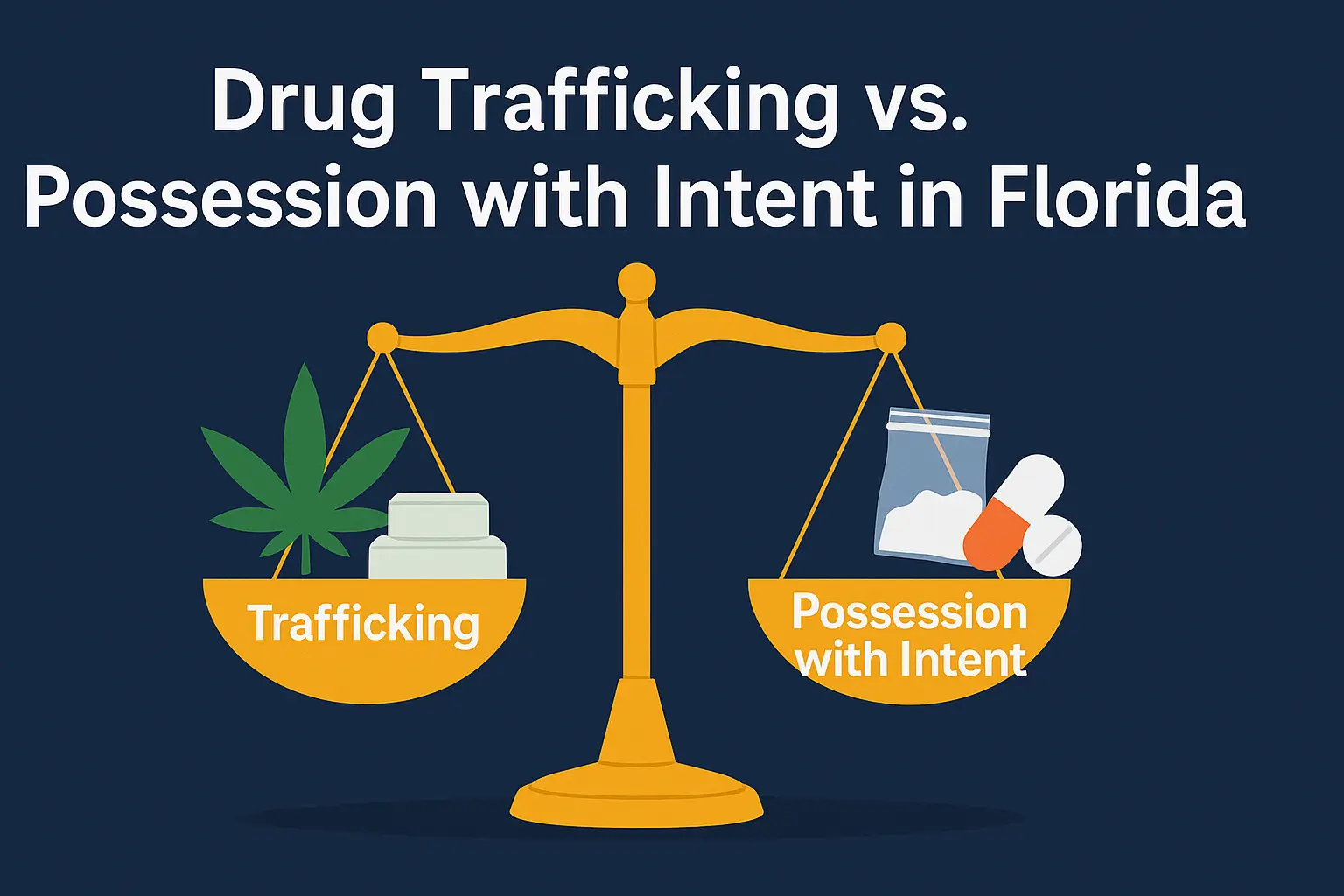
Drug charges in Florida range from misdemeanors to life felonies. Two of the most serious — drug trafficking and possession with intent to sell — are often confused. Understanding the differences between trafficking and possession with intent is critical, because the penalties vary drastically.
This page compares two distinct felony offenses under Florida law; it does not replace a full legal analysis of either charge.
For a full explanation of Florida drug trafficking charges, penalties, and defenses, see our Drug Trafficking in Florida guide.
For a deeper explanation of how Florida prosecutors prove intent-to-sell cases, see our Possession With Intent to Sell in Florida guide.
⚖️ Possession with Intent in Florida
Under Florida Statute §893.13, possession with intent to sell, manufacture, or deliver drugs is based on the circumstances, not just the amount. Evidence prosecutors use includes:
Large quantities packaged in smaller bags.
Scales, baggies, or paraphernalia.
Large amounts of cash.
Witness statements.
Penalties:
Usually charged as a second- or third-degree felony.
Penalties vary by substance and degree, and can include up to 15 years in prison.
💰 Drug Trafficking in Florida
Likewise, under Florida Statute §893.135, trafficking is based on weight thresholds, regardless of intent. Even if there is no evidence of selling, simply possessing enough of a substance qualifies as trafficking.
Examples of thresholds:
Marijuana: 25 pounds or 300 plants.
Cocaine: 28 grams or more.
Oxycodone: 7 grams or more.
Penalties:
Mandatory minimum prison sentences (3, 7, or 15 years).
Fines up to $200,000.
Some trafficking charges are punishable by life in prison.
🔍 Key Differences Between Trafficking and Possession with Intent
| Factor | Possession with Intent | Trafficking |
|---|---|---|
| Basis | Circumstantial evidence (scales, baggies, cash, etc.) | Weight of the drugs |
| Statute | §893.13 | §893.135 |
| Penalties | 5–15 years (depending on drug) | 3–30 years mandatory minimums |
| Proof Required | Intent to sell, manufacture, or deliver | Possession of a threshold amount |
🛡️ Defenses to These Charges
A defense lawyer may challenge:
Illegal searches or traffic stops (4th Amendment violations).
Actual vs. constructive possession (drugs weren’t yours).
Weight calculations (lab errors, unusable material counted).
Lack of intent in possession with intent cases.
📍 Broward County Drug Defense
In Fort Lauderdale and Broward County, prosecutors aggressively pursue trafficking cases. But weight-based charges often leave room for defense, especially when lab results or search procedures are flawed.
❓ FAQs
Q1: What’s the difference between possession with intent and trafficking?
Possession with intent is based on circumstances suggesting dealing. Trafficking is based on drug weight.
Q2: Can possession with intent be upgraded to trafficking?
Yes, if the weight meets the trafficking threshold.
Q3: Are trafficking penalties harsher than possession with intent?
Yes. Trafficking carries mandatory minimum prison sentences and higher fines.
Q4: Can trafficking charges be reduced?
Sometimes, through plea negotiations or by challenging weight and evidence.
Q5: Do you need a lawyer for either charge?
Yes. Both carry felony penalties and require strong defense strategies.