
Last updated February 2026
🧼 A Second Chance Starts With a Clean Record
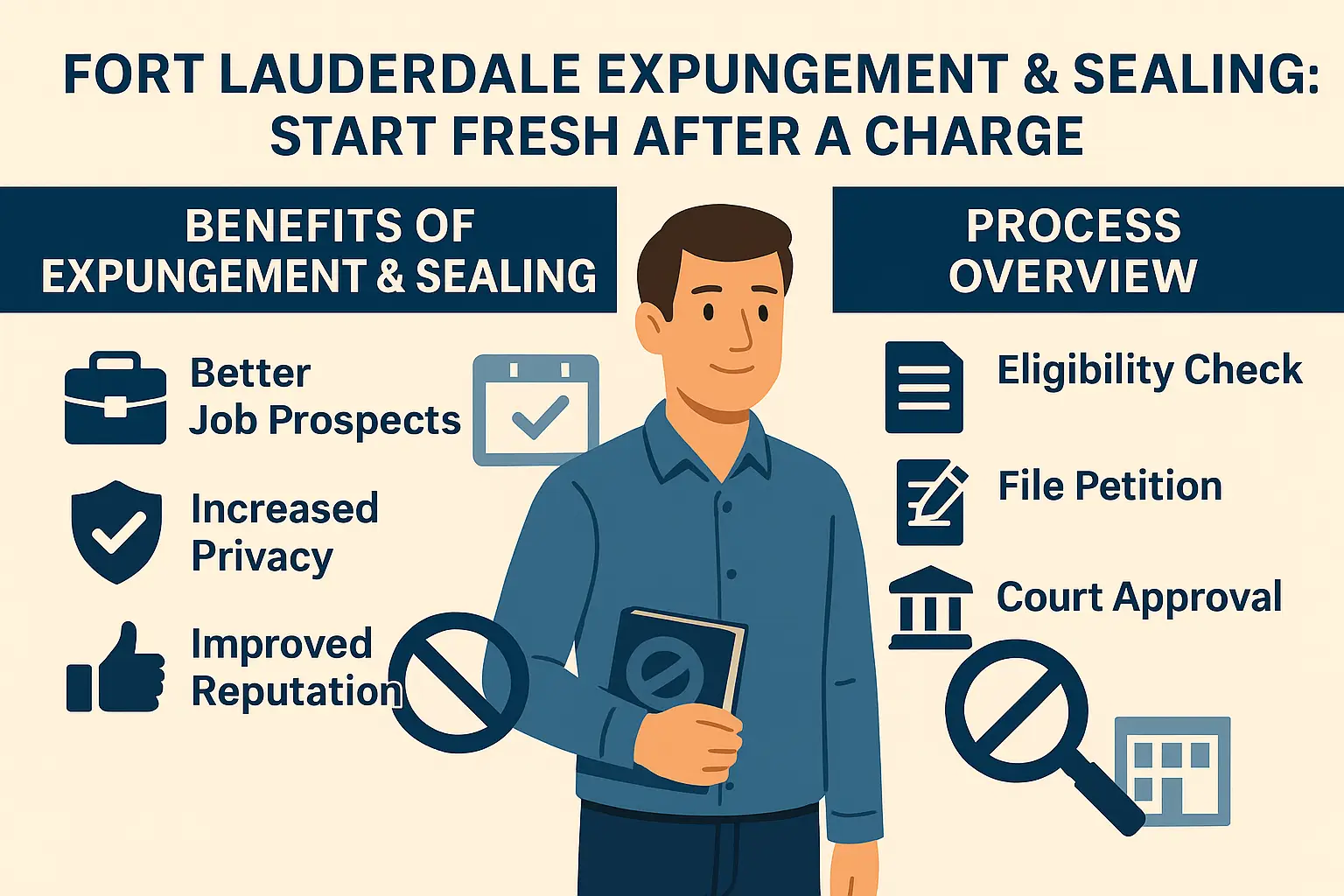
Even when charges are dropped, dismissed, or resolved without a conviction, your arrest can still show up on background checks in Florida. That can affect jobs, housing, school, and professional licensing — long after the case ends.
If you’re looking for a seal and expunge attorney in Fort Lauderdale, the key is doing it correctly the first time. Florida’s rules are strict, the paperwork is technical, and avoidable mistakes can cause months of delay.
At Michael White, P.A., we help clients across Fort Lauderdale and Broward County clear eligible records with a clean, efficient strategy.
👉 For the full statewide overview, eligibility rules, and step-by-step process, visit:
Sealing & Expungement in Florida
⚖️ Sealing vs. Expungement in Florida: The Quick Difference
Under Florida law, sealing and expungement are different remedies with different eligibility rules.
🔒 Sealing
Makes the record confidential (generally hidden from public view)
Often available when a case ends with a withhold of adjudication
Certain agencies may still access sealed records in limited situations
🧹 Expungement
Destroys the record held by most agencies (FDLE retains a confidential copy)
Typically available when a case ends in dismissal, no action, or not guilty
Requires an FDLE Certificate of Eligibility before court filing
👉 Want the detailed breakdown? See: Sealing vs. Expunging in Florida
✅ Who May Qualify to Seal or Expunge a Record
You may be eligible if:
You were arrested but charges were never filed, or the case was dismissed / dropped / no actioned / not guilty (often expunge-eligible)
You received a withhold of adjudication on an eligible offense (often seal-eligible)
You have no prior criminal convictions (including out-of-state issues)
You have no prior Florida sealing/expungement (with limited exceptions)
You have no pending charges anywhere
Some charges are not eligible even if the case ended favorably. Eligibility is offense-specific and fact-specific.
Common related questions:
🛡️ How a Fort Lauderdale Seal & Expunge Lawyer Helps
We handle the process from start to finish, including:
Eligibility review and strategy (seal vs expunge, timing, risk points)
FDLE Certificate of Eligibility packet (when required)
Court petition, affidavit, proposed order, and supporting documents
Representation if a hearing is required
Follow-up to ensure agencies process the order properly
Mistakes — rejected fingerprints, incorrect dispositions, wrong statute numbers, or filing an ineligible case — commonly cause major delays. We focus on getting it right the first time.
⏳ How Long Does It Take?
Many cases take 6–12 months from starting the FDLE step through a signed court order, depending on FDLE backlogs, court scheduling, and whether a hearing is required.
👉 For a deeper timeline breakdown, see: How Long Does It Take to Expunge a Record in Florida?
✅ Why Clients Choose Michael White, P.A.
Former prosecutor with insight into how records are created and maintained
Trusted by professionals, students, parents, and first-time offenders
Efficient, record-focused process with clear communication
Fort Lauderdale–based defense with South Florida reach
📞 Ready to Clear Your Record in Fort Lauderdale?
If your case ended in a dismissal, no action, not guilty, or a withhold — you may have a path to sealing or expungement.
📲 Call (954) 270-0769 or schedule a consultation today.
❓ Fort Lauderdale Sealing & Expungement FAQs
What’s better — sealing or expungement?
Expungement offers stronger privacy protections, but it’s only available in limited outcomes (like dismissals). Sealing is often available with a withhold. The right choice depends on your disposition and eligibility.
Will employers or landlords see it after sealing/expungement?
Most private background checks will not show sealed records, and expunged records should be removed because they’re destroyed by most agencies. Some databases can lag and may require correction.
Can I expunge a DUI in Florida?
DUI convictions generally cannot be sealed or expunged. If your case was reduced or dismissed, eligibility depends on the final disposition.
Can I do this on my own?
You can, but many self-filed cases are delayed or denied due to eligibility issues or incomplete documentation. We help prevent avoidable mistakes.