
Last updated March 2026
Graffiti is one of the most common ways people end up facing criminal mischief charges in Florida. While some may view it as minor or artistic expression, Florida law treats graffiti as intentional property damage when it is done without permission.
For a broader explanation of how these charges work, see our guide to Criminal Mischief in Florida.
Is Graffiti Illegal in Florida?
Yes — when graffiti is applied to property without the owner’s consent, it is typically charged as criminal mischief under Florida law.
Graffiti cases often involve:
- spray painting walls or buildings
- tagging fences, signs, or vehicles
- writing or drawing on public or private property
- defacing businesses, schools, or residences
The key issue is lack of consent. Even minimal markings can lead to criminal charges if the property owner did not authorize the conduct.
How Graffiti Is Charged
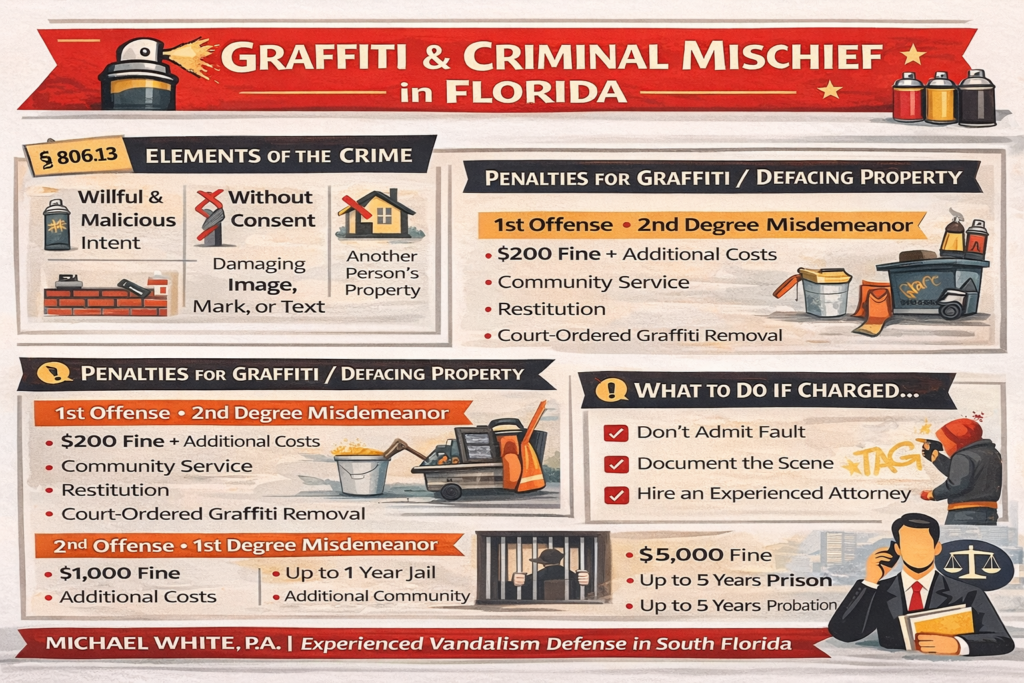
Graffiti is not a separate standalone offense in most cases. Instead, it falls under Florida’s criminal mischief statute, which focuses on:
- willful and malicious conduct
- damage or defacement
- property belonging to another person
The severity of the charge depends largely on the cost to repair or remove the graffiti.
For example, cleaning paint from certain surfaces can be expensive — especially when professional restoration is required. That cost can quickly elevate what seems like a minor incident into a more serious charge.
If you are dealing with lower-value damage allegations, see Criminal Mischief Under $200 in Florida for how smaller cases are handled.
Penalties for Graffiti Charges in Florida
Depending on the damage amount and circumstances, penalties may include:
- misdemeanor or felony criminal charges
- fines and court costs
- probation
- community service
- restitution for cleanup or repairs
- possible jail exposure
In many graffiti cases, courts place heavy emphasis on restitution and cleanup costs, which can sometimes exceed the actual value of the original damage.
To better understand how repayment works, see Restitution in Florida Criminal Mischief Cases.
Why Graffiti Cases Can Escalate Quickly
What starts as a relatively minor incident can become more serious depending on:
- the location (schools, churches, government property)
- repeat allegations
- the total cost of removal
- whether multiple surfaces or properties were affected
Graffiti on certain types of property may lead to enhanced scrutiny or more aggressive prosecution.
Common Defenses to Graffiti Charges
Graffiti cases often present strong defense opportunities, especially where intent, identity, or damage is unclear.
Lack of Intent
Not all markings are intentional vandalism. In some cases, the conduct may be accidental or misunderstood.
Mistaken Identity
Graffiti is frequently investigated after the fact. Law enforcement may rely on assumptions, incomplete video footage, or unreliable witness descriptions.
Consent or Authorization
If the property owner gave permission — even informally — the case may not meet the legal definition of criminal mischief.
Disputed Damage or Cleanup Costs
The cost of removing graffiti is often estimated or inflated. Challenging those numbers can affect both the charge and the restitution amount.
The Role of Video Evidence in Graffiti Cases
Surveillance footage and phone videos are commonly used in graffiti investigations. However, video evidence is not always clear or complete.
Issues may include:
- poor image quality
- unclear identification
- missing context
- gaps in footage
For a deeper look at how video evidence is used and challenged, see Can Video Evidence Prove Criminal Mischief in Florida?.
Can Graffiti Charges Be Dropped?
Yes — depending on the facts, graffiti-related criminal mischief charges may be resolved through:
- dismissal
- diversion programs
- negotiated agreements involving restitution
- reduced charges
Early legal intervention often creates the best opportunity to minimize or avoid long-term consequences.
Fort Lauderdale Graffiti Defense Attorney
Graffiti charges may seem minor at first glance, but they can carry real consequences — including a criminal record and financial obligations for cleanup.
At Michael White, P.A., we focus on:
- challenging intent and identity
- disputing inflated cleanup costs
- negotiating restitution strategically
- positioning cases for dismissal or reduction
If you are facing graffiti-related criminal mischief charges in Fort Lauderdale or South Florida, early action can make a significant difference.
FAQs
Is graffiti always criminal mischief in Florida?
In most cases, yes. Graffiti is typically charged as criminal mischief when it involves damaging or defacing property without permission.
Can graffiti be charged as a felony in Florida?
Yes. If the cost to repair or remove the graffiti reaches certain thresholds, the charge may be elevated to a felony.
Do I have to pay to remove graffiti?
Possibly. Courts often require restitution to cover cleanup or repair costs.
What if I didn’t do the graffiti?
Mistaken identity is a common issue in graffiti cases, especially when based on unclear video footage or witness assumptions.