
Last updated February 2026
If you were arrested in Florida but not convicted, you may be eligible to expunge your record. The next question is the one everyone cares about:
How long does it actually take?
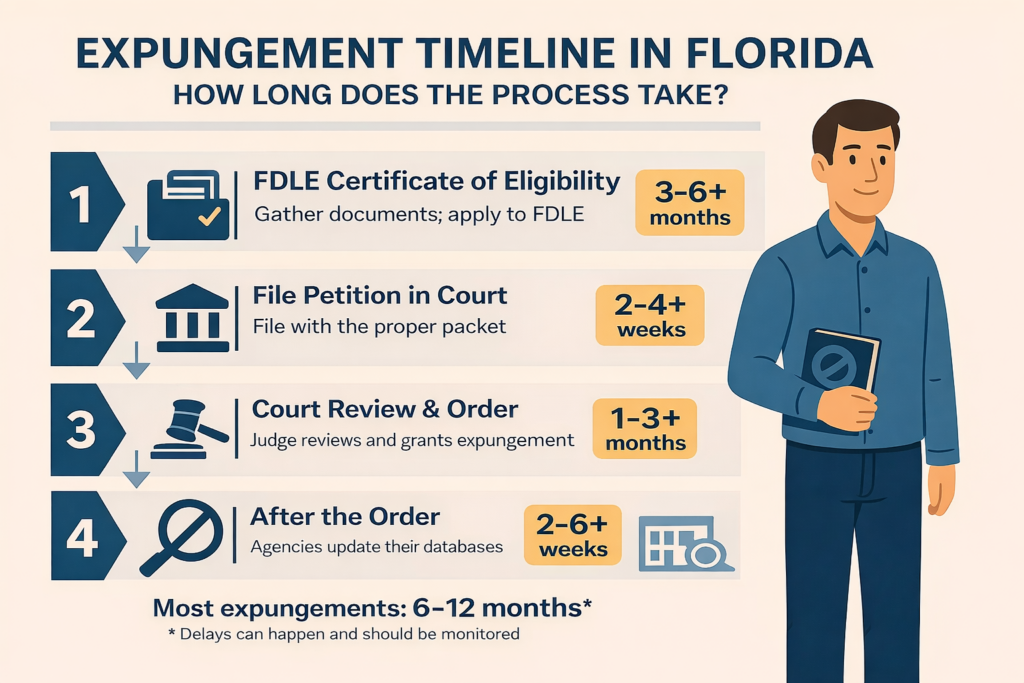
In many cases, the full process takes about 6–12 months, depending on FDLE processing times, court scheduling, and whether paperwork issues need to be corrected.
👉 For the full overview of Florida record-clearing options (sealing vs. expungement, eligibility, and process), start here:
🕒 Step-by-Step Timeline: Florida Expungement
While every case is different, here’s the typical sequence and where delays happen.
📑 Step 1: FDLE Certificate of Eligibility (often several months)
Most Florida expungements begin with an application to FDLE for a Certificate of Eligibility. This packet usually includes:
Fingerprints
Certified case documents and disposition
Application forms and affidavit
FDLE fee
This is usually the longest part of the timeline. Processing varies with FDLE backlogs and document accuracy.
Most common delay: missing/incorrect dispositions or mismatches in statute/case status.
🏛️ Step 2: File the Petition in Court (often a few weeks)
After the Certificate of Eligibility is issued, your petition is filed in the court where the case occurred. The filing packet typically includes:
Petition
Sworn affidavit
FDLE certificate
Proposed order
Court timing depends on the judge’s procedures and the county’s docket.
👨⚖️ Step 3: Court Review and Order (often 1–3+ months)
Some judges sign expungement orders without a hearing if everything is clean and uncontested. Others may set a short hearing, especially if:
the State objects,
documents are unclear, or
eligibility needs clarification.
Once granted, the judge signs an order directing agencies to expunge.
✅ Step 4: After the Order — When Records Actually Disappear
Even after an order is signed, records can take time to update across agencies and background-check systems.
Typically:
the clerk updates the court file status,
agencies process the order internally, and
private databases update on their own timelines.
If an expunged case still appears on a background check, it may be a lag or a third-party database that needs correction.
🚫 The Biggest Causes of Delay
Applying before confirming eligibility
Missing or incorrect final dispositions
Fingerprints rejected or improperly completed
Cases showing “open/pending” in the system when they shouldn’t
Filing in the wrong court or with the wrong case number
💬 FAQs: How Long Expungement Takes in Florida
How long does it take to expunge a record in Florida?
In many cases, expect about 6–12 months, depending on FDLE backlogs, court scheduling, and whether a hearing is required.
Can I speed up the process?
You can’t skip steps, but you can avoid delays by ensuring the FDLE packet and court filing are complete and accurate the first time.
Is sealing faster than expunging?
Timelines are often similar because both typically involve FDLE review and court filings.
What’s usually the longest step?
The FDLE Certificate of Eligibility stage is commonly the biggest bottleneck.
Do I need a lawyer?
Not legally, but many delays and denials come from avoidable paperwork and eligibility mistakes. An attorney can help streamline the process.
📞 Ready to Start?
If your case ended in a dismissal, no action, or not guilty, you may have a path to expungement. We can review eligibility and help you move through the process efficiently.