
Last updated February 2026
Many drivers are surprised to learn that dental work or a mouth injury can affect DUI breath test results. In Florida DUI cases, breath testing relies on strict scientific assumptions—assumptions that often break down when alcohol is present in the mouth rather than the lungs.
These cases frequently involve residual mouth alcohol, not true blood-alcohol concentration.
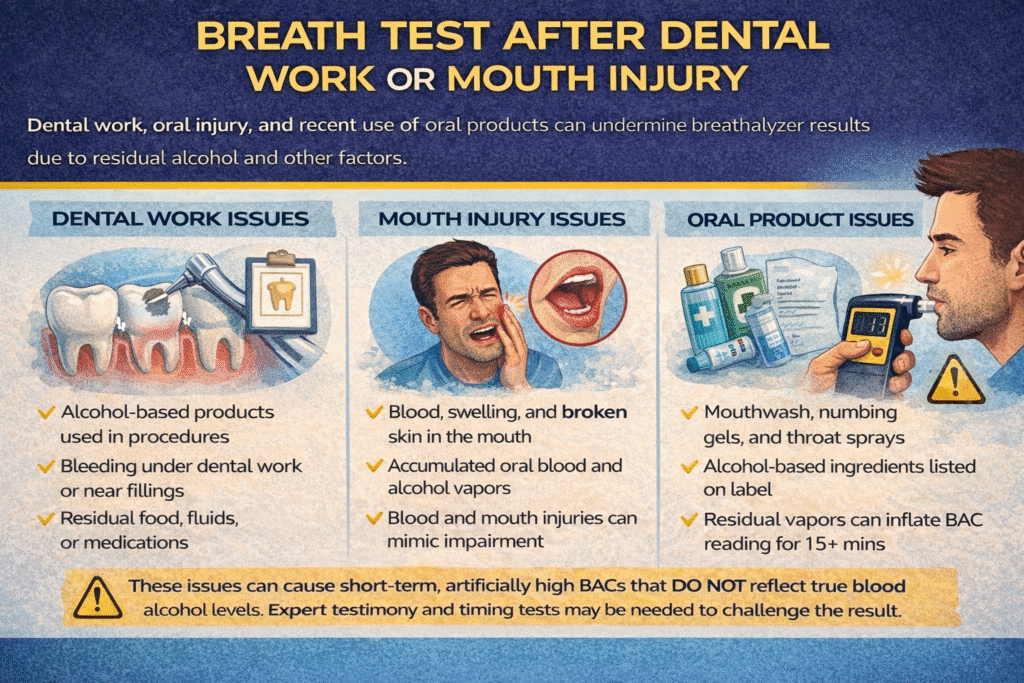
⚖️ Can Dental Work Affect a Breathalyzer Test?
Yes. Dental procedures can leave substances in the mouth that interfere with breath testing.
Examples include:
dental anesthetics
dental adhesives
alcohol-based rinses used during treatment
exposed gum tissue
When alcohol remains in the mouth, a breathalyzer may register artificially inflated readings that do not reflect true impairment.
🩸 How Mouth Injuries Create False Breath Test Results
Mouth injuries often involve:
bleeding gums
oral lacerations
inflammation or exposed tissue
Blood in the mouth can trap alcohol and release it into the breath sample, producing false positives or exaggerated BAC results. This is a known limitation of breath testing devices.
⏱️ The 20-Minute Observation Period Matters
Florida breath testing rules require officers to observe a person for a minimum period before administering a breath test.
During this time, the subject must not:
eat or drink
vomit
burp or regurgitate
place anything in the mouth
Dental issues make this rule especially important. Failure to follow the observation period often supports challenging and suppressing the DUI evidence.
🧪 Why Breath Tests Are Especially Unreliable in These Cases
Breathalyzers assume alcohol comes from the lungs—not the mouth.
Dental work and oral injuries break that assumption by:
introducing alcohol directly into the mouth
delaying alcohol dissipation
contaminating breath samples
These problems directly implicate Florida DUI testing rules and the scientific reliability of the results.
🚨 Common Red Flags in Dental-Related Breath Test Cases
recent dental appointments
visible mouth injuries
bleeding noted on bodycam
missing or shortened observation period
identical or inconsistent breath readings
Any of these issues may undermine the State’s case.
✅ Key Takeaways
Dental work and mouth injuries can affect breath test accuracy
Residual mouth alcohol can cause falsely elevated BAC results
Observation-period violations are common
Breath tests are not always reliable
Suppression is often the strongest defense
❓ FREQUENTLY ASKED QUESTIONS
Can dental work cause a false DUI breath test?
Yes. Dental procedures can leave alcohol-based substances in the mouth that affect breath test readings.
Do bleeding gums matter in DUI breath tests?
Yes. Blood in the mouth can trap alcohol and release it into the breath sample, inflating results.
What if police didn’t follow the observation period?
Failure to follow required observation rules can invalidate breath test results and support suppression.
Are these DUI cases defensible?
Very often. Breath test cases involving dental issues frequently involve scientific and procedural flaws.