
Last updated March 2026
Not all battery charges in Florida are the same. While domestic battery is often charged as a misdemeanor, aggravated battery is a serious felony that can lead to prison and long-term consequences.
Understanding the difference between these charges is critical because prosecutors often decide which offense to pursue based on the severity of the alleged injuries, the presence of a weapon, and the intent involved.
If you have been arrested for a domestic violence offense in Fort Lauderdale or Broward County, it is important to understand how Florida law distinguishes between these two charges and how the State attempts to prove them.
If you are facing domestic violence allegations, start by reviewing our guide to working with a Fort Lauderdale Domestic Violence Defense Lawyer to understand the legal process and immediate steps to protect your rights.
What Is Domestic Battery in Florida?
Domestic battery typically refers to battery committed against a family or household member.
Under Florida Statute 784.03, battery occurs when a person:
Intentionally touches or strikes another person against their will, or
Intentionally causes bodily harm.
When the alleged victim is a family or household member, the offense becomes domestic violence battery under Florida’s domestic violence laws.
A family or household member may include:
A spouse or former spouse
A person you share a child with
Someone who lives or previously lived in the same household
Certain blood relatives living together
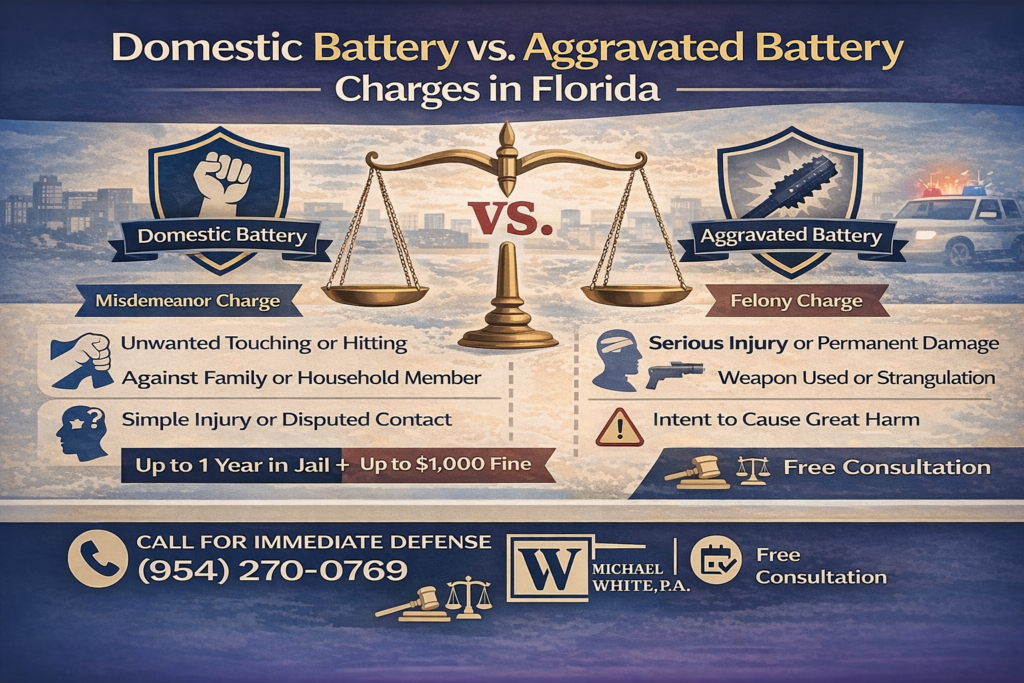
Domestic battery is usually charged as a first-degree misdemeanor, punishable by:
Up to 1 year in jail
Up to 12 months of probation
Up to $1,000 in fines
However, even a misdemeanor domestic battery conviction can carry serious collateral consequences, including firearm restrictions and long-term background record issues.
What Is Aggravated Battery?
Aggravated battery is a much more serious offense.
Under Florida Statute 784.045, a battery becomes aggravated when one of the following occurs:
The defendant intentionally causes great bodily harm, permanent disability, or permanent disfigurement
The defendant uses a deadly weapon
The alleged victim is pregnant, and the defendant knew or should have known
Unlike domestic battery, aggravated battery is a second-degree felony.
Potential penalties include:
Up to 15 years in prison
Up to 15 years of felony probation
Up to $10,000 in fines
If the case also involves a domestic relationship, prosecutors may pursue the charge as domestic violence aggravated battery, which can lead to additional restrictions and consequences.
Key Differences Between Domestic Battery and Aggravated Battery
The primary differences involve injury severity, weapons, and criminal penalties.
Domestic battery typically involves unwanted touching or minor injury. Aggravated battery involves serious injury, weapons, or circumstances that increase the danger of the offense.
In many cases, prosecutors initially charge domestic battery but later upgrade the offense if medical records or photographs suggest more serious injuries.
Conversely, a charge initially filed as aggravated battery may be reduced when evidence does not support the severity required by law.
When Domestic Battery Charges Escalate to Felonies
Domestic battery cases can escalate beyond misdemeanors in several ways.
For example:
Prior domestic violence convictions may lead to enhanced penalties.
Serious injuries can transform a misdemeanor into aggravated battery.
Certain conduct may support additional charges such as domestic violence by strangulation.
You can learn more about how these felony domestic violence charges are prosecuted in our guide to Domestic Violence Strangulation in Florida.
Defenses to Battery Charges in Florida
Both domestic battery and aggravated battery cases often turn on the specific facts of the encounter.
Common defenses may include:
Self-Defense
Florida law allows individuals to use reasonable force to protect themselves from imminent harm.
In some circumstances, defendants may also raise Stand Your Ground immunity, which can result in dismissal before trial. Learn more in Stand Your Ground in a Florida Domestic Violence Case.
Lack of Intent
Battery requires intentional conduct. Accidental contact or defensive movement may not meet the legal standard.
Inconsistent or Unreliable Evidence
Domestic disputes often occur during emotionally charged situations. Conflicting statements, lack of injury documentation, or contradictory video evidence can weaken the prosecution’s case.
Can Battery Charges Be Reduced or Dismissed?
Many battery cases resolve without trial. Prosecutors evaluate evidence strength, witness credibility, and legal defenses when deciding whether to proceed.
In some situations, charges may be:
Reduced
Dismissed
Resolved through plea negotiations
To learn how these decisions are made, see Can Domestic Violence Charges Be Dropped, Reduced, or Dismissed in Florida.
Speak With a Fort Lauderdale Domestic Violence Defense Lawyer
Battery charges — whether misdemeanor or felony — can carry serious consequences for your freedom, employment, firearm rights, and family life.
The difference between domestic battery and aggravated battery can determine whether a case involves probation or prison exposure.
If you have been arrested for domestic violence in Fort Lauderdale, Hollywood, or anywhere in Broward County, early legal intervention can make a significant difference.
Michael White, P.A. is a former Broward prosecutor who understands how domestic violence cases are built — and how they can be challenged.
Call (954) 270-0769 for a confidential consultation.