
Last updated February 2026
Florida Statutes § 812.014 defines grand theft as unlawfully taking property valued at $750 or more with the intent to deprive the owner of it—either temporarily or permanently. This includes:
Cars or trucks
Firearms
Credit/debit cards
Construction site materials
Controlled substances
All grand theft charges in Florida are felonies.
Grand theft is part of Florida’s broader theft and fraud laws. For a full overview of how these cases are charged and defended, see our guide to theft and fraud charges in Florida.
⚖️ Types of Grand Theft Felonies in Florida
🔹 Third-Degree Grand Theft (Felony)
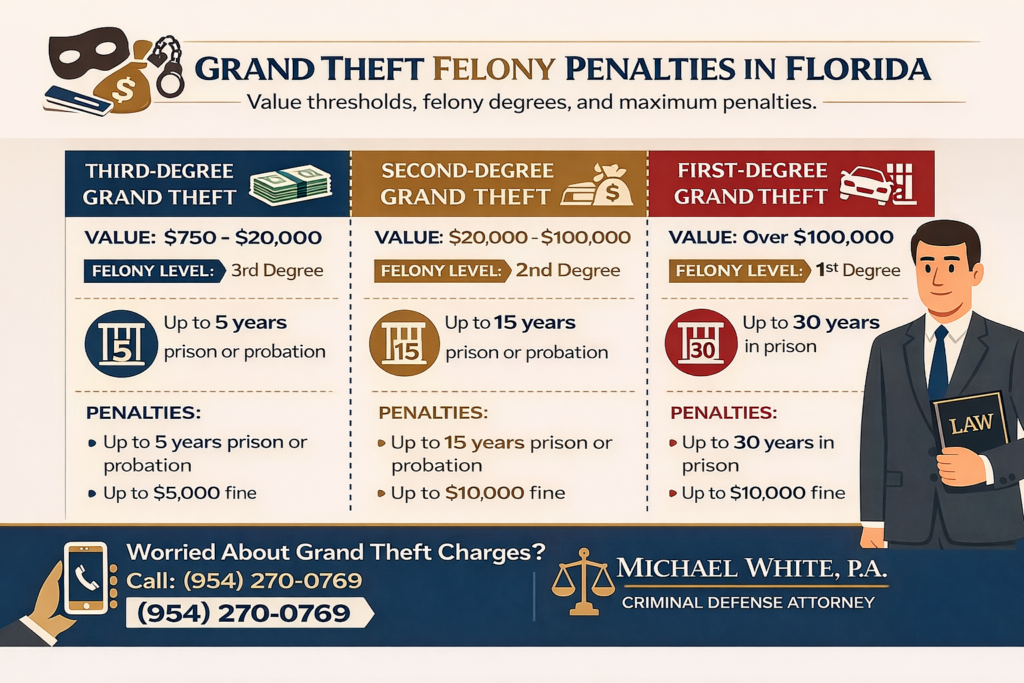
Property value: $750–$20,000
Penalty: Up to 5 years prison/probation, $5,000 fine
🔸 Second-Degree Grand Theft (Felony)
Property value: $20,000–$100,000
Penalty: Up to 15 years prison/probation, $10,000 fine
🔴 First-Degree Grand Theft (Felony)
Property value: Over $100,000 OR use of vehicle to commit theft & damage
Penalty: Up to 30 years in prison, $10,000 fine
⚠️ Why the Degree of Grand Theft Matters
The degree of a grand theft charge affects far more than potential prison time. Higher-level felonies carry longer probation terms, harsher sentencing scores, and fewer options for diversion or charge reduction.
In many cases, disputing the property value or ownership can mean the difference between a third-degree felony and a decades-long exposure.
🚓 Arrested for Grand Theft in Fort Lauderdale?
Even first-time offenders face felony records and harsh penalties. A grand theft conviction in Florida can damage your employment, housing, and rights—including your ability to vote or possess firearms.
If your case involves a probation violation, a repeat offense, or theft from a vulnerable person, the prosecution may pursue enhancements. That’s why it’s crucial to act fast.
Grand theft charges may also be enhanced if the allegation involves a firearm, a motor vehicle, a vulnerable victim, or a prior theft conviction.
🧠 How We Defend Grand Theft Felony Charges
As a former prosecutor, Attorney Michael White understands how grand theft cases are charged—and how to fight them. Our firm works to:
Challenge evidence and police procedures
Identify lack of intent or mistaken identity
Negotiate charge reductions or pretrial diversion
Fight for acquittal or dismissal when possible
📞 Accused of Grand Theft? Call Michael White, P.A.
If you’re facing a grand theft felony in Fort Lauderdale or anywhere in South Florida, don’t wait. Call us today at (954) 270-0769 for a confidential consultation.
We’re ready to protect your future and your freedom.
🧾 Grand Theft Felony in Florida: Frequently Asked Questions
❓ Is grand theft always a felony in Florida?
Yes. In Florida, grand theft is always charged as a felony. The degree of felony depends on the value of the property and the facts of the case.
❓ What’s the difference between petit theft and grand theft?
Petit theft involves property valued under $750 and may be a misdemeanor. Grand theft involves property worth $750 or more and is always a felony.
❓ Can I go to jail for grand theft in Florida?
Yes. Even a third-degree grand theft charge carries up to five years in prison. First-degree charges can result in up to thirty years.
❓ Can grand theft charges be dropped or reduced?
Yes. An experienced defense attorney can often challenge the evidence or negotiate for reduced charges or diversion.
❓ Can I seal or expunge a grand theft felony?
Only if the charge is dropped or you receive a withhold of adjudication and meet Florida’s strict eligibility rules. A conviction cannot be sealed or expunged.