
Last updated February 2026
📜 What Is Grand Theft in the Third Degree?
Facing a third-degree grand theft charge in Florida is no small matter. While it’s the lowest level of felony theft under Florida law, the consequences are serious — and long-lasting. A conviction can mean prison time, a permanent record, and life-altering collateral damage.
Here’s what you need to know if you’ve been charged — and how an experienced defense attorney can help.
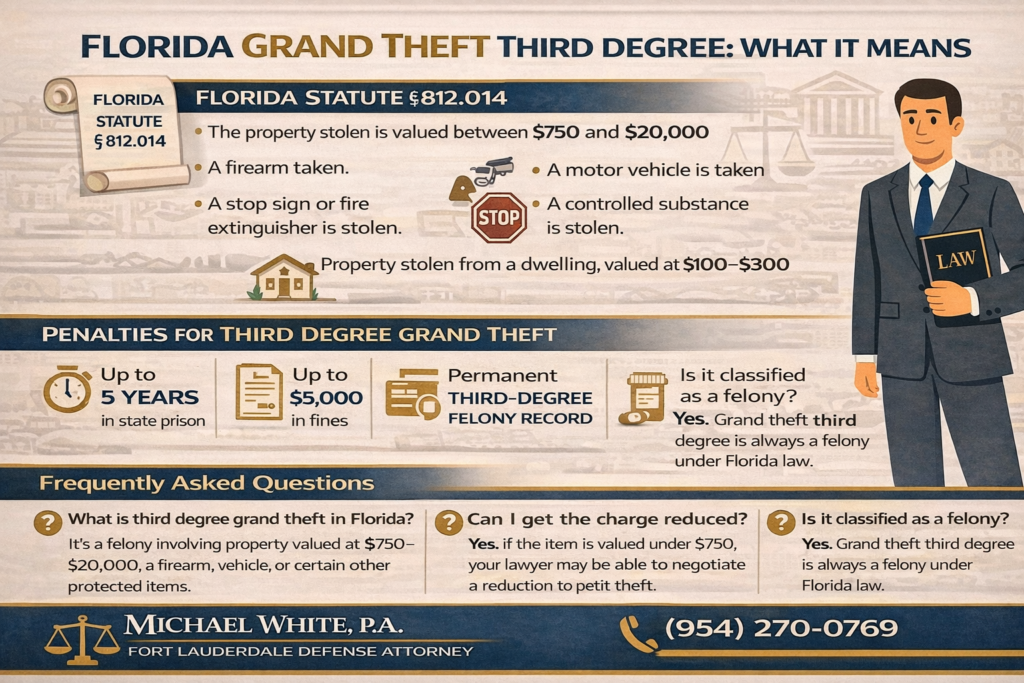
Under Florida Statute § 812.014, theft becomes a felony of the third degree when:
The property stolen is valued between $750 and $20,000
OR the property fits certain protected categories, including:
A firearm
A stop sign or fire extinguisher
A motor vehicle
A controlled substance
Property stolen from a dwelling (valued at $100–$300)
Even first-time offenders can be charged with a felony for these offenses — and the law does not require prior convictions.
Theft offenses in Florida are classified based on value and the type of property involved.
⚖️ Penalties for Third Degree Grand Theft
Third-degree grand theft is a Level 2 offense under Florida’s sentencing guidelines.
If convicted, you could face:
🕔 Up to 5 years in state prison
🧾 Up to $5,000 in fines
📉 5 years of probation
🔒 A permanent felony record
This charge also counts as a “crime of dishonesty,” which can severely impact employment, licensing, housing, and immigration.Third-degree grand theft is one of several felony theft classifications under Florida law.
For a broader breakdown of felony degrees and sentencing exposure, see grand theft felony penalties in Florida.
⚠️ Why Third Degree Grand Theft Is Still Serious
Although third-degree grand theft is the lowest level of felony theft, it still carries prison exposure, long probation terms, and a permanent felony record. In many cases, the long-term consequences — background checks, licensing issues, and future sentence enhancements — matter more than the initial jail exposure.
🛡️ How We Defend Grand Theft (Third Degree) Charges
At Michael White, P.A., we tailor each defense based on the facts, your criminal history, and the nature of the alleged offense. Common defenses include:
Lack of Intent — You had no plan to permanently deprive the owner
Mistaken Value — Prosecutors must prove value exceeds the $750 threshold
Consent — The property was loaned, shared, or used with permission
Mistaken Identity — No witness or video tying you to the scene
Pre-Filing Intervention — We act before charges are even filed
Many of our clients avoid a felony conviction altogether — through dismissal, diversion, or a withhold of adjudication.
Early legal intervention often determines whether a third-degree grand theft charge results in dismissal, reduction, or a permanent felony conviction.
🧑⚖️ Why Clients Choose Michael White, P.A.
As a former Broward prosecutor, Attorney Michael White understands how the State builds theft cases — and how to tear them down.
We act early. We challenge weak evidence. And we fight for results that protect your record and your future.
📞 Charged With Grand Theft in Florida? Don’t Plead Guilty Without a Fight.
If you’ve been charged with third-degree grand theft, learn how our Fort Lauderdale theft and fraud defense team fights felony charges and protects your future.
One mistake shouldn’t define your life. Let’s protect your future.
Call today or schedule a confidential consultation.
❓ Frequently Asked Questions About Third Degree Grand Theft in Florida
📄 What is third degree grand theft in Florida?
It is a felony offense involving the theft of property valued between $750 and $20,000, or certain protected items such as firearms, vehicles, or controlled substances.
⚖️ Is grand theft in the third degree a felony?
Yes. Third degree grand theft is classified as a third-degree felony under Florida law, punishable by up to 5 years in prison and a $5,000 fine.
🧾 Can a third-degree grand theft charge be dropped or reduced?
Yes. With early legal intervention, strong defenses, or evidentiary issues, prosecutors may agree to dismiss the charge, reduce it, or resolve the case without a felony conviction.
📉 What if the item’s value is less than $750?
If the property is valued under $750, a defense attorney may be able to seek a reduction to petit theft, which is a misdemeanor offense.
🛡️ Will I go to jail for third degree grand theft in Florida?
Not always. Many first-time offenders qualify for diversion programs, probation, or a withhold of adjudication instead of jail time, depending on the facts of the case.