
Last updated March 2026
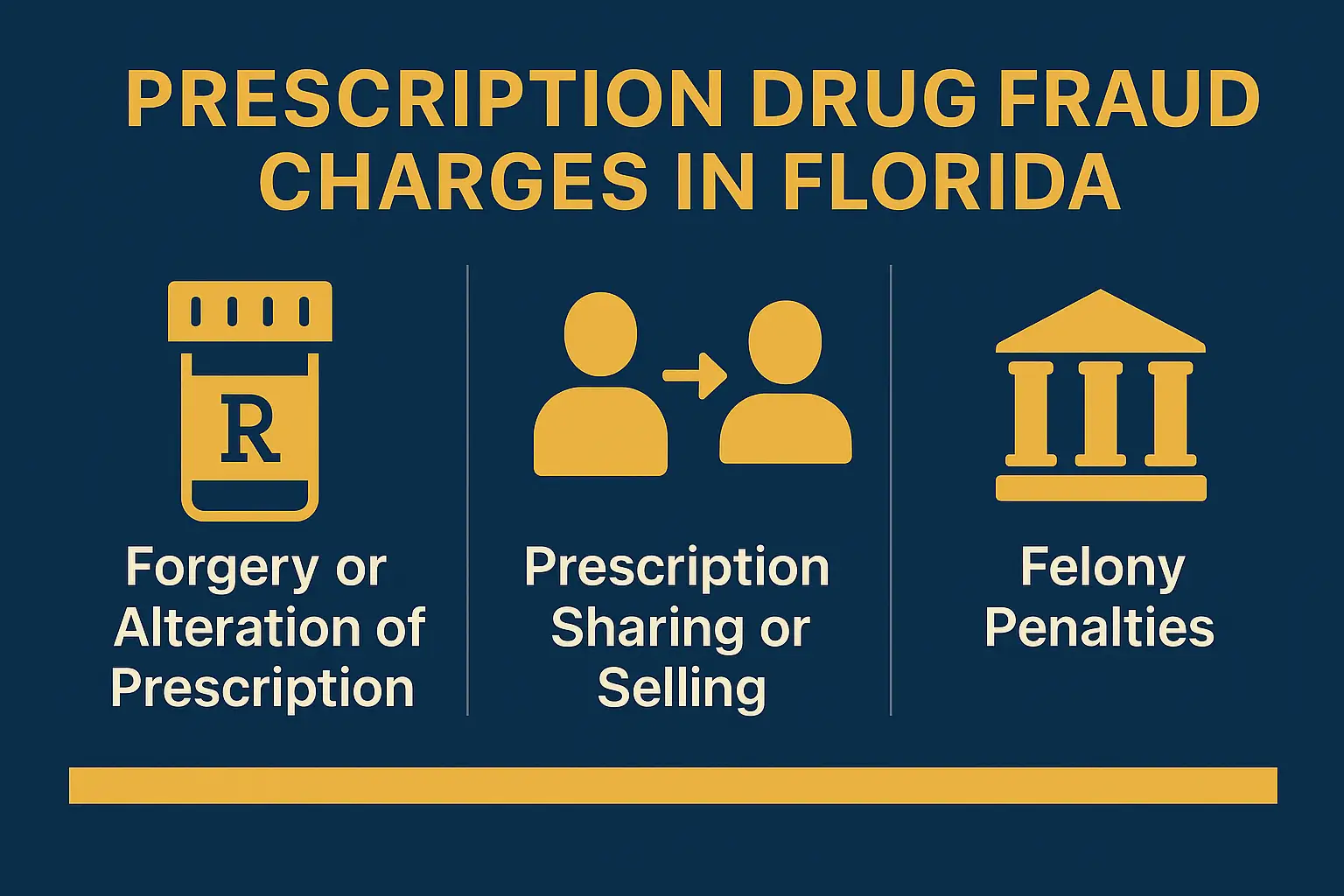
Florida treats prescription drug fraud as a serious felony — often punished more aggressively than simple drug possession. Prosecutors target opioid-related cases, forged scripts, altered prescriptions, and doctor-shopping offenses.
These cases frequently arise from pharmacy calls, PDMP database checks, or traffic stops where officers discover controlled substances without a valid prescription. They are also common in Broward County, where pharmacies are trained to detect minute irregularities in prescriptions.
Unlike simple possession cases, prescription drug fraud charges focus on intentional deception, not mere possession or use of medication.
For context on how Florida prosecutes prescription-related offenses more broadly, see our Prescription Drug Charges in Florida guide.
Here’s what you need to know if you or a loved one is charged.
⚖️ What Counts as Prescription Drug Fraud in Florida?
Under Florida law, a person commits prescription drug fraud when they:
Obtain a controlled substance by fraud, deceit, or misrepresentation
Forge or alter a prescription
Use a fake name or false patient information
Present a prescription knowing it is fraudulent
Use someone else’s legitimate prescription
Engage in doctor shopping without disclosing prior prescriptions
These offenses can be charged as third-degree or second-degree felonies, depending on quantity, substance, and whether a fraud scheme is alleged.
Prescription fraud cases often involve disputes over intent, documentation, and how evidence was obtained.
🚨 Common Situations Leading to Prescription Drug Fraud Charges
These cases often begin with:
Pharmacists noticing altered quantity, dose, or date
A script written for a deceased or inactive physician
Requests for early refills
Doctor shopping patterns through the PDMP
Possession of prescription bottles with scratched labels
Traffic stops revealing pills outside containers
Individuals holding scripts for multiple CS classes (e.g., opioids + benzos)
Pharmacists often deny the fill and immediately call law enforcement, triggering an investigation.
Prescription fraud investigations often involve the same medications frequently seen in possession cases, including Adderall, Xanax, oxycodone, hydrocodone, Percocet, all of which can lead to felony charges when possessed without a valid prescription.
🧾 Penalties for Prescription Drug Fraud
Penalties depend on the type of controlled substance and alleged conduct:
Third-Degree Felony
Up to 5 years in prison
Up to 5 years probation
$5,000 fine
Second-Degree Felony (more serious fraud or trafficking-adjacent conduct)
Up to 15 years in prison
Up to 15 years probation
$10,000 fine
Additional consequences include:
Loss of professional licenses
Immigration impacts
Loss of firearm rights
Inability to seal/expunge if adjudicated
Mandatory drug evaluations
Unlike many possession cases, prescription drug fraud charges are often excluded from diversion programs due to the alleged intent to deceive.
🛑 How Prosecutors Try to Prove Fraud
The State often uses:
Pharmacy surveillance video
Prescription monitoring program (PDMP) records
Pharmacist testimony
Digital metadata on e-scripts
Text messages
Pill counts
Bodycam or traffic-stop evidence
Prior prescriptions
Statements from medical staff
They commonly allege:
forged signature
altered date/quantity
multiple doctors within a short period
inconsistent medication histories
These cases frequently intersect with digital-evidence issues, similar to cell-phone search and digital-forensics posts.
🛡️ Defenses to Prescription Drug Fraud
At Michael White, P.A., we challenge these cases using:
✔ Lack of Knowledge
Prescription may have been given to you by someone else without explaining it was altered.
✔ No Intent to Defraud
Human error, misunderstanding, or miscommunication with pharmacy staff is common — similar to lack-of-intent defenses.
✔ Proof Problems
Pharmacist testimony often relies on “belief” instead of evidence.
✔ Unlawful Stop or Search
If pills were discovered during an invalid traffic stop or unlawful vehicle search, we file a motion to suppress.
✔ Medical Necessity / Valid Prescription
Sometimes a valid script exists but wasn’t presented properly.
✔ Disputed Possession or Attribution
In some cases, pills or prescriptions are found in shared spaces, creating disputes about who actually engaged in the alleged fraud.
❓ FAQs — Prescription Drug Fraud in Florida
1. Is prescription drug fraud a felony in Florida?
Yes. It can be a third- or second-degree felony depending on the conduct.
2. Can I be charged without possessing pills?
Yes — fraud can occur through a forged script alone.
3. Are all pharmacy mistakes considered fraud?
No. The State must prove intentional deception.
4. Can prescription fraud be sealed or expunged?
Only if adjudication is withheld and the charge qualifies.
5. Do I need a lawyer for prescription drug fraud?
Absolutely — these cases have complex evidence and serious consequences.