
Last updated March 2026
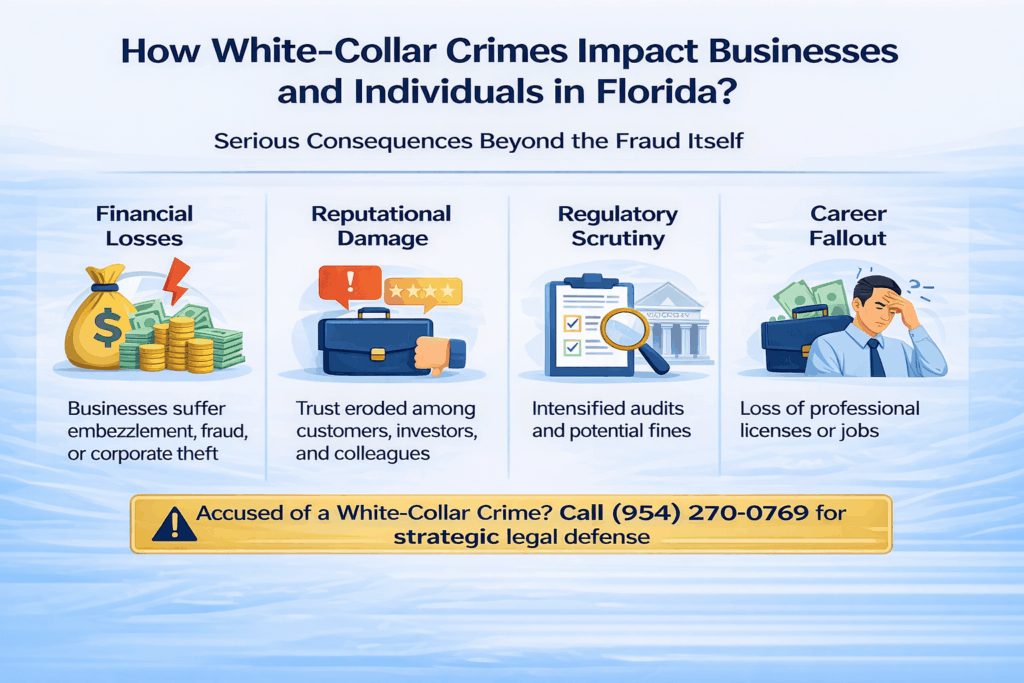
White collar crime allegations in Florida often cause damage long before a case reaches trial. Even an investigation—without an arrest—can disrupt businesses, careers, professional licenses, and personal relationships.
Because these cases frequently involve financial records, regulatory agencies, and public scrutiny, the consequences extend well beyond the courtroom.
For a full overview of Florida white collar crime laws and defense strategy, see our guide to White-Collar Criminal Charges.
💸 1. Financial Disruption
Allegations involving fraud, embezzlement, tax violations, or financial misconduct can trigger immediate financial consequences such as:
-
Frozen bank accounts
-
Seized business assets
-
Cancelled contracts
-
Investor withdrawal
-
Lost revenue from reputational harm
Even before guilt is established, investigations can create cash-flow interruptions that place enormous strain on a business or household.
In cases involving federal exposure, asset forfeiture efforts may begin during the investigation phase.
🏢 2. Business and Operational Consequences
Companies facing internal or external white collar allegations may experience:
-
Internal audits and compliance reviews
-
Regulatory investigations
-
Employee resignations
-
Contract terminations
-
Suspension from government programs
For closely held businesses, the mere existence of an investigation can jeopardize vendor relationships and long-term stability.
🧾 3. Regulatory and Licensing Exposure
In regulated professions—such as healthcare, finance, law, real estate, and government contracting—white collar investigations often trigger parallel administrative action.
Agencies that may initiate separate proceedings include:
-
Federal licensing authorities
-
State regulatory boards
-
Professional disciplinary committees
-
Financial oversight agencies
These regulatory actions may proceed independently of the criminal case and can result in suspension, revocation, or permanent restrictions—even if criminal charges are later reduced.
The full scope of criminal sentencing exposure—including prison time, fines, and restitution—depends on the specific charges and financial allegations involved. For a detailed breakdown, see our guide to White-Collar Criminal Penalties in Florida.
🧠 4. Reputational and Career Harm
White collar allegations frequently become public through:
-
Arrest records
-
Federal indictments
-
Media reporting
-
Professional reporting requirements
For executives, professionals, and business owners, reputational damage may affect:
-
Future employment opportunities
-
Partnership eligibility
-
Client retention
-
Long-term earning capacity
Even dismissed cases can leave digital footprints that require strategic mitigation.
In some cases, investigations that begin at the state level are later adopted by federal authorities, significantly increasing both exposure and long-term consequences. To understand how and why that happens, see our guide to Can Feds Take Over a State White-Collar Criminal Investigation?.
🧨 5. Emotional and Personal Impact
Financial crime investigations are often prolonged and document-intensive. Individuals under investigation commonly experience:
-
Chronic stress
-
Strained professional relationships
-
Disruption of family life
-
Decision-making fatigue
The uncertainty surrounding subpoenas, grand jury investigations, or potential federal charges can be overwhelming.
⚖️ Collateral Consequences Often Exceed Criminal Penalties
In many cases, the collateral impact of a white collar allegation—lost business, damaged reputation, regulatory action—can outweigh the formal criminal penalties.
This is especially true in cases involving:
-
High-dollar loss allegations
-
Federal prosecution
-
Asset forfeiture
-
Professional licensing risk
Understanding these risks early allows defense strategy to focus not only on the criminal charge, but also on preserving long-term stability.
📞 Facing a White Collar Investigation?
If you are under investigation for a financial offense in Florida, early legal intervention can influence how the case develops—and how collateral damage is contained.
Call (954) 270-0769 to schedule a confidential consultation.