
Last updated April 2026
If you are arrested in Florida, what happens in the first 24 to 72 hours can determine the direction of your entire case.
From booking and jail intake to first appearance, bond decisions, immigration holds, and extradition issues, the early stage of a criminal case is procedural — but highly strategic.
Whether the charge involves DUI, drugs, theft, domestic violence, or a felony investigation, the arrest and first appearance process follows a structured legal path under Florida law.
This page focuses specifically on the arrest and first appearance stage. For a complete overview of the entire process from arrest through resolution, see our Florida Criminal Arrest & Pretrial Process Guide.
Understanding that path is critical.
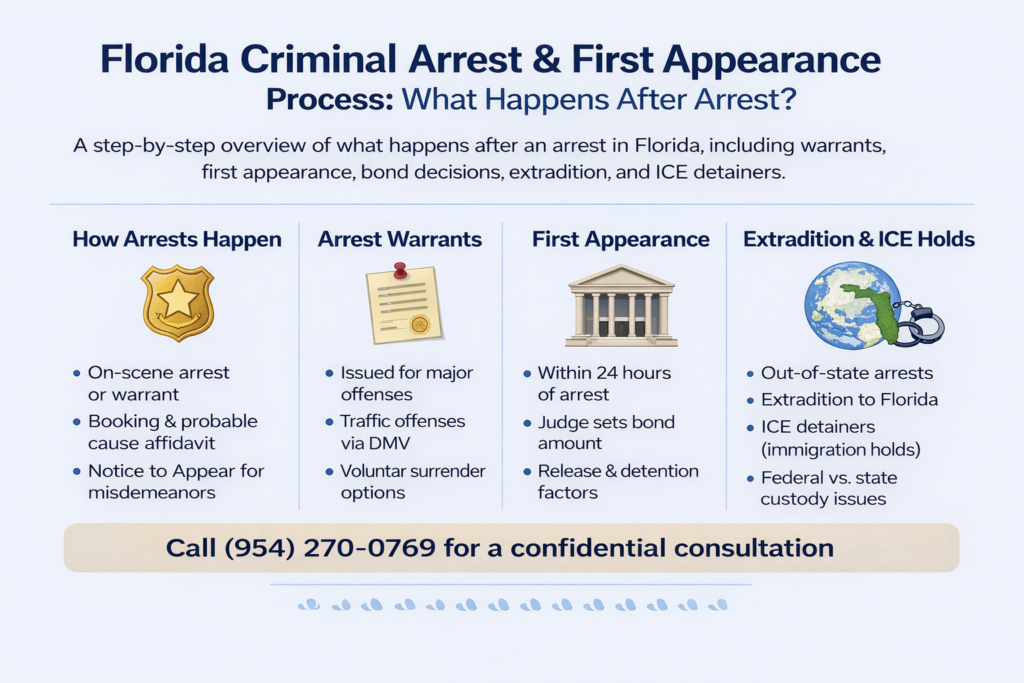
🚔 How Arrests Happen in Florida
An arrest can occur in several ways:
• On-scene arrest during a traffic stop or investigation
• Arrest based on an active warrant
• Voluntary surrender after a warrant is issued
• Issuance of a Notice to Appear (misdemeanor citation instead of jail booking)
After arrest, a person is transported to the county jail for:
• Booking and fingerprinting
• Mugshot photograph
• Entry into the jail system
• Preparation of a probable cause affidavit
For a detailed explanation of how officers document charges, see our guide to Probable Cause Affidavits in Florida.
📄 What Is a Notice to Appear?
In some misdemeanor cases, law enforcement may issue a Notice to Appear (NTA) instead of making a custodial arrest.
This allows the individual to:
• Avoid jail booking
• Receive a court date
• Remain out of custody pending first court appearance
However, failure to appear can result in a warrant being issued.
Learn more about how NTAs work in our dedicated Notice to Appear in Florida guide.
🔍 Arrest Warrants & Voluntary Surrender
Arrests are not always immediate.
A judge may issue a warrant based on:
• A sworn affidavit
• Failure to appear
• Probation violation
• Filing of formal charges
In some cases, surrendering voluntarily through counsel may:
• Avoid surprise arrest
• Reduce bond complications
• Improve court positioning
If you discover a warrant tied to a driver’s license issue, see our page on DMV-Related Arrest Warrants in Florida.
🏛 What Happens at First Appearance?
Florida law requires that a person arrested be brought before a judge within 24 hours.
At first appearance, the judge determines:
• Whether probable cause exists
• Bond eligibility
• Bond amount
• Pretrial conditions
• No-contact orders
• GPS monitoring or supervision requirements
The judge does not determine guilt. This hearing strictly addresses detention and release conditions.
For a full breakdown of bond decisions and release types, see our guide to Bond & Pretrial Release in Florida.
⛓ Will You Stay in Jail Before Trial?
Remaining in custody depends on:
• Bond amount
• Ability to post bond
• Nature of the charge
• Prior record
• Immigration status
Some defendants remain in jail pending trial. Others secure release through bond or supervised pretrial programs.
Read more in our page on Jail Before Trial in Florida.
🌎 Extradition to Florida
If you are arrested in another state on a Florida warrant, extradition may follow.
This process can involve:
• Waiver of extradition
• Governor’s warrant procedures
• Transfer between states
• Bond implications
Because extradition cases often involve strategic timing decisions, see our in-depth guide to Extradition to Florida from Another State.
🧊 ICE Detainers & Immigration Holds
Non-citizens may face an additional complication: an ICE detainer.
An immigration hold can:
• Prevent release even if bond is posted
• Trigger federal immigration proceedings
• Extend detention beyond state court timelines
If immigration status may affect release, immediate legal coordination is critical.
🧭 Why the First 72 Hours Matter
The arrest and first appearance stage often determines:
• Bond strategy
• Charging posture
• Early negotiations
• Diversion eligibility
• Case trajectory
Mistakes made early — including statements to law enforcement — can permanently affect the defense.
Early intervention can:
• Argue for bond reduction
• Coordinate voluntary surrender
• Protect against self-incrimination
• Secure evidence before it disappears
📍 Broward County & South Florida Considerations
While Florida criminal procedure is statewide, practices differ by county.
Bond customs, supervision programs, and jail procedures vary in:
• Broward County
• Miami-Dade County
• Palm Beach County
Understanding those local practices can make a measurable difference in early-stage outcomes.
📞 Speak With a Florida Criminal Defense Attorney
If you or a loved one has been arrested, expects to surrender, or is facing a first appearance hearing, time matters.
The arrest stage is not administrative — it is strategic.
Call (954) 270-0769 for a confidential consultation with Michael White, P.A.