
Last updated February 2026
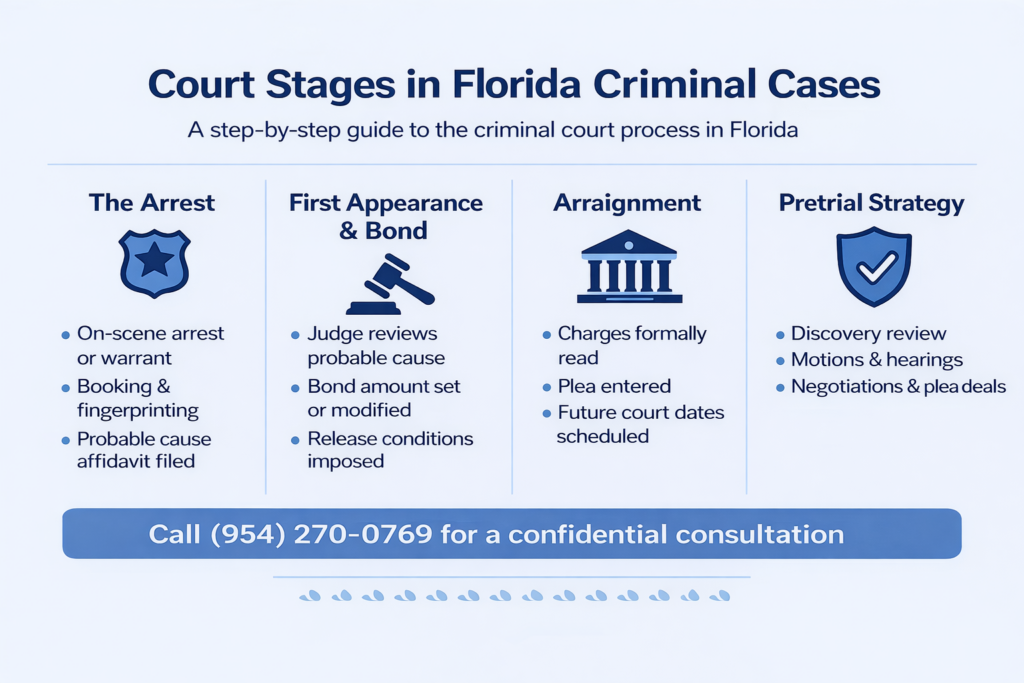
After arrest and initial release decisions are made, a Florida criminal case moves through a series of structured court stages.
Each stage serves a different purpose — from formally entering a plea to negotiating resolution or preparing for trial.
Understanding what happens at each phase helps you avoid mistakes and prepare strategically.
For a complete overview of the criminal process from arrest forward, see our Florida Criminal Arrest & Pretrial Process Guide.
⚖️ Stage 1: Arraignment
The arraignment is typically the first formal court appearance after first appearance and bond are addressed.
At arraignment:
• Charges are formally read
• A plea is entered (guilty, not guilty, or no contest)
• Future court dates are scheduled
• Discovery deadlines may begin
In most cases, defendants plead not guilty at arraignment to preserve all legal defenses.
For a full breakdown of what happens and what decisions matter at this stage, see our guide to What Happens at a Criminal Arraignment in Florida.
📅 Stage 2: Pretrial Conference
After arraignment, the case proceeds into the pretrial phase.
Pretrial conferences are status hearings where the court and attorneys discuss:
• Discovery progress
• Negotiations
• Outstanding motions
• Readiness for trial
These hearings are often procedural — but they are strategically important.
Missed deadlines, unresolved evidence issues, or poor negotiation posture can dramatically affect the case’s outcome.
Learn more in our guide to What Happens at a Pretrial Conference in Florida.
🧾 Stage 3: Motion Practice & Evidence Challenges
Before trial, attorneys may file motions to:
• Suppress unlawfully obtained evidence
• Dismiss defective charges
• Exclude improper testimony
• Compel discovery
Many cases are resolved during this stage — either through dismissal, reduction, or negotiated plea.
While not every case involves formal hearings, pretrial motion practice is often where the strongest defenses are built.
📊 Stage 4: Case Timeline & Resolution
Criminal cases in Florida do not resolve overnight.
The timeline depends on:
• Whether the charge is misdemeanor or felony
• Complexity of evidence
• Number of witnesses
• Court backlog
• Negotiation posture
Some misdemeanor cases may resolve within months.
Serious felony cases may take a year or longer.
For a detailed look at how long cases typically take in Fort Lauderdale and South Florida, see our guide to the Criminal Case Timeline in Fort Lauderdale.
🛑 Possible Outcomes Before Trial
Many cases resolve before trial through:
• Diversion programs
• Plea negotiations
• Charge reductions
• Dismissals
If resolution is not reached, the case proceeds to trial.
Trial involves jury selection, presentation of evidence, cross-examination, and verdict.
🧭 Why Understanding Court Stages Matters
Each stage presents strategic opportunities.
Early mistakes — such as missing court, entering the wrong plea, or failing to address discovery issues — can compound quickly.
Understanding the sequence helps:
• Protect release status
• Preserve defenses
• Avoid additional charges
• Maintain negotiation leverage
Procedural awareness is often as important as substantive defense.
📞 Speak With a Florida Criminal Defense Attorney
If you are navigating arraignment, pretrial hearings, or approaching trial, early legal strategy can shape the entire trajectory of your case.
Call (954) 270-0769 for a confidential consultation.