
Last updated April 2026
Florida’s disorderly intoxication law is often misunderstood — and frequently misused by police.
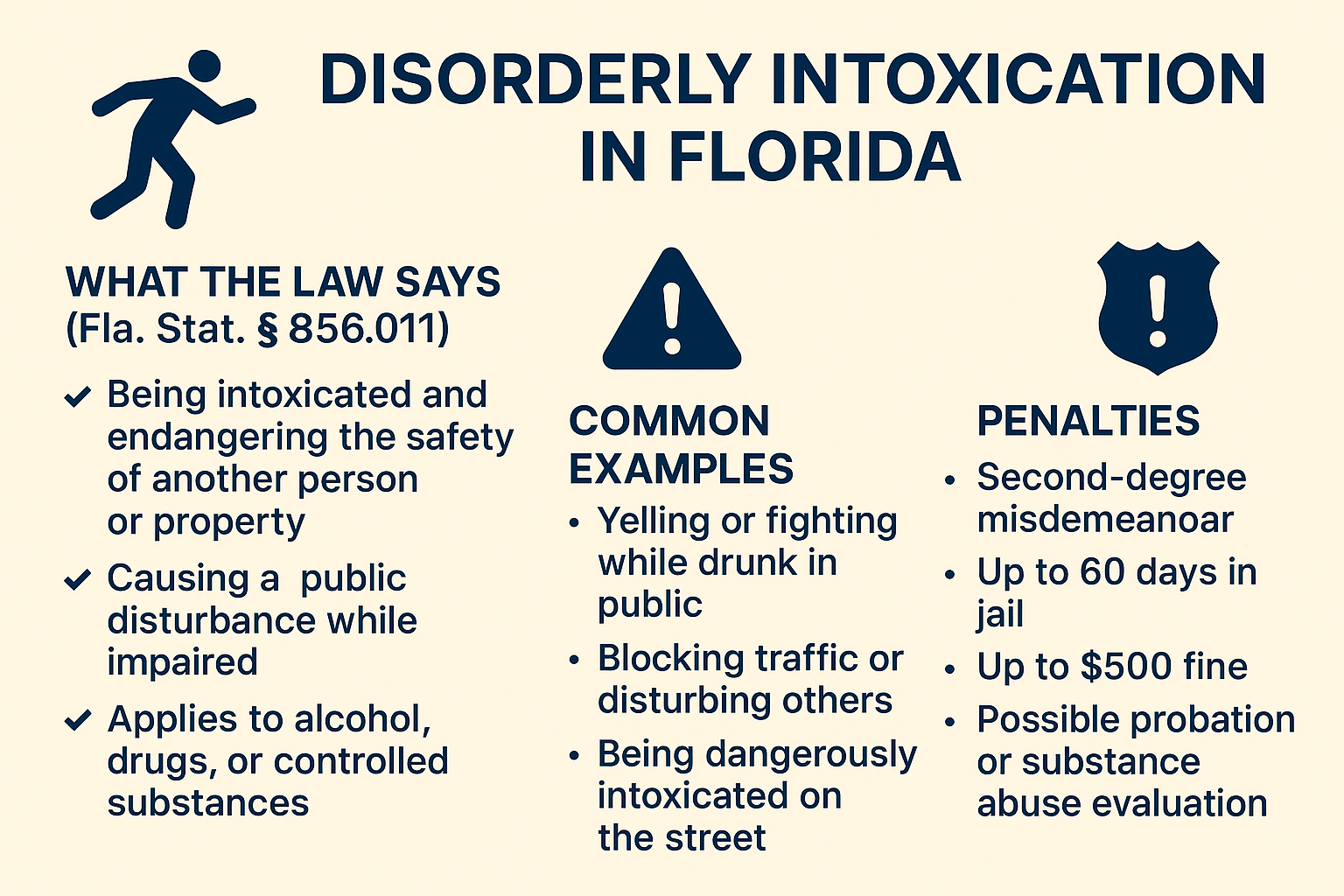
Under Fla. Stat. § 856.011, being drunk in public is not a crime by itself. The State must prove:
-
You were intoxicated, and
-
You endangered yourself or others OR
-
You caused a public disturbance.
In South Florida, this charge usually comes from nightlife districts, beaches, bar rows, events, and tourist areas — and many cases fall apart once the actual legal standard is applied.
For a broader overview of related charges, see our guide to Disorderly Conduct & Public Order Offenses in Florida.
Here’s what the law requires, and how to fight these cases.
⚖️ What Counts as Disorderly Intoxication?
To convict you of disorderly intoxication, prosecutors must show:
✔ You were intoxicated, and
✔ You endangered the lives, safety, or health of others, or
✔ You created a public disturbance while intoxicated
Examples police claim as disorderly intoxication:
-
Yelling at strangers
-
Falling or stumbling in crowds
-
Arguing outside bars
-
Sleeping in the wrong area
-
Refusing to leave an establishment
-
Being drunk on the beach
But none of these automatically meet the legal standard.
Just like in Loitering and Prowling in Florida, police often treat harmless behavior as criminal when the statute requires specific, provable danger or disturbance.
Because disorderly intoxication is frequently used to escalate police encounters or justify detention, it often overlaps with obstruction allegations when officers lack a lawful basis to intervene.
🚫 What Is NOT Disorderly Intoxication?
It is not a crime to simply be:
-
Drunk in public
-
Talking loudly
-
Sitting on a bench while intoxicated
-
Walking home from a bar
-
Waiting outside a club
-
Crying, upset, emotional, or tired
There must be danger or a disturbance.
This parallels the exact problem we see in motion to dismiss cases where the officer arrests based on conduct that does not meet statutory elements.
Similar principles apply in Disorderly Conduct in Florida, where speech alone is usually not enough.
⚠️ When Does Intoxication Become a Crime?
Not every instance of public intoxication is illegal.
In many cases, the key issue is whether the person’s behavior created a real danger or actual disturbance — not simply whether they appeared intoxicated.
Situations that often fall into a gray area include:
- being intoxicated but calm and non-disruptive
- sitting or resting in public
- emotional or loud behavior without threats
- refusing to leave an area without creating danger
In these situations, what police interpret as disorderly intoxication may not meet the legal standard required for a conviction.
These distinctions are often central to getting the charge dismissed.
🚓 Common Ways These Arrests Happen
Police often arrest for disorderly intoxication when:
-
Someone talks back to an officer without posing a danger
-
An intoxicated person refuses to leave a business
-
A tourist falls asleep on the beach
-
A person is involved in a loud argument
-
Someone appears drunk during a welfare check
-
Police want to “remove someone from the area”
These arrests mirror the same overuse issues seen in unlawful seizure and investigative-stop posts.
In practice, these cases often turn on body camera footage — particularly whether the conduct created actual danger or simply appeared unusual or inconvenient.
🛡️ Defenses to Disorderly Intoxication
At Michael White, P.A., defenses typically include:
✔ No Danger to the Public
If there was no risk to others, the charge fails.
✔ No Public Disturbance
The State must prove more than “annoying” or “loud” behavior.
✔ Self-Defense / Protective Actions
In some cases, you were protecting yourself or someone else.
✔ Unlawful Detention
If police escalated without reasonable suspicion, all evidence may be suppressible through a motion to suppress.
✔ Inconsistent Officer Statements
Bodycam often contradicts claims of danger, similar to victim credibility and inconsistent statements challenges.
✔ First Amendment Issues
Loud or expressive behavior is not automatically criminal.
🚨 Speak With a Fort Lauderdale Criminal Defense Lawyer Today
Disorderly intoxication charges often arise from misunderstandings or overreactions.
Contact Michael White, P.A. today to challenge the allegations and protect your record.
❓ FAQs — Disorderly Intoxication in Florida
1. Is it illegal to be drunk in public in Florida?
No. Being intoxicated in public is not automatically a crime.
2. Can I be arrested for arguing with someone while intoxicated?
Only if the argument created a genuine public disturbance.
3. What are the penalties for disorderly intoxication?
Up to 60 days in jail and fines — but many cases get dismissed.
4. Can I fight a disorderly intoxication charge?
Yes. These cases often fail due to lack of evidence.
5. Will this go on my criminal record?
It can — unless dismissed or resolved with a withhold.