
Last updated February 2026
When someone is arrested, one of the first questions family members ask is: “How do we get them out?” Understanding Florida’s bail process can help reduce stress and allow you to act quickly and confidently.
Posting bail is part of the broader pretrial release process in Florida. For a complete explanation of how bond is set, modified, and enforced, see our Florida Bond & Pretrial Release Process Guide.
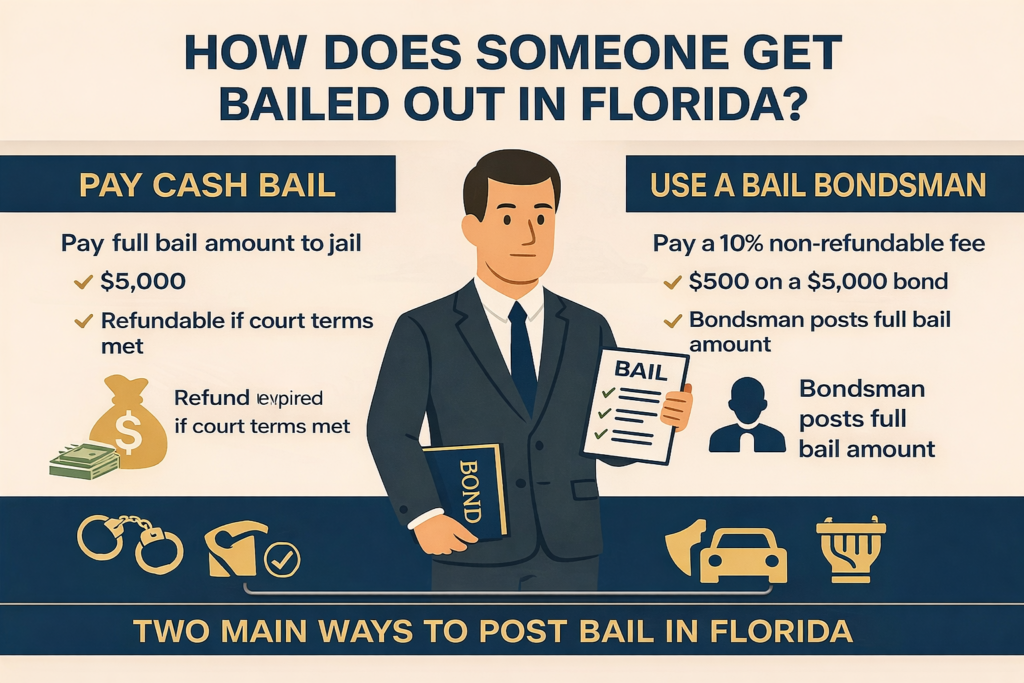
⚖️ Two Main Ways to Post Bail in Florida
In Florida, you can secure release from jail through:
1️⃣ Cash Bail
- Pay the entire bail amount (e.g., $5,000) directly to the jail via cash or certified check
- The money is refundable at the end of the case, minus any court fines or costs
- This method requires access to funds up front, but avoids paying a non-refundable fee
2️⃣ Bail Bondsman
- Pay a non-refundable 10% fee to a licensed bail bonds agent
- Example: $500 on a $5,000 bond
- The bondsman then posts the full bail amount to secure release
- The person bailed out must comply with any check-ins or travel restrictions
If you’re unsure how bail differs from bond, see our guide to Bail vs. Bond in Florida.
🧾 What Information You’ll Need to Post Bail
Before going to the jail or contacting a bondsman, gather:
• The defendant’s full legal name
• Date of birth
• Jail location
• Booking number (if available)
• Exact bond amount
Having this information speeds up release and avoids delays.
🎥 Watch: How the Bail Process Works in Florida
When someone you care about has been arrested, the first priority is getting them out of jail safely and as quickly as possible.
In this video, I explain:
• How bail is set after an arrest
• The difference between cash bail and using a bondsman
• What information you need before posting bail
• How long release typically takes
• What mistakes to avoid during the process
Understanding how Florida’s bail system works can reduce stress, prevent costly errors, and help you make the best decision for your family.
⏳ What Happens After Bail Is Posted?
Once bail is posted and any other conditions (e.g., no-contact orders, travel restrictions) are in place:
- The jail typically releases the individual within several hours
- The defendant must attend all scheduled court hearings
- Failure to appear can result in:
- Warrant for arrest
- Loss of the bail money
- Additional charges or revocation of bond
Violating release conditions can result in bond revocation. Learn more in our guide to Violating Pretrial Release in Florida.
📌 When Is Bail Set?
Bail is usually determined at the first appearance hearing, which must happen within 24 hours of arrest.
Depending on the charge, the judge may:
- Set a standard bail amount
- Increase or reduce the amount
- Deny bail (in serious or non-bondable offenses)
🛡️ Need Help Navigating the Bail Process?
If your loved one is in custody in Fort Lauderdale or South Florida, don’t make assumptions. Whether to use cash bail or a bondsman depends on your finances, the charge, and your legal goals.
At Michael White, P.A., we help clients understand all available options and move quickly to protect their rights.
📲 Call (954) 710-0925 or schedule a free consultation to speak with a local criminal defense attorney today.
💬 Frequently Asked Questions: Florida Bail Process
Q1: How is bail set after an arrest in Florida?
A: Bail is typically set by a judge at a first appearance hearing, which occurs within 24 hours of arrest. The judge considers the charges, criminal history, and flight risk.
Q2: What’s the difference between cash bail and using a bondsman?
A: With cash bail, you pay the full amount up front and may get it back at the end of the case. With a bondsman, you pay a non-refundable 10% fee, and they post the bail for you.
Q3: Is the bail money refundable in Florida?
A: Yes—if you post cash bail, it is refundable at the conclusion of the case, minus any court costs. If you use a bondsman, the 10% premium is not refunded.
Q4: What happens if someone misses a court date while out on bail?
A: A warrant may be issued, and the person can be re-arrested. If a bondsman was involved, they may forfeit the bond and send someone to locate the individual.
Q5: Can a lawyer help with bail issues in Florida?
A: Absolutely. A criminal defense attorney can attend bail hearings, argue for lower bond amounts, and help you navigate the best option for release.