
Last updated April 2026
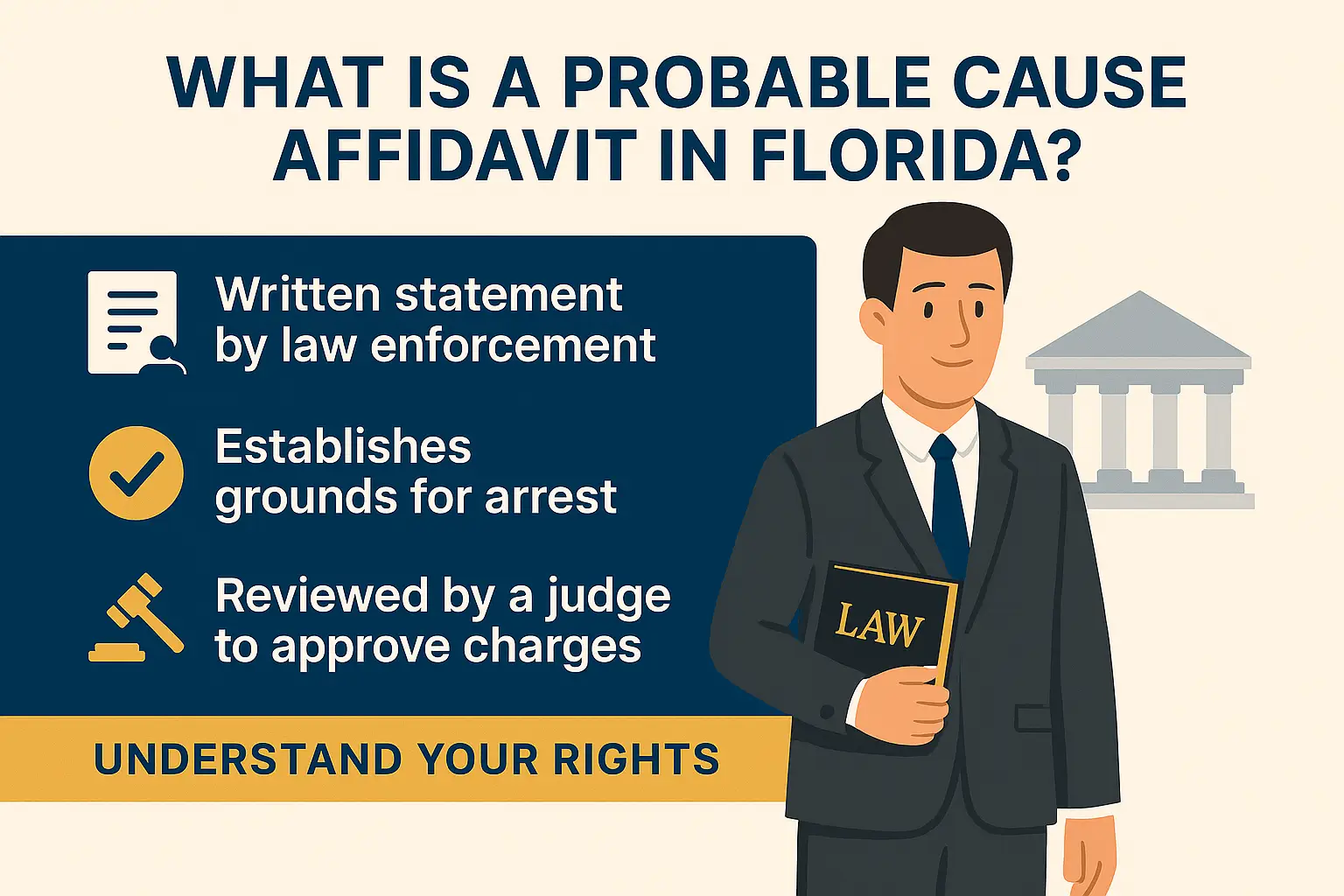
A Probable Cause Affidavit (PCA) is one of the most important documents in any Florida criminal case. It’s a sworn statement — written by the arresting officer — explaining why you were detained, what evidence supports the arrest, and why there was probable cause to believe a crime occurred.
The PCA is created during the earliest stage of the criminal process. To understand how it fits into the broader arrest and first appearance timeline, see how arrests and first appearance work in Florida criminal cases.
PCAs are used at critical hearings, including:
-
First appearance
-
Bond hearings
-
Charging decisions
A strong—or flawed—PCA can shape the entire direction of a case.
⚖️ What a PCA Must Include
A valid PCA must establish probable cause, meaning facts that would lead a reasonable person to believe:
-
A crime was committed
-
You were the person who committed it
A PCA usually contains:
-
Officer observations
-
Witness statements
-
Victim allegations
-
Contraband or evidence recovered
-
Statements made by the defendant
-
Timeline of events
In some cases, individuals are issued a notice to appear instead of being taken into custody, depending on the circumstances of the arrest.
🕵️ Where Probable Cause Affidavits Go Wrong
In Broward County, probable cause affidavits are often written quickly under pressure, which can lead to inconsistencies between the affidavit, body-worn camera footage, and later testimony. These discrepancies frequently become a focal point in early defense strategy.
Not all PCAs are accurate — and many contain errors that can be exploited, including:
✔ Missing Elements of the Crime
The officer alleges the crime but forgets to include key elements.
✔ Boilerplate Language
Copied/pasted language without specific facts.
✔ Exaggeration or False Details
Often exposed by body-worn camera footage.
✔ Illegal Stop or Detention
If the stop was unlawful, the entire PCA collapses — just like issues we litigate in motion to suppress hearings.
These issues are often raised early through pretrial litigation and can shape how a case progresses through the criminal process.
✔ Miscalculating “Knowledge”
Common in DWLS, theft, and drug possession cases where knowledge is essential.
✔ Mischaracterizing Resistance
Very common in BAT LEO or resisting cases during chaotic arrests.
🔍 Why the PCA Matters in Your Case
In many cases, the strengths or weaknesses of the PCA influence how prosecutors evaluate the case before formal plea negotiations even begin.
The PCA is used by:
1. Prosecutors
To decide what charges to file (or drop).
2. Judges
To decide bond, conditions of release, and whether to hold you at first appearance.
3. Defense attorneys
To find weaknesses early — contradictions, missing elements, unlawful stops — and leverage them for dismissals or reductions.
PCA errors often lead to:
-
Evidence suppression
-
Charge reductions
-
Filing declines
-
Dismissals
These decisions directly impact whether someone remains in jail before trial or is released under supervision.
🧭 Examples of PCA Issues in South Florida Cases
You may have a flawed PCA if:
-
Officer claims your “car smelled like marijuana” but bodycam contradicts it
-
The PCA leaves out who actually called 911
-
Timing of events is impossible
-
Statements are paraphrased inaccurately
-
The officer claims you “pulled away” but video shows minimal contact
-
Officer misstates standardized DUI observations
-
Text or phone evidence was obtained without proper consent
Any of these issues can become powerful leverage in negotiations.
In many cases, these types of weaknesses create opportunities where criminal charges can be dropped before trial in Florida.
🛡️ Speak With a Fort Lauderdale Criminal Defense Lawyer Today
A flawed or incomplete PCA can be the difference between a case being filed — or dismissed.
Contact Michael White, P.A. today so we can review the affidavit, challenge its weaknesses, and protect your rights from the very first step.
❓ FAQs — Probable Cause Affidavits in Florida
1. What is the purpose of a probable cause affidavit?
It explains why police arrested someone and what evidence supported the arrest.
2. Who writes the PCA?
The arresting officer or lead investigator.
3. Can the PCA be challenged?
Yes. PCAs can be attacked for missing elements, inaccuracies, or unlawful stops.
4. Does a PCA decide guilt?
No — it only determines whether there was enough evidence to arrest, not convict.
5. Can a flawed PCA lead to dismissal?
Yes — especially when combined with legal motions or contradicting bodycam footage.