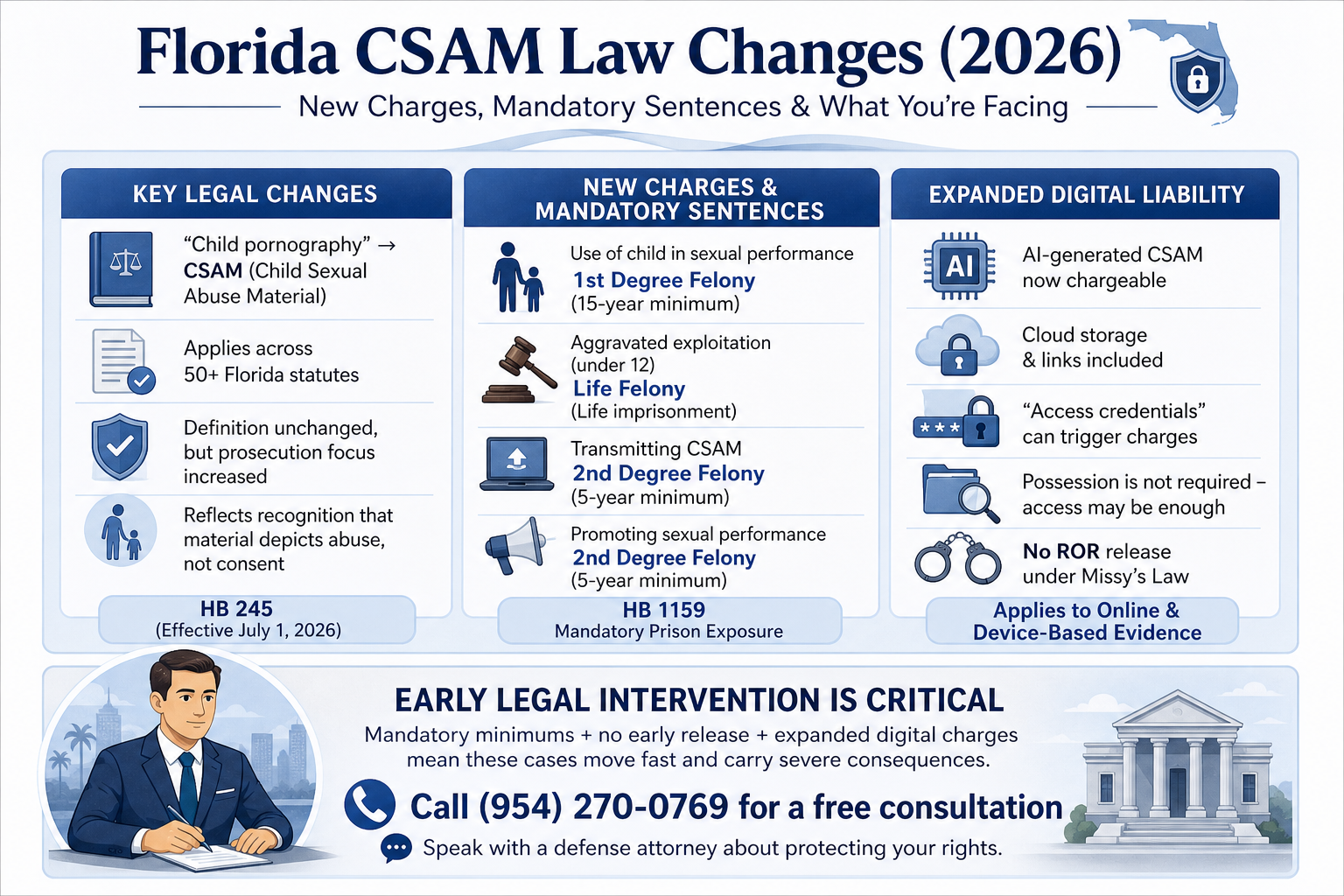
Infographic explaining Florida CSAM law changes in 2026, including new felony charges, mandatory minimum sentences, AI-generated material liability, and pretrial detention rules.

Florida CSAM Law Changes (2026): New Charges, Mandatory Sentences & What to Know

⚖️ Florida CSAM Law Changes (2026): New Charges, Mandatory Sentences, and What It Means Last updated May 2026 Florida has enacted sweeping changes to its laws involving child sexual abuse material (CSAM), with most provisions taking effect on July 1, 2026. These updates—passed through House Bill 245 and House Bill 1159—expand how these cases are […]
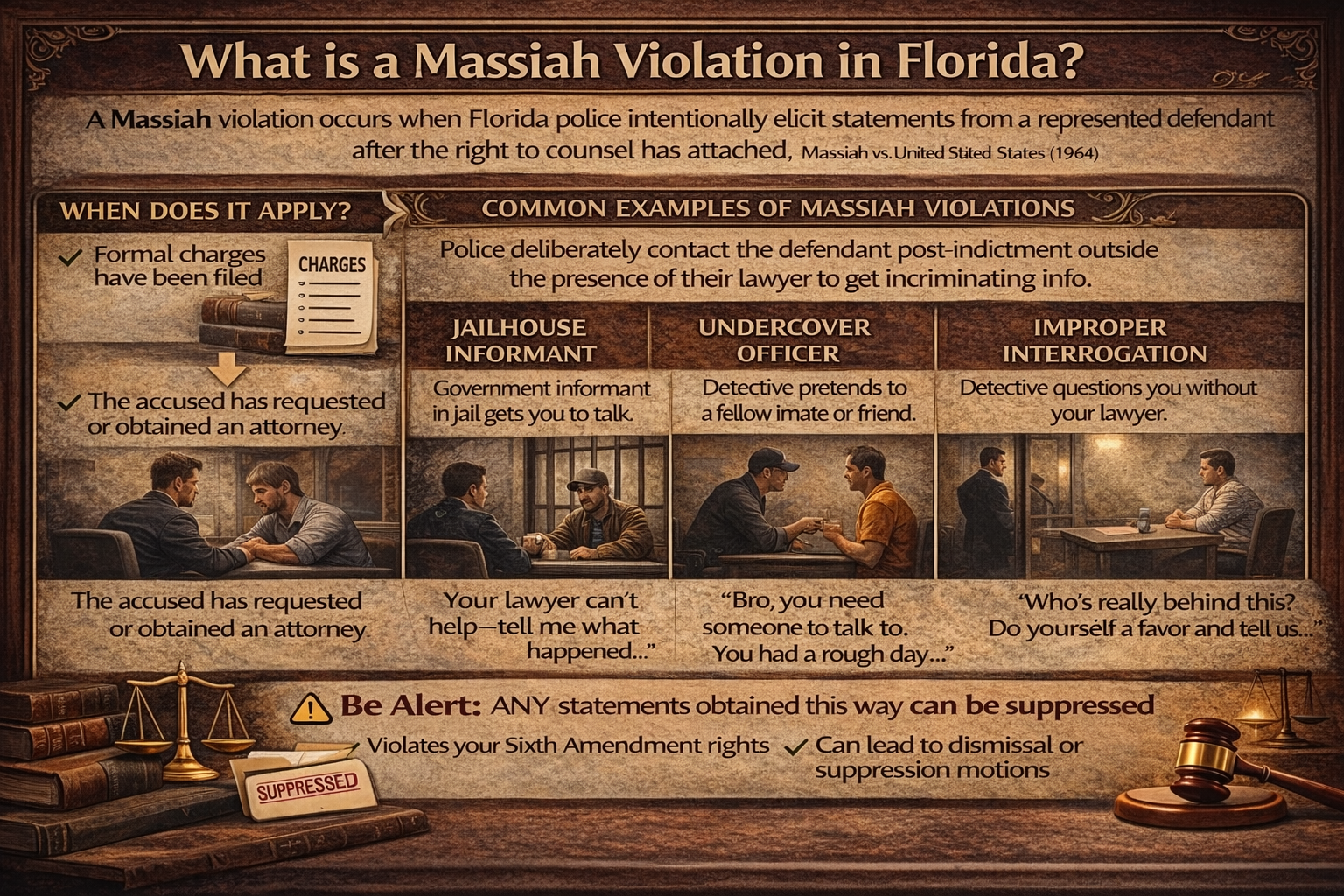
Infographic explaining what a Massiah violation is in Florida, including when the right to counsel has attached, use of jailhouse informants or undercover officers, and how statements obtained without a lawyer may be suppressed.

What Is a Massiah Violation in Florida?

A Massiah violation occurs when police deliberately obtain statements from a defendant after the right to counsel has attached — without the presence of their lawyer. These violations often happen outside traditional interrogations and can lead to suppression of powerful evidence. For a broader overview of how this protection works, see our guide to right […]

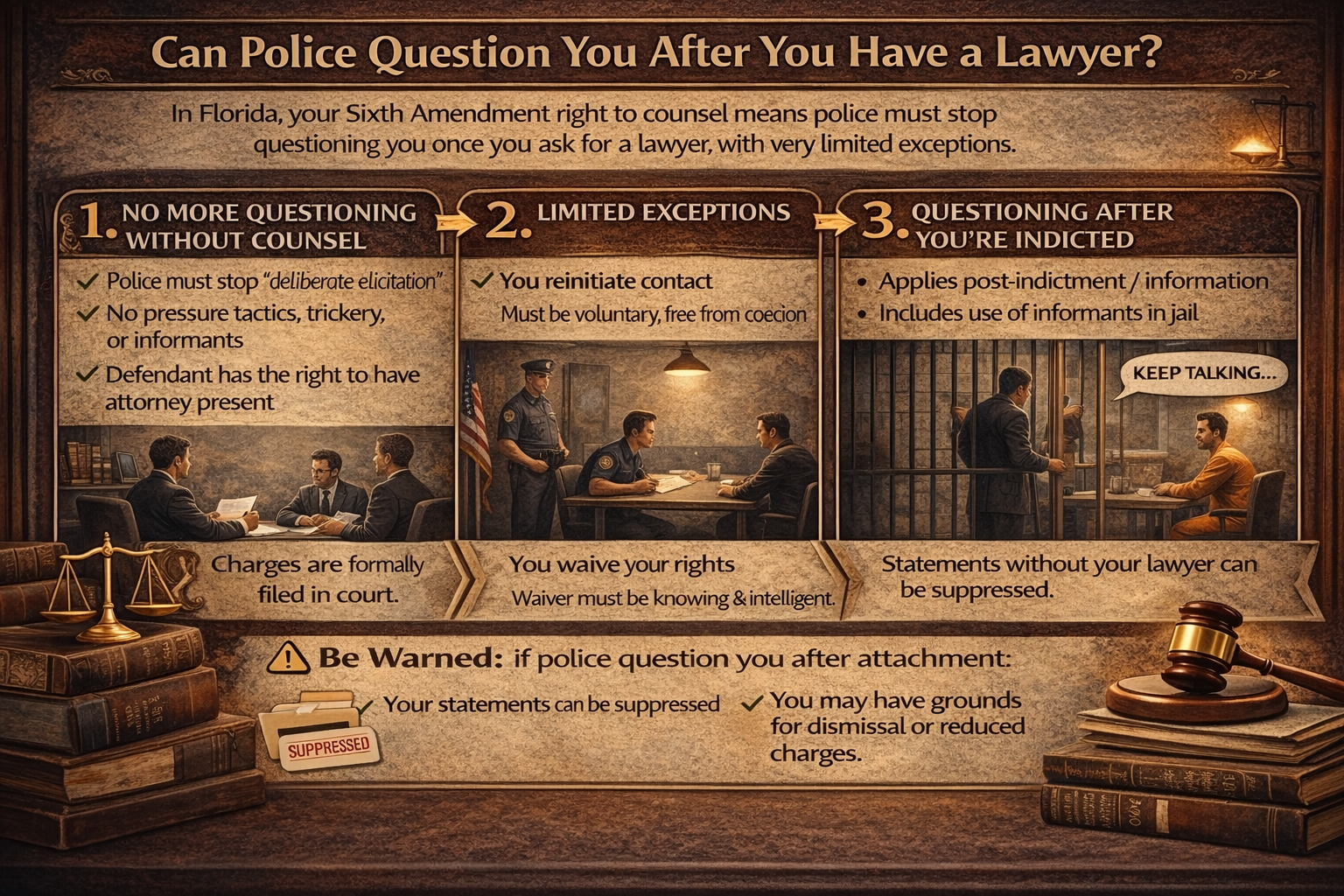
Infographic explaining whether police can question you after you have a lawyer in Florida, including rules on post-charge questioning, limited exceptions, and when statements may be suppressed under the Sixth Amendment.

Can Police Question You After You Have a Lawyer in Florida?

Many people assume that once they have a lawyer, police are no longer allowed to question them. That’s not always true. In Florida, whether police can question you depends on when your right to counsel attached and how the interaction occurs. In some situations, questioning is strictly prohibited. In others, statements may still be used. […]

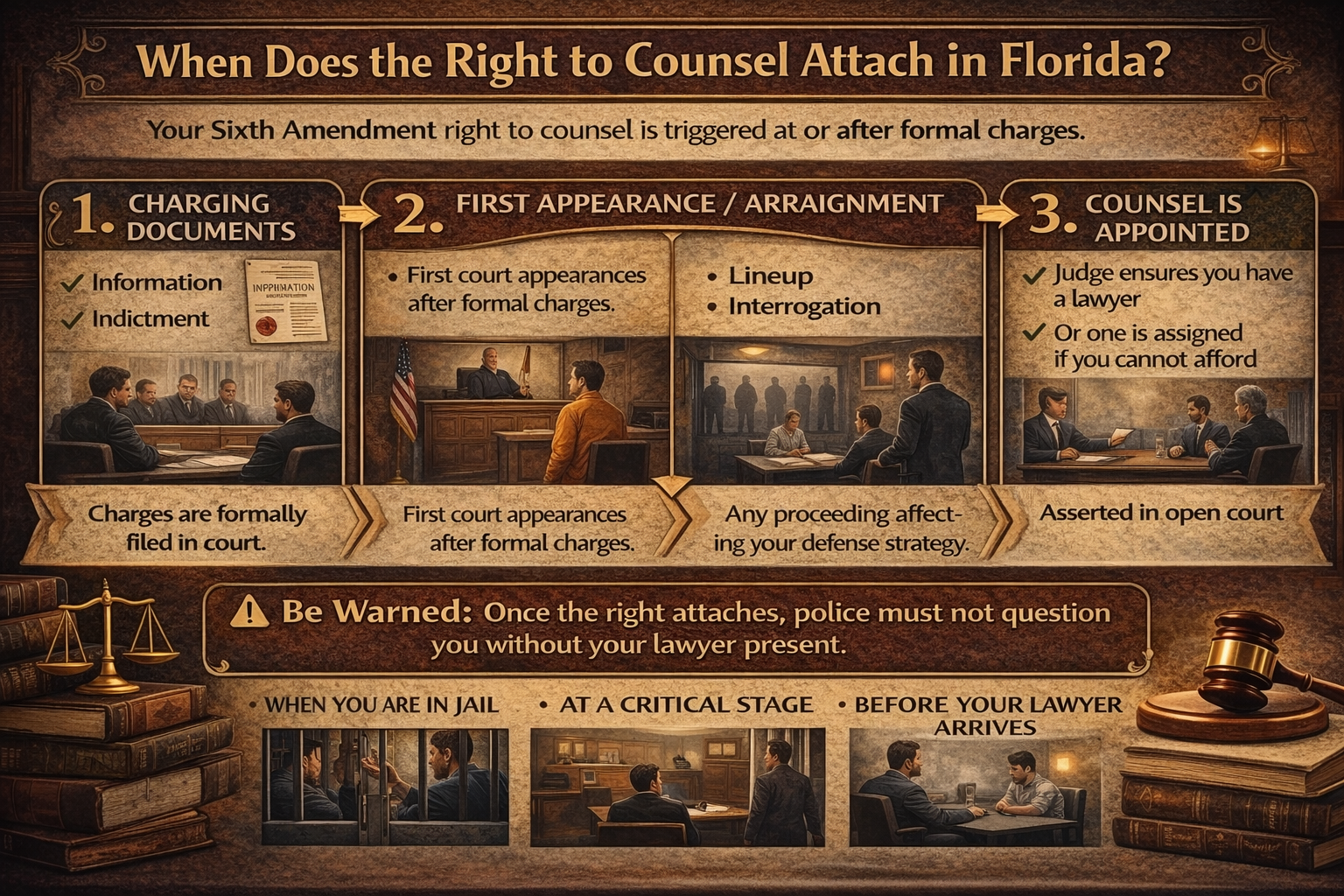
Infographic explaining when the Sixth Amendment right to counsel attaches in Florida, including formal charges, first appearance or arraignment, and critical stages of prosecution, with courtroom and police illustrations.

⚖️ When Does the Right to Counsel Attach in Florida?

The right to counsel is one of the most important protections in a criminal case — but it does not begin the moment you are arrested. In Florida, the Sixth Amendment right to counsel generally attaches only after formal charges are filed. That timing matters because it determines when police must stop certain types of […]

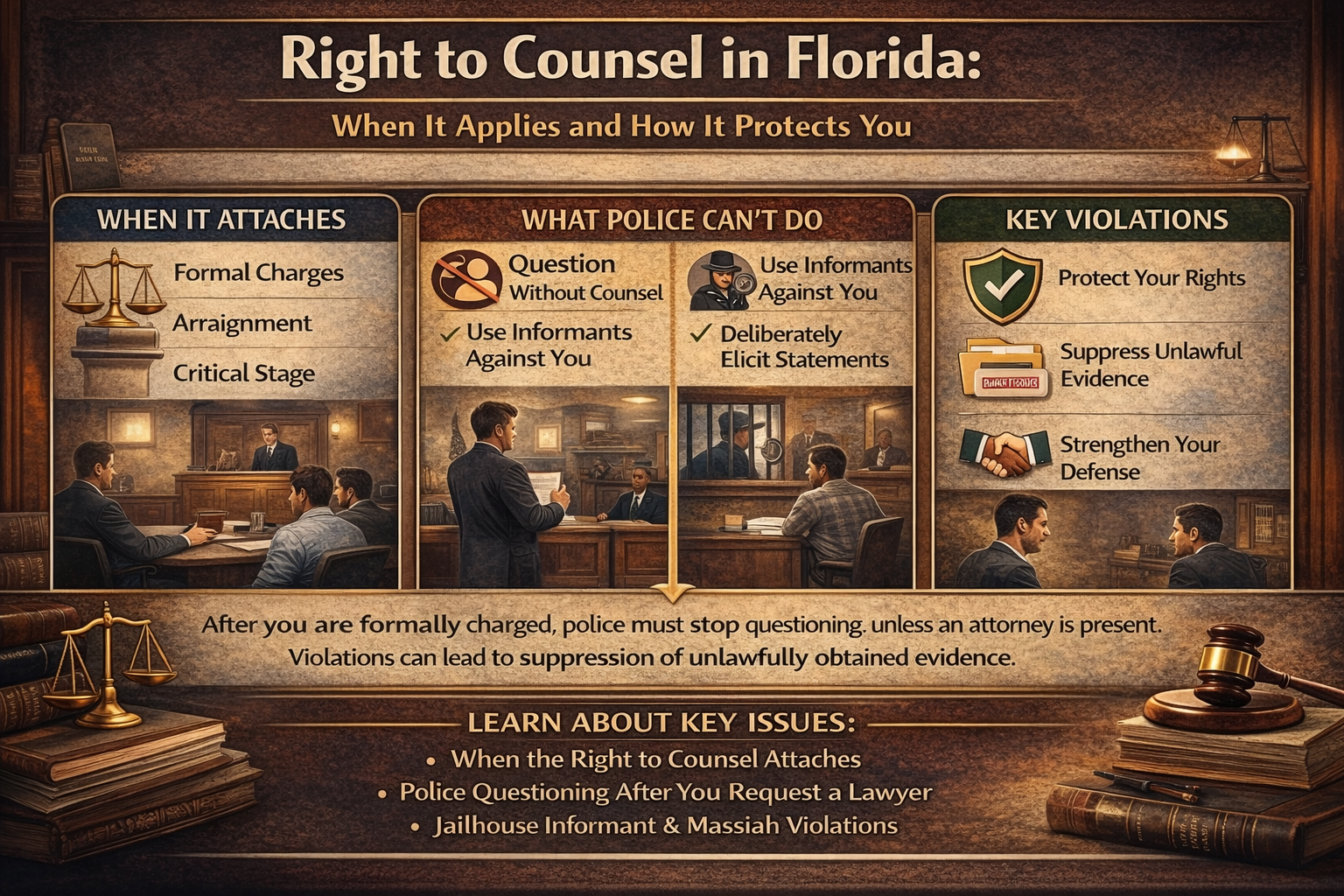
Infographic explaining the Sixth Amendment right to counsel in Florida, including when the right attaches, what police cannot do after charges are filed, and how violations can lead to suppression of evidence.

Right to Counsel in Florida: When It Applies and How It Protects You

The right to counsel is one of the most powerful protections in a Florida criminal case. But it does not apply at every stage — and it does not work the same way as Miranda. Under the Sixth Amendment, your right to a lawyer generally attaches after formal charges are filed. Once it attaches, police […]

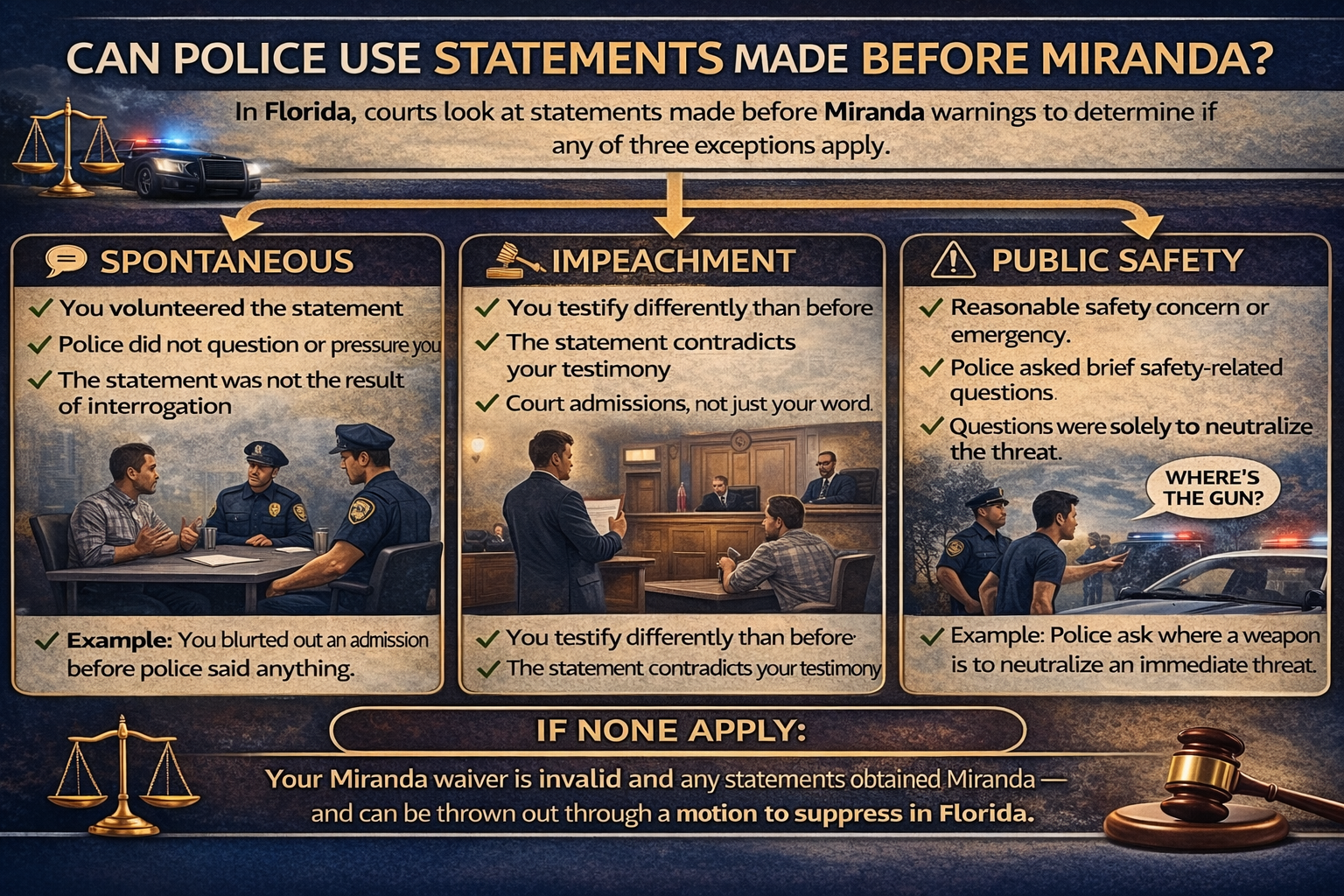
Infographic explaining when police can use statements made before Miranda warnings in Florida, including exceptions like spontaneous statements, impeachment, and public safety questioning, with police and courtroom illustrations.

Can Police Use Statements Made Before Miranda in Florida?

Many people believe that if police don’t read Miranda warnings, anything you say cannot be used against you. That’s not always true. In Florida, statements made before Miranda warnings may still be admissible depending on the circumstances. Understanding when those statements can be used — and when they can be challenged — is critical in […]